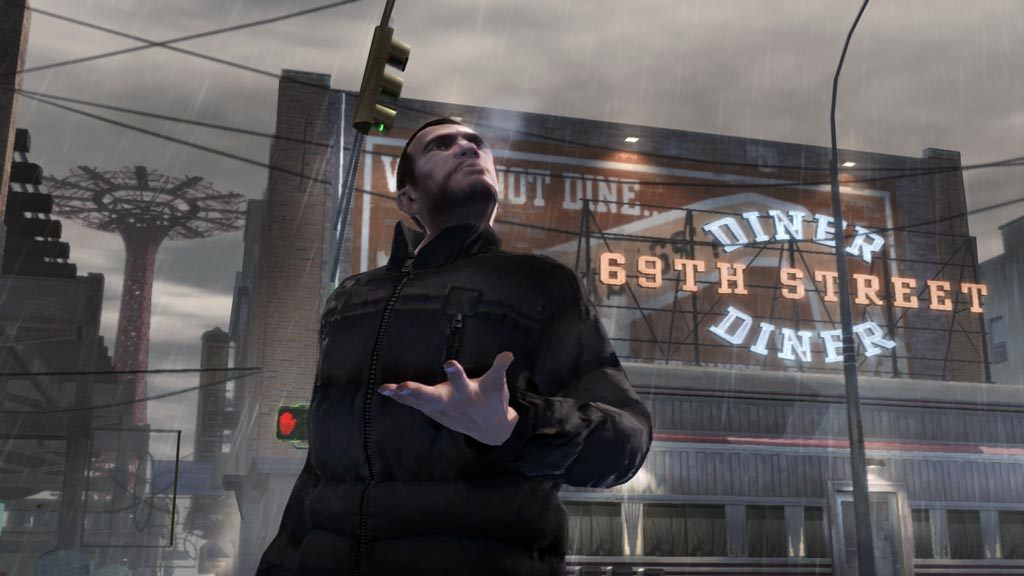
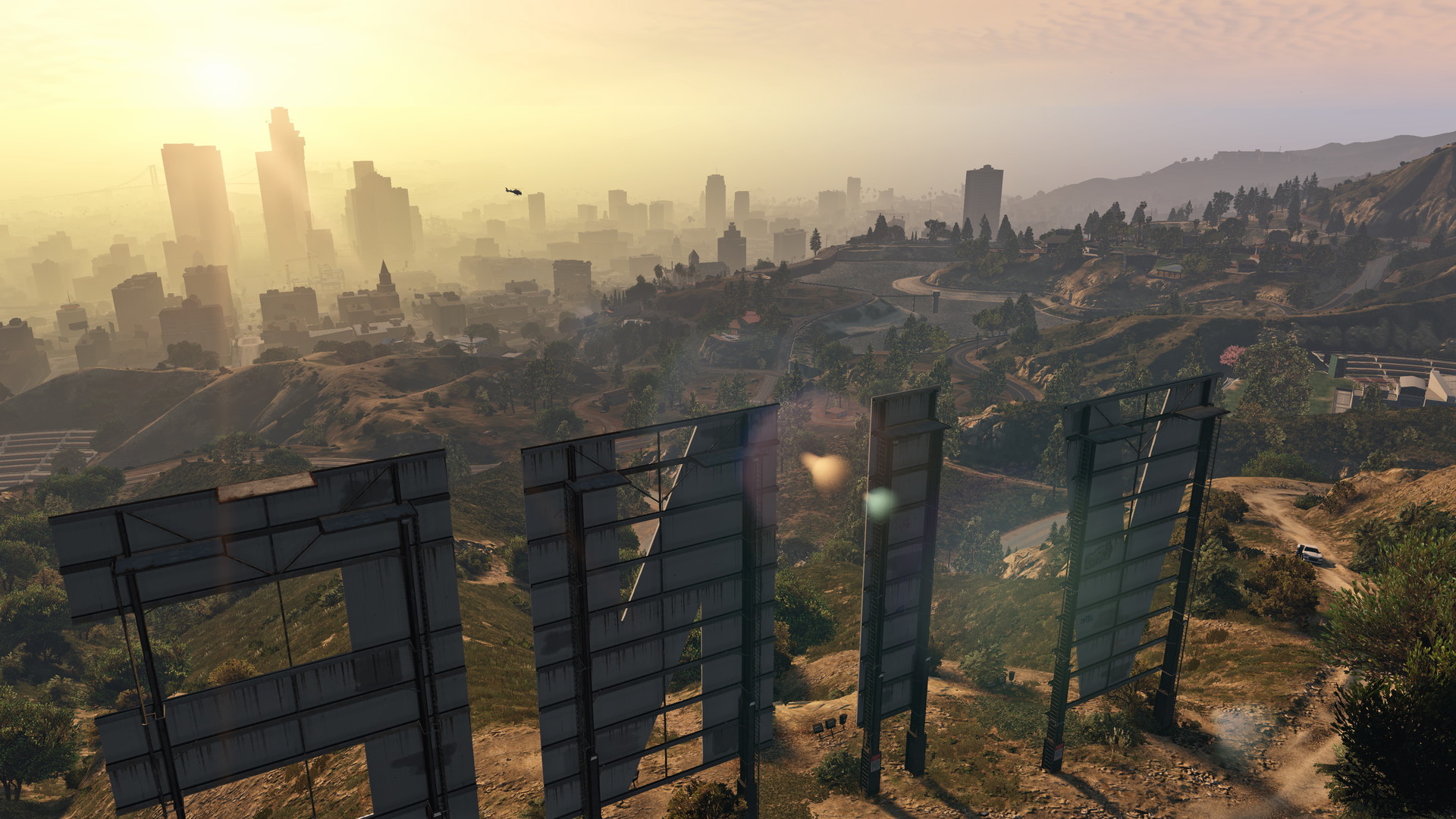
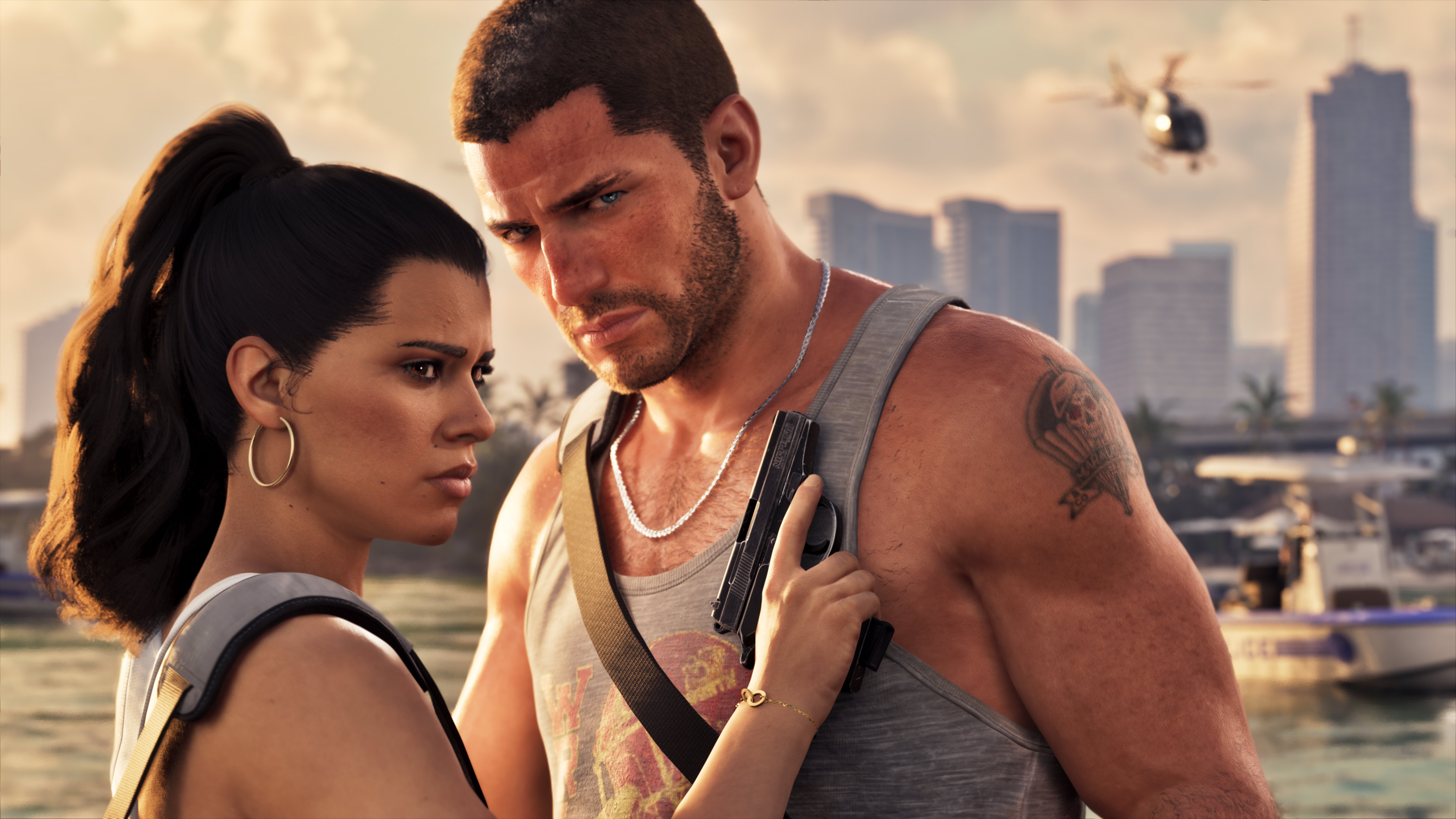
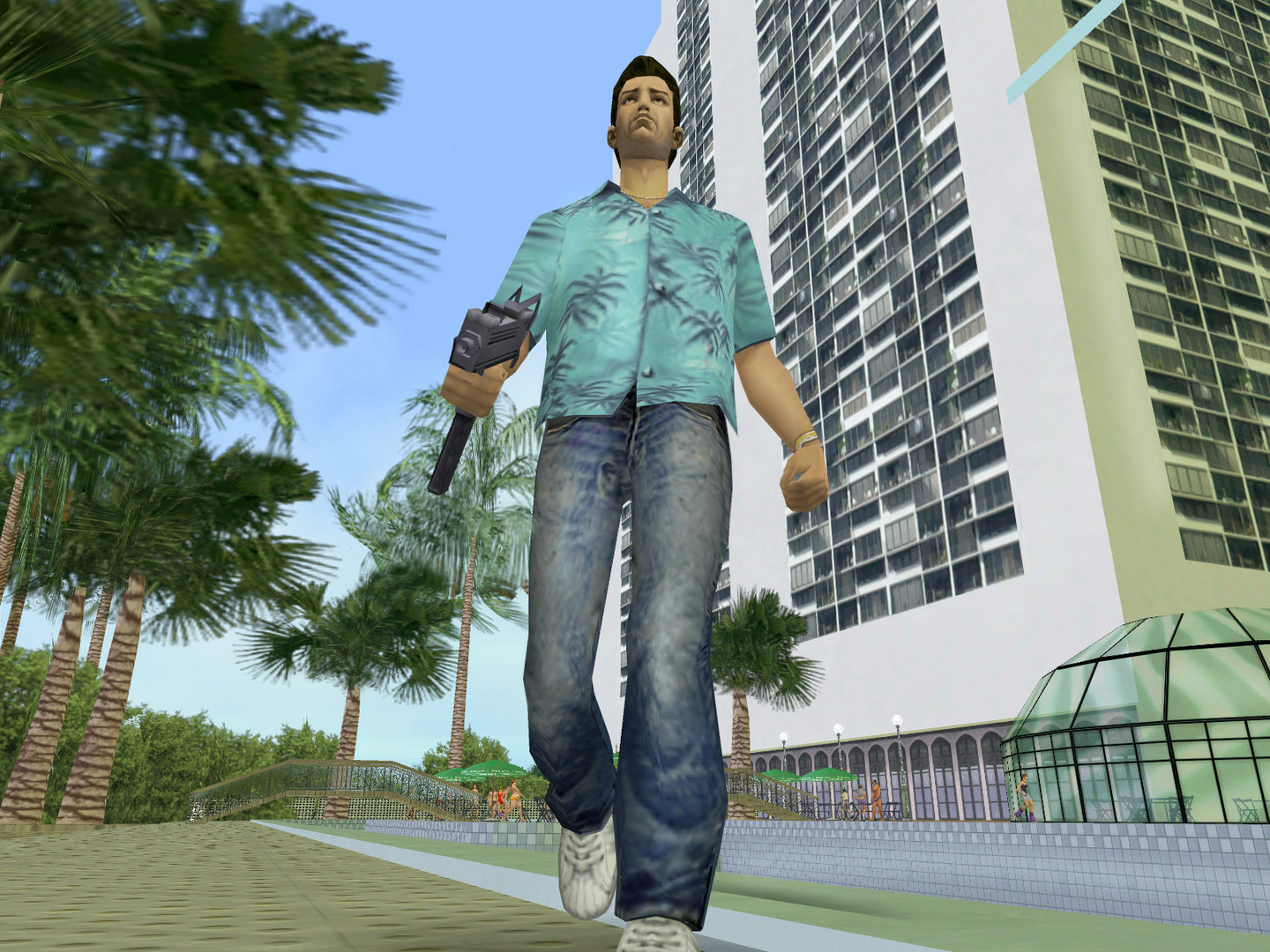
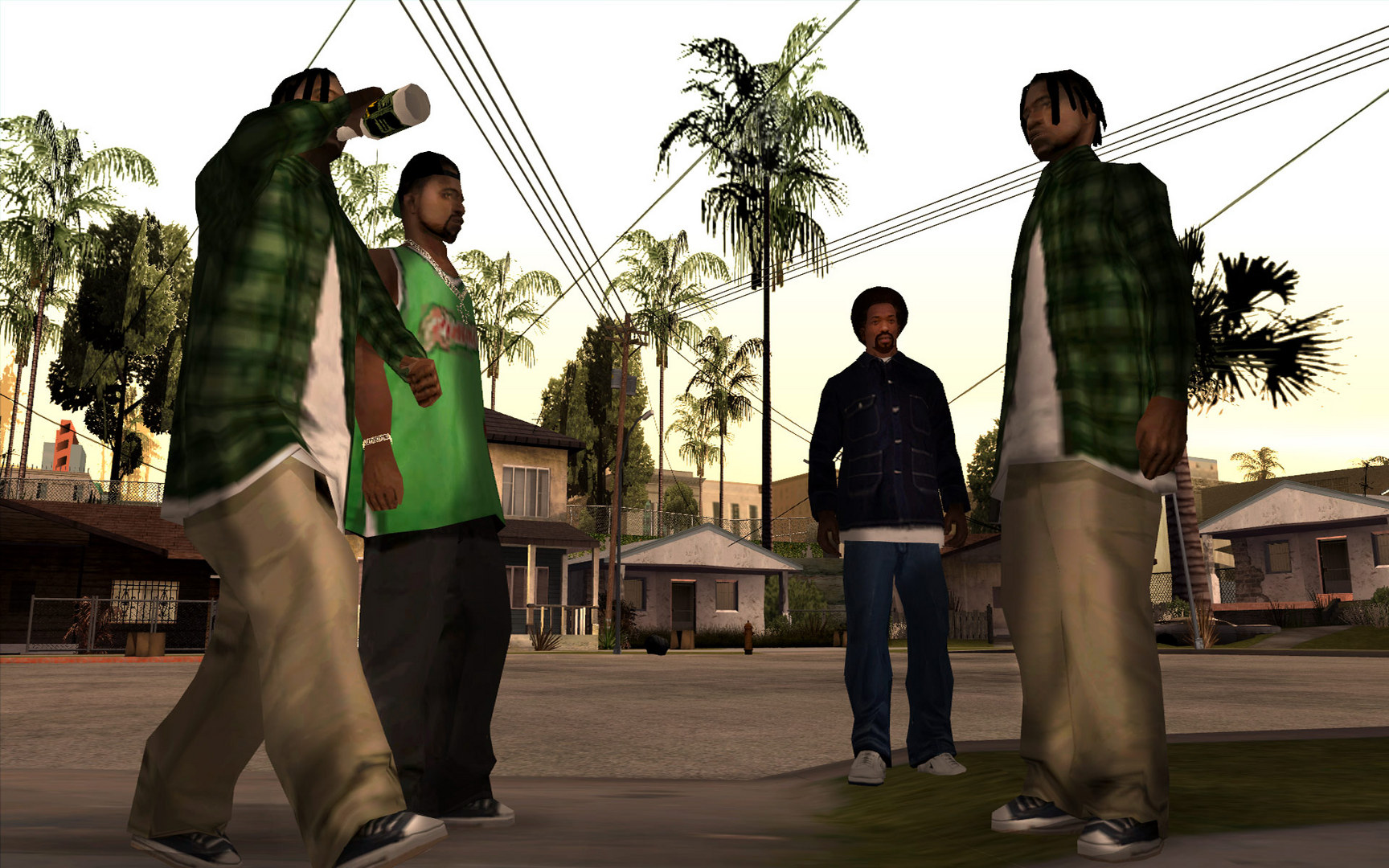
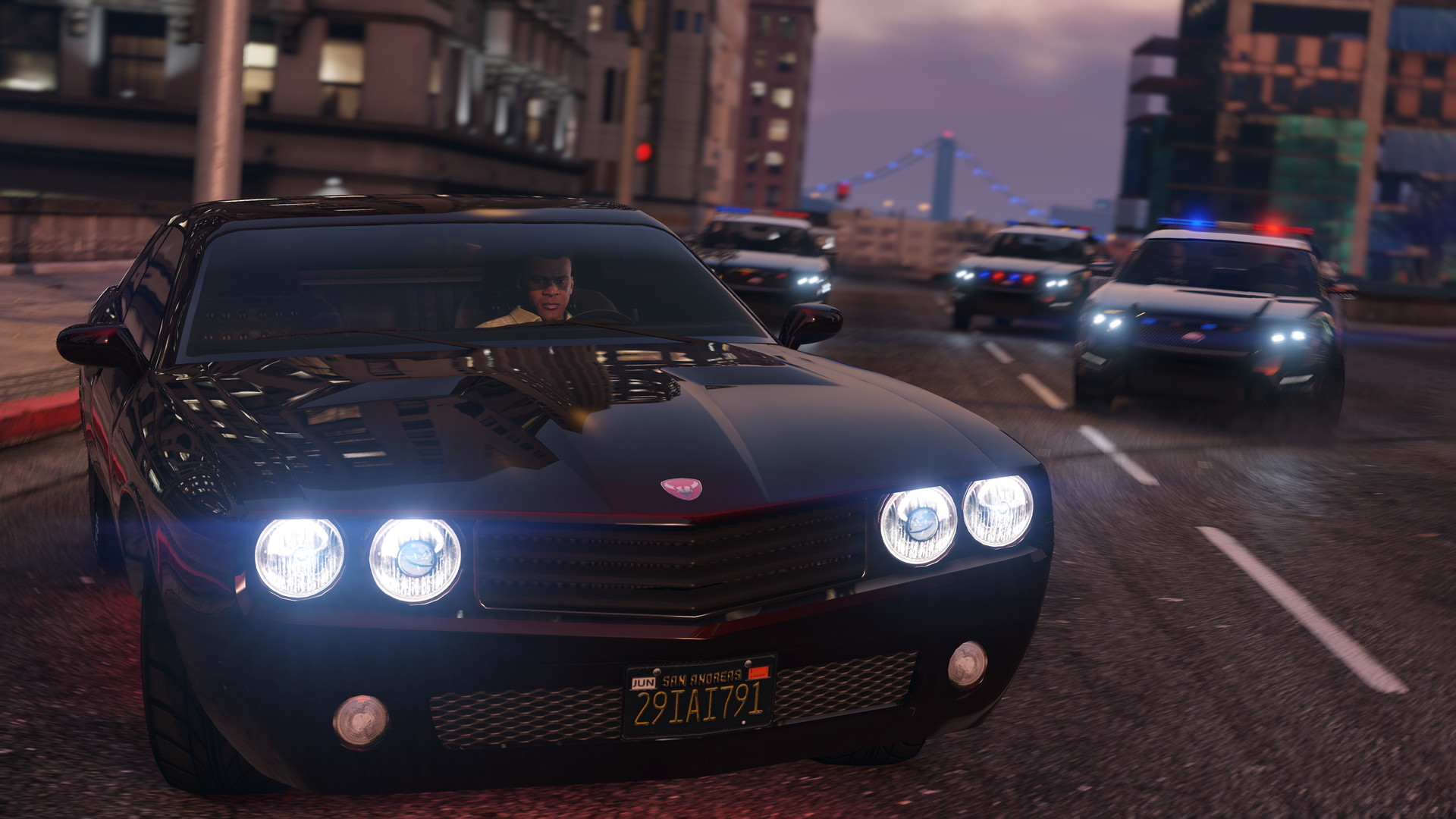



On Thursday, November 19, Rockstar Games releases Grand Theft Auto VI. Analysts estimate it cost between $1 billion and $1.5 billion to make, which would make it the costliest entertainment product in history. The biggest movie budget on record is roughly half the low estimate, and even adjusted for inflation, no film comes close to it.
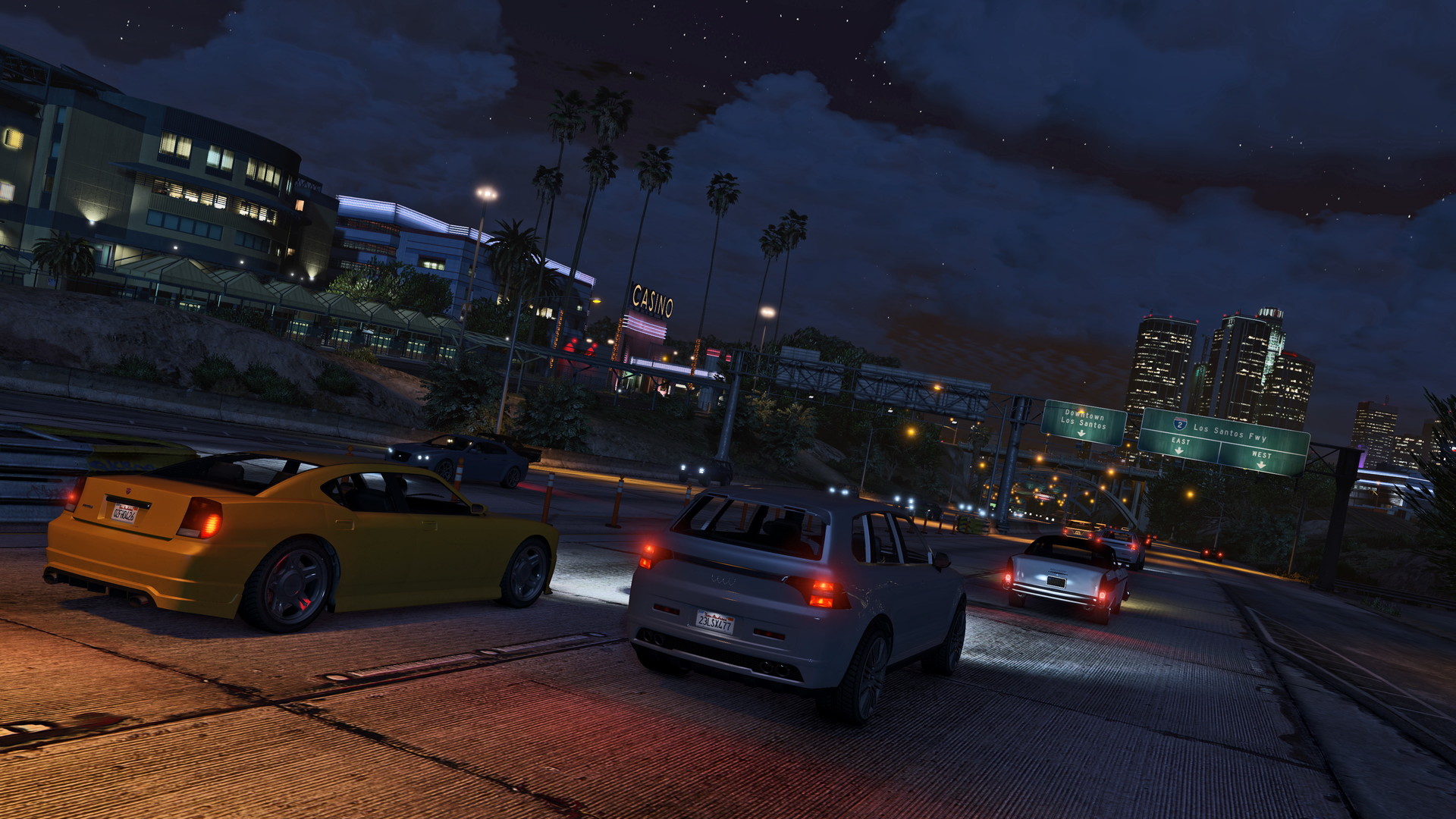
Its predecessor holds a different record, as the most lucrative. Grand Theft Auto V went on sale in September 2013 and made $800 million in its first 24 hours. By day three it had passed $1 billion, and Take-Two said no entertainment property had ever reached that mark faster. Thirteen years and more than 230 million copies later, estimates of its lifetime take run from $8.5 billion to nearly $10 billion. The entire Avatar trilogy, including the highest-grossing film ever made, has earned about $6.7 billion in theaters.
In its first 24 hours.
The launch that broke the record ↗The 13-year gap between the two games gave the internet one of its sturdiest jokes. “We got X before GTA 6” became shorthand for anything absurdly overdue. When a former intelligence official testified to Congress in 2023 that the US had recovered UFOs, the TikTok reaction that took off was “We gonna have aliens before GTA 6.” The White House joined in this June. Hours after Rockstar unveiled the cover art, the administration’s official account posted a version featuring President Trump, under the caption “We really saved America before GTA 6.”
Each time Rockstar has shown the game, the audience has been enormous. Its second trailer, in May 2025, pulled 475 million views across platforms in a single day, according to Take-Two, and Rockstar billed it as “the biggest video launch of all time.” The sales are following. On November 9, Take-Two told investors that pre-orders had reached levels it had never seen, with CEO Strauss Zelnick saying they were “far in excess of our initial expectations.” Sensor Tower counts roughly 7.7 million digital pre-orders, around $750 million, before anyone has played it and without counting physical copies. Analysts are projecting 35 million to 40 million copies sold in the first year.

To people who don’t play, GTA is mostly known for its scandals. In 2005, a sex scene buried in the code of San Andreas led Walmart, Target and Best Buy to pull the game, and Senator Hillary Clinton called for a federal investigation. In 2003, an Alabama teenager shot two police officers and a dispatcher to death. The victims’ families went after Rockstar for $600 million, arguing that Vice City was to blame, and 60 Minutes asked a national audience whether a video game could turn someone into a killer. Whatever you make of that question, the game is built entirely around crime. Players steal cars, hold up stores and outrun the cops, trying to grab some small share of the American dream any way they can.
The argument of this essay is that while it would be too much to say GTA tells the story of America, it comes a lot closer than you’d think.
GTA holds up a mirror to America. It’s made by outsiders, built in Scotland by people who came to know America through its movies, TV and ads, and they built an exaggerated version of the country out of its own stories about itself. Dan Houser, one of the chief architects of the series, said in 2025 that the game was “so much about America, possibly from an outsider’s perspective.” But the mirror also works in the other direction. The way America reacted to GTA, with its panics and its lawsuits over what kids should see, says as much about the country as anything in the games.
At the moment, the mirror is catching a new American fear. Google opened Project Genie on January 29, an experimental AI that generates a world you can explore for sixty seconds at a stretch. On January 30, Take-Two’s shares dropped 7.9 percent, roughly $3.5 billion in value, as investors wondered whether places like GTA’s cities would one day be produced by software rather than built by people.
GTA holds up a mirror to America.
It starts with how GTA came about, and then looks at five things the mirror shows.
Chapter 1: Americana, Made in Scotland
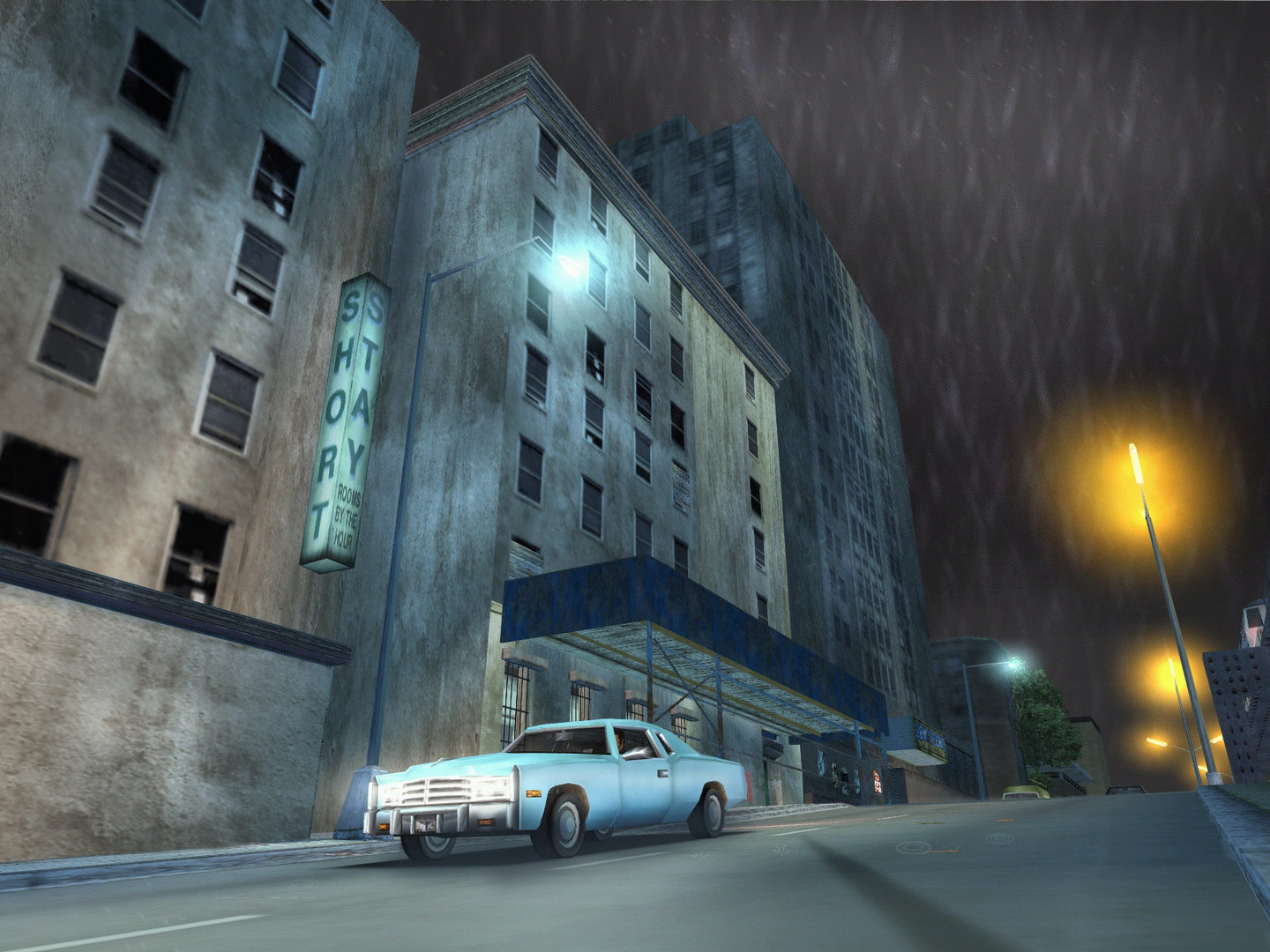
Since Grand Theft Auto III in 2001, every game in the series has followed one template. The player controls a lone criminal in a fictional take on a real American city and can roam almost all of it. Every car is available: approach it, yank out whoever is behind the wheel, and it’s yours. Each one comes with a radio, and each station has its own hosts, playlists and mock advertising. Characters scattered around town offer missions that move the plot along, though the game never insists you accept them. Reviewing GTA III in December 2001, one critic confessed he’d spent more than two hours in the game, part of it working a night shift as a cabbie, before taking a single mission. Commit a crime and stars light up at the top of the screen, each one summoning more police. Keep at it, the same reviewer reported, and eventually the National Guard rolls in, tank and all.
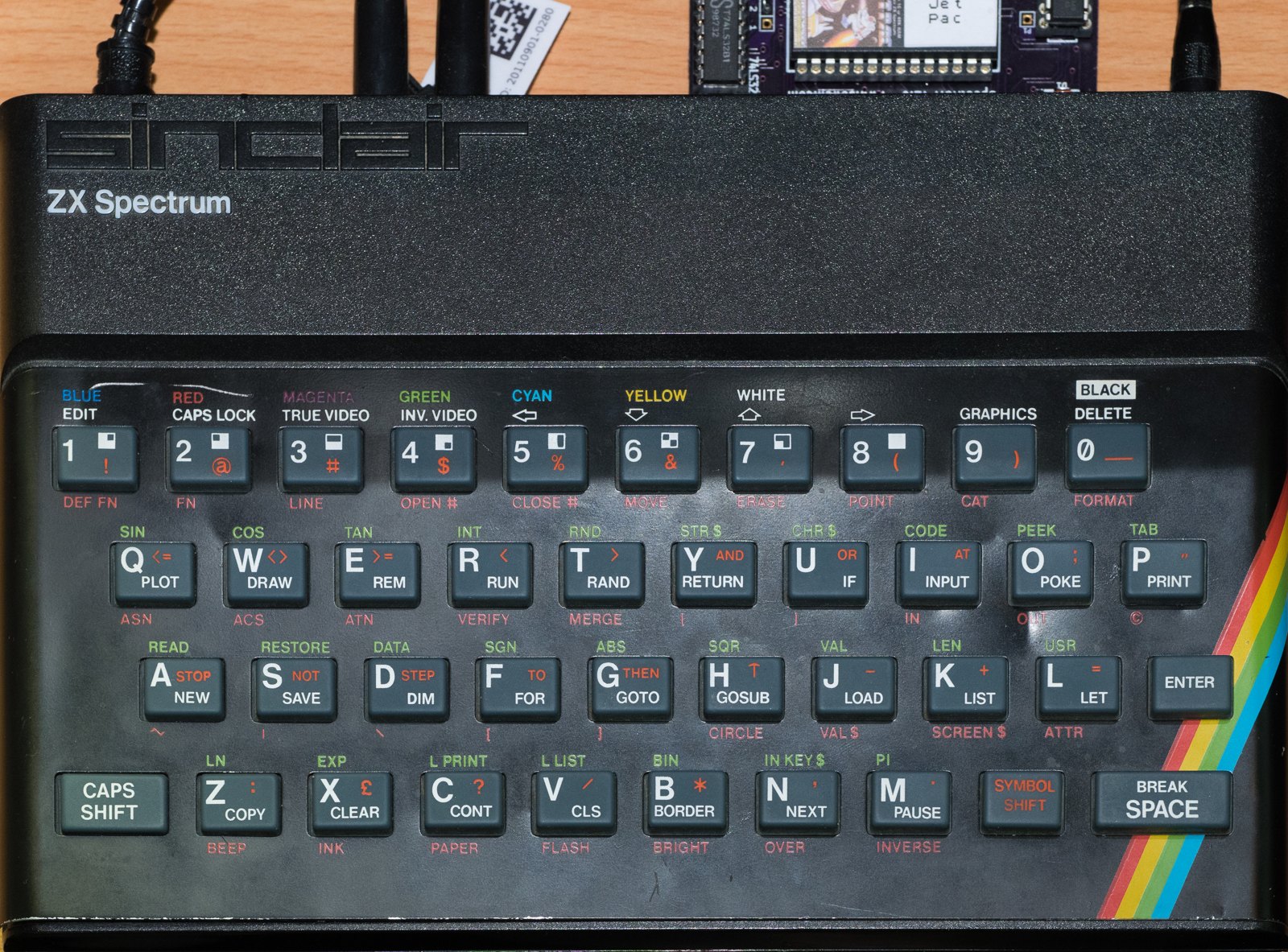
The company that made all this began in Dundee, a city on Scotland’s east coast. Its Timex plant, which had made watches, started building Sinclair home computers in 1981, the ZX81 and later the ZX Spectrum, and by February 1983 it was producing one every four seconds. The Spectrum went on to be the first computer for a great many of the British kids who grew up to make games.
One Timex employee, David Jones, lost his job there in 1987. He put his redundancy money toward an Amiga, and in 1988 he and some old school friends formed DMA Design, working out of an office over what used to be a fish and chip shop. Mike Dailly, the first person Jones hired, would go on to program GTA.
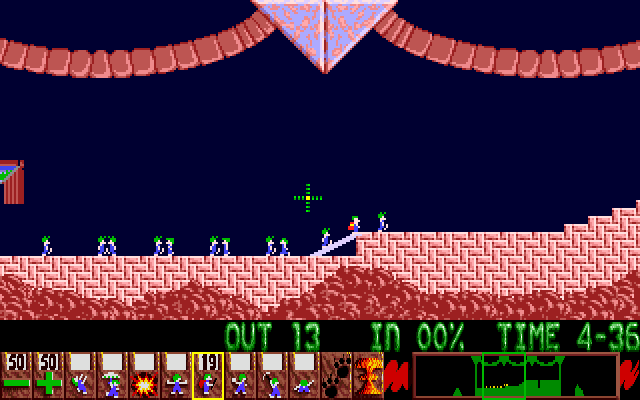
The studio’s first big success was Lemmings, a 1991 puzzle game that anyone with a computer in the early ’90s probably remembers fondly. Little green-haired creatures file mindlessly toward drops and hazards, and you save them by handing out tasks: dig here, build a bridge there, stand still and block the others. It sold upward of 2 million copies in two years and was twice voted European Game of the Year. Nothing about it suggested the studio’s next big idea would be a crime game.
Nobody wanted to be a cop
That idea began as a city rather than a story. Brian Baglow, DMA’s PR man, called the concept a “living city,” and the programmer Keith Hamilton wanted it to seem to keep “carrying on without you” after the power went off. Jones cared most about density and traffic, and figured a cops-and-robbers premise would suit a crowded city. Development on Race’n’Chase started in spring 1995, with players able to pick either side of the law.
Playing as a police officer turned out to be dull, since it meant obeying traffic rules; Baglow likened it to Sim Driving Instructor. Nobody picked it, so the team cut it. Hamilton’s explanation became the series’ founding principle: “It was more fun to break the law.”
It was more fun to break the law.
Luck supplied the rest. An error in the code that drove the police cars had them trying to smash the player off the road instead of surrounding him. Gary Penn, a designer, was delighted that “the police are psycho,” and the bug stayed.
For long stretches the project was a wreck that almost didn’t survive. In one designer’s words, it “wasn’t the golden child in the company.” Penn has described it as a mess, and remembered a period at the publisher, BMG, when he felt like the lone advocate keeping it from being killed.
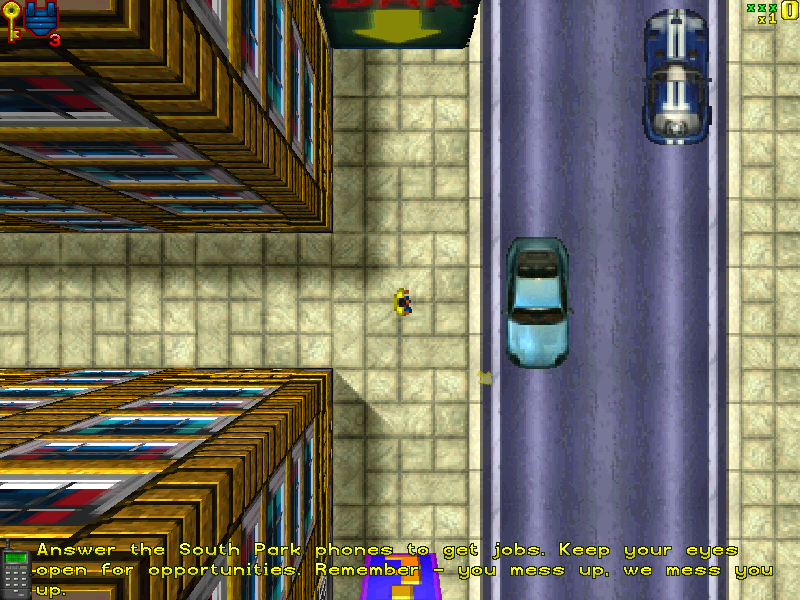
It survived, and Grand Theft Auto shipped in 1997. The camera looked straight down on the streets, cars were an inch long, and points came from crimes, with police pressure rising as the crimes piled up. It was not much to look at; IGN judged the graphics “really quite shoddy.” In Britain, the censors restricted it to adults.
Manufacturing a scandal
The adult rating turned out to be useful, because the first GTA scandal was a marketing plan. BMG brought in Max Clifford, Britain’s best-known publicist, whose specialty was peddling celebrity scandals to the tabloids. His counsel, as David Kushner tells it in Jacked, his history of the series, was to embrace the violence and “shove it down the media’s throat.” The tabloids took the bait, with the Daily Mail denouncing a “criminal computer game that glorifies hit-and-run thugs.”
Months before release, in May 1997, the furor made it to Parliament. Lord Campbell of Croy stood in the House of Lords, finger presumably raised, to warn about a game built on “thefts of cars, joyriding, hit-and-run accidents, and being chased by the police,” adding that “there will be nothing to stop children from buying it.” A government minister assured him that “the Government are very concerned about violent computer games as is the public.” Looking back, Dailly gave Clifford the credit. “He designed all the outcry,” he said, which all but guaranteed politicians would pile in.
The game reached British shops in November 1997 and American ones in March 1998. Britons bought about half a million copies before Christmas, and by October 1999 worldwide sales stood at 3.5 million.
America, as seen on TV
Its America was assembled from what Hollywood exported, and in Britain those exports dominated. From 1989 to 1995, US films accounted for 84 to 94 percent of British box office receipts. The designers set the game in that America, basing three cities on Manhattan, San Francisco and Miami. Those became Liberty City, San Andreas and Vice City, and the series has never left them.
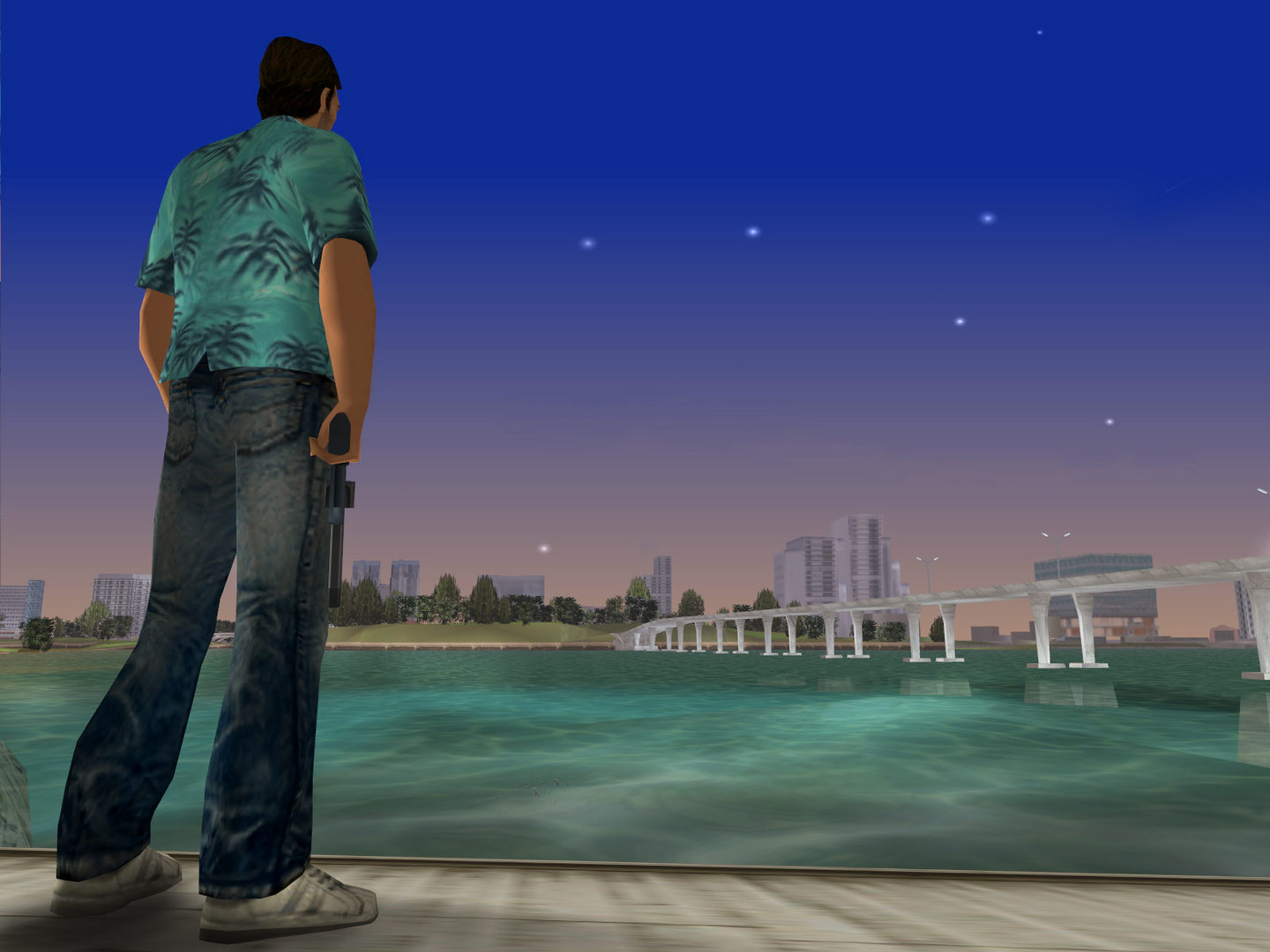
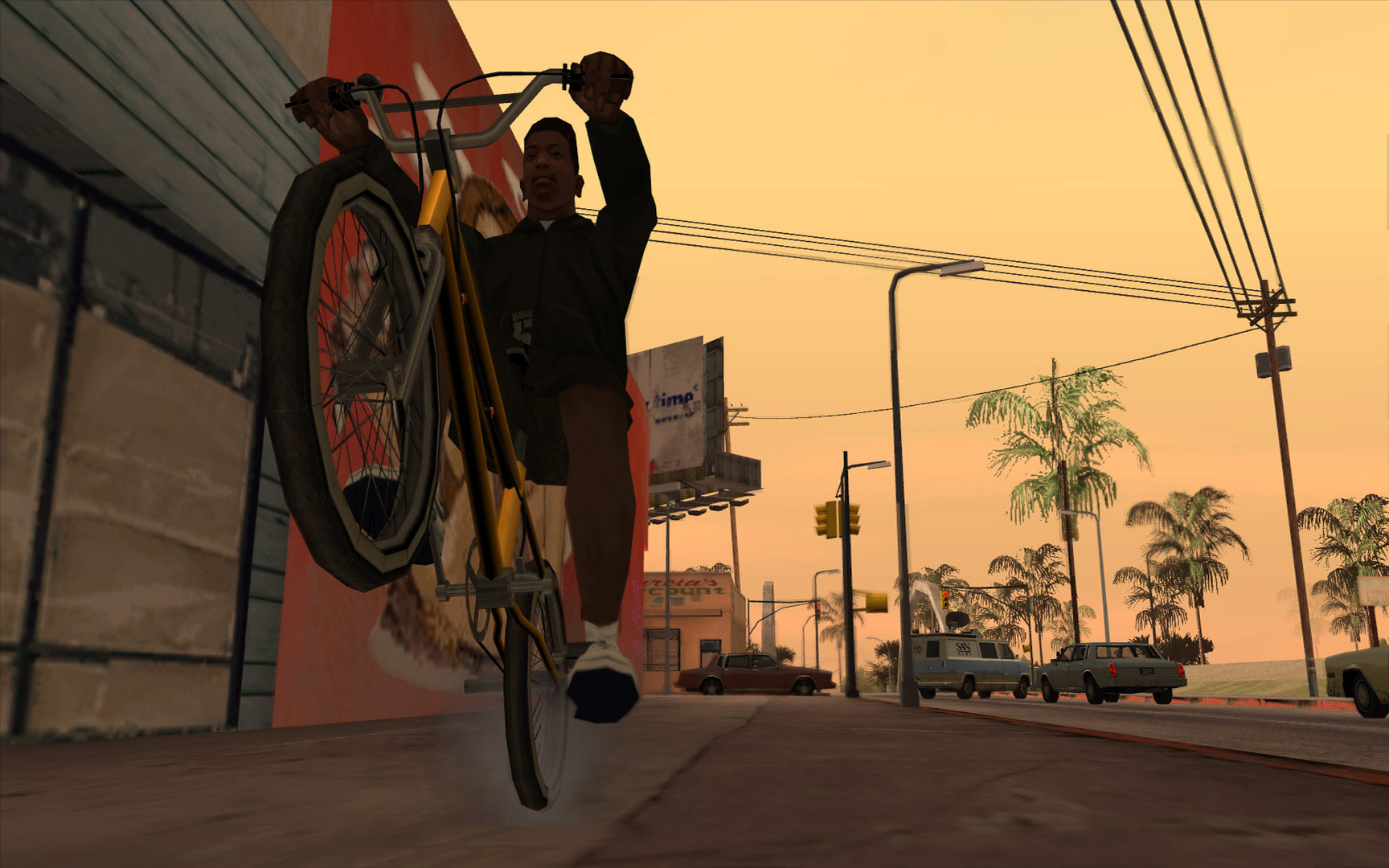
Sam and Dan Houser, the London-raised brothers who would later take charge of GTA, came by their America the same way, at closer range. Their father, Walter, ran Ronnie Scott’s, the club where American jazz greats played when they came through London. Family lore has Dizzy Gillespie asking young Sam about his career plans, and the boy announcing that he was going to rob banks. Sam checked American crime films out of the library (The Getaway, The French Connection, The Wild Bunch, The Warriors), and both brothers fell hard for New York hip-hop, Def Jam above all. Their father took Sam to New York for his 18th birthday, after which, Sam said, he was “chronically in love with the place.” Dan would later call the games “a British response to Americana, rather than America.”
The brothers relocated to New York in 1998 and founded Rockstar Games, GTA’s home ever since, with Sam as its boss and Dan as the series’ lead writer.
New York, October 2001
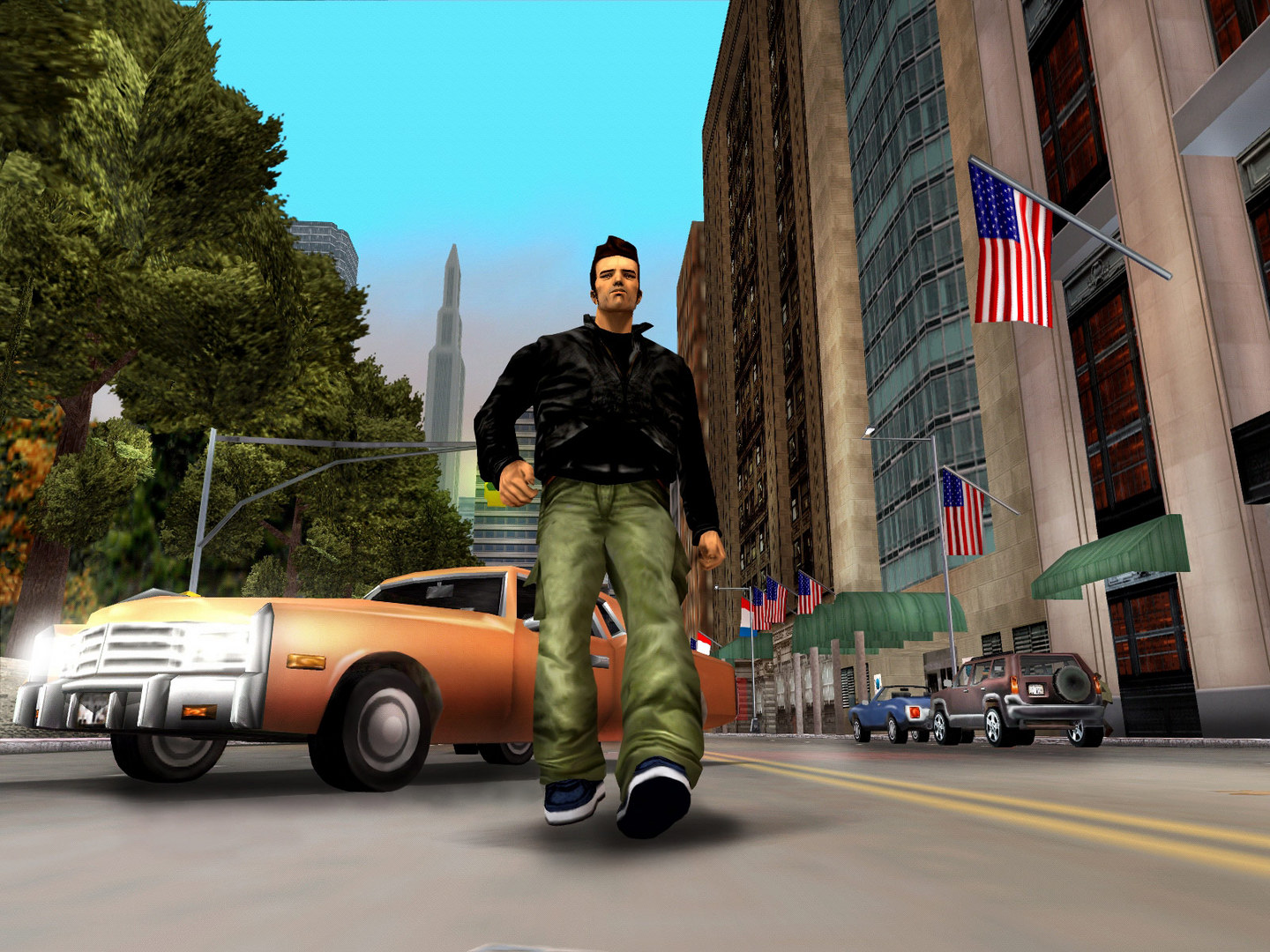
GTA III was the first game made under that arrangement. It moved the series into 3D, and with it the living city DMA had been after since 1995 finally came to life. Its New York was a movie New York as well: Sam cited Heat, The Sopranos and Goodfellas as influences, and the team borrowed from Taxi Driver and The Warriors.
Its release was scheduled for early October 2001, a game set in a version of New York and made by a company based in Manhattan. September 11 upended that, as it upended most things that autumn. Rockstar delayed the game three weeks and went through it carefully. Police cars got new paint so they no longer resembled the NYPD’s. A plane’s route was moved so it no longer passed behind the skyline. A mission that referred to terrorists was cut, some radio chatter came out, and the cover art was replaced. Houser said the edits were cosmetic, and that “it was our duty to finish it.”
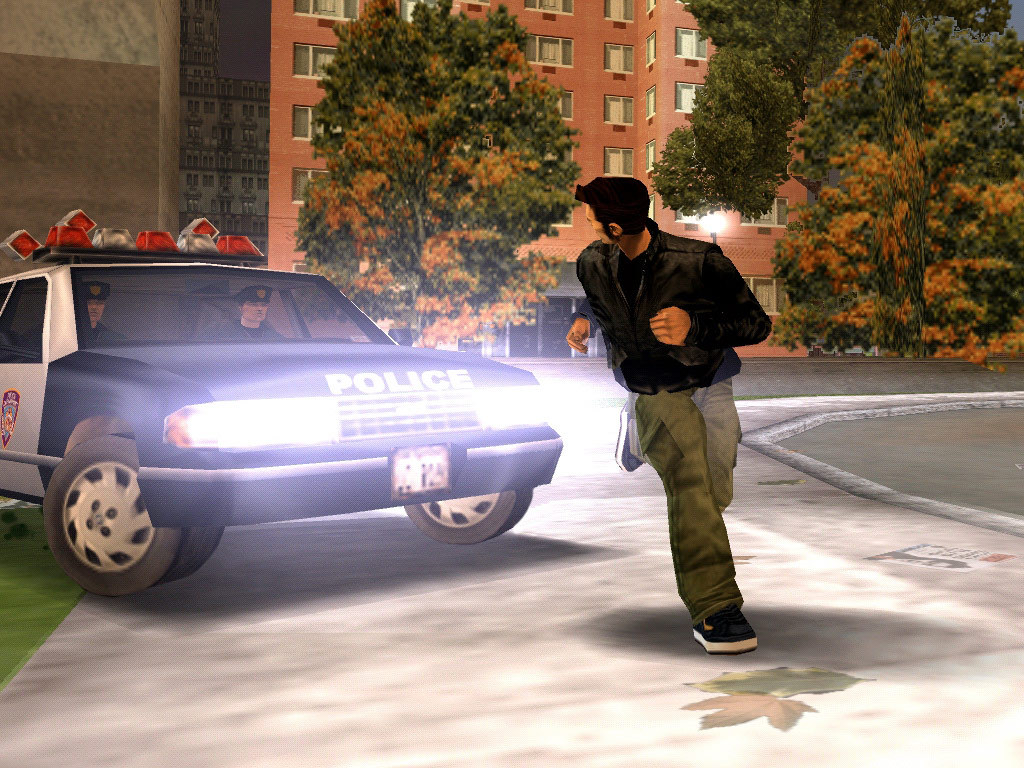
When GTA III finally came out on October 23, 2001, reviewers struggled to find comparisons. Its Metacritic score was 97, and not one of the reviews tallied there was negative. The Official U.S. PlayStation Magazine gave it full marks and called it “the most innovative, outlandish, brilliant video game I’ve ever seen.” GameSpot, Eurogamer, the Golden Joystick Awards and the Game Developers Choice Awards all named it Game of the Year.
It sold, too. Despite arriving with only about two months of 2001 left, it finished the year third in American game sales, behind three versions of Pokémon counted together and two console versions of Madden counted together. In those two months it moved nearly 2 million copies, about $99 million worth. Worldwide sales reached 6 million in the first year, and it spent more than a year in Britain’s top ten. The M rating, meant to keep it from anyone under 17, did little to slow down teenagers.
It also reshaped the medium. “It would be no exaggeration to say that GTA III changed the industry,” according to Bethesda’s Todd Howard, the director behind Skyrim and Fallout. Open-world games as we know them start there.
It would be no exaggeration to say that GTA III changed the industry.
That was the beginning. In the quarter century that followed, GTA turned into something bigger than a hit series: a mirror held up to America that could be very funny and very uncomfortable at once, and that ended up mattering far more than anyone would have expected from a game about stealing cars.
Chapter 2: Entertainment and American Morality
Morality fights in America have a way of running through popular culture. When adults start worrying about the young, they look at what the young are watching, reading, hearing or playing, and the arguments that follow capture what scared the country at that moment and where it chose to point the finger. GTA sat at the center of one of the biggest of those arguments for about two decades. The script was old by then. Some authority declares a new medium a danger to children, senators convene hearings, and the industry regulates itself before the government can.
Comics, records, controllers
In 1954 the medium was comic books, and the venue was a Senate subcommittee investigating juvenile delinquency. Its star witness, the psychiatrist Fredric Wertham, offered this: “I think Hitler was a beginner compared to the comic-book industry. They get the children much younger.” William Gaines, a comics publisher, appeared that same week, and Senator Estes Kefauver confronted him with one of his own covers, describing “a man with a bloody axe holding a woman’s head up which has been severed from her body.” Was that in good taste? “Yes sir, I do,” Gaines said, “for the cover of a horror comic.”
Within months, the industry adopted the Comics Code, which kept “horror” and “terror” out of titles, banned vampires and werewolves, and required that crime never pay. Gaines shut down his horror books and, to get out from under the code, turned Mad from a comic into a magazine.
Three decades later the target was rock. The Parents Music Resource Center, founded in 1985 by Tipper Gore and Susan Baker, the wives of a senator and the Treasury secretary, drew up the “Filthy Fifteen,” songs it found objectionable for their sex, violence, drug references or occult themes. Prince’s “Darling Nikki” topped the list. When the Senate Commerce Committee took up rock lyrics at a hearing that year, Frank Zappa came to object: “If it looks like censorship and it smells like censorship, it is censorship, no matter whose wife is talking about it.” The labels headed off legislation by accepting a Parental Advisory label, which ended up selling records more often than it stopped anyone from buying them.
Video games got their turn in December 1993, when two senators, Joe Lieberman and Herb Kohl, convened hearings built around two titles. One was Mortal Kombat, whose fatalities let a fighter rip the heart or spine from a beaten opponent. The other was Night Trap, in which vampires invade a sleepover. “Few parents would buy these games for their kids if they knew what was in them,” Lieberman said. The two big console makers treated the hearings as a chance to score points off each other. Nintendo had removed the blood from its version of Mortal Kombat, while Sega had published Night Trap, and Nintendo’s Howard Lincoln told the senators that “Night Trap will never appear on a Nintendo system.” Kohl set a deadline: “If you don’t do something about [content ratings], we will.” The industry responded with a ratings body of its own, the ESRB, which issued its first ratings in September 1994.
Different medium. Familiar argument.
- 1954COMICS
Senate hearings. The Comics Code follows.
- 1985MUSIC
The PMRC. The Parental Advisory label.
- 1993GAMES
Senate hearings. The ESRB follows.
- 2005GRAND THEFT AUTO
Hot Coffee. An Adults Only rating.
- 2011THE SUPREME COURT
Games gain the protection of books and film.
When games took the blame
Soon games were being blamed for actual deaths. In December 1997, a 14-year-old at Heath High School in West Paducah, Kentucky, fired on a student prayer circle and killed three classmates. Their families sued Nintendo, Sega, Sony and the companies behind Doom and Quake, claiming the games had taught him to aim and fire without teaching him not to kill. The suit was dismissed, and in 2002 a federal appeals court held that making game companies liable for a player’s actions could run afoul of the First Amendment.
Then came Columbine. In April 1999, two students at the high school in Littleton, Colorado, killed 13 people. In the search for an explanation that followed, an entirely human impulse, the news blamed bullying, goth subculture, violent games and Marilyn Manson. Within weeks President Clinton directed the FTC and the Justice Department to find out whether the film, music and game businesses were marketing violent, adult-rated products to kids. The FTC’s answer, in September 2000, was yes. Seven in ten games rated Mature were aimed at players under 17, and six in ten marketing plans for those games said so plainly. When the FTC sent 13- to 16-year-olds shopping, 85 percent managed to buy violent M-rated games or explicit music.
Putting Rockstar on trial
Earlier campaigns had gone after entire media: comics as such, rock as such, games as such. With GTA, the target narrowed to one franchise.
In 2003, in Fayette, Alabama, 18-year-old Devin Moore killed two police officers and a dispatcher and escaped in a squad car. Once caught, he was reported to have said, “Life is like a video game. Everybody’s got to die sometime.” The Miami attorney Jack Thompson, who called violent games “murder simulators,” sued on the families’ behalf for $600 million, pinning the blame on Vice City. In March 2005, 60 Minutes took the case to a national audience and asked, “Can a video game lead to murder?” The suit failed, but it foreshadowed what was coming.
What came next started with San Andreas. Rockstar had disabled a sexual minigame but left the code in the shipped game, and in June 2005 a modder in the Netherlands found a way to switch it back on in the PC version. More than a million people downloaded his patch within four weeks. Rockstar pinned it on “a determined group of hackers.” The ESRB concluded instead that the content sat on the disc “in a fully rendered, unmodified form,” and changed the rating to Adults Only, which amounted to a ban from major retailers. Walmart, Target and Best Buy took the game off their shelves.
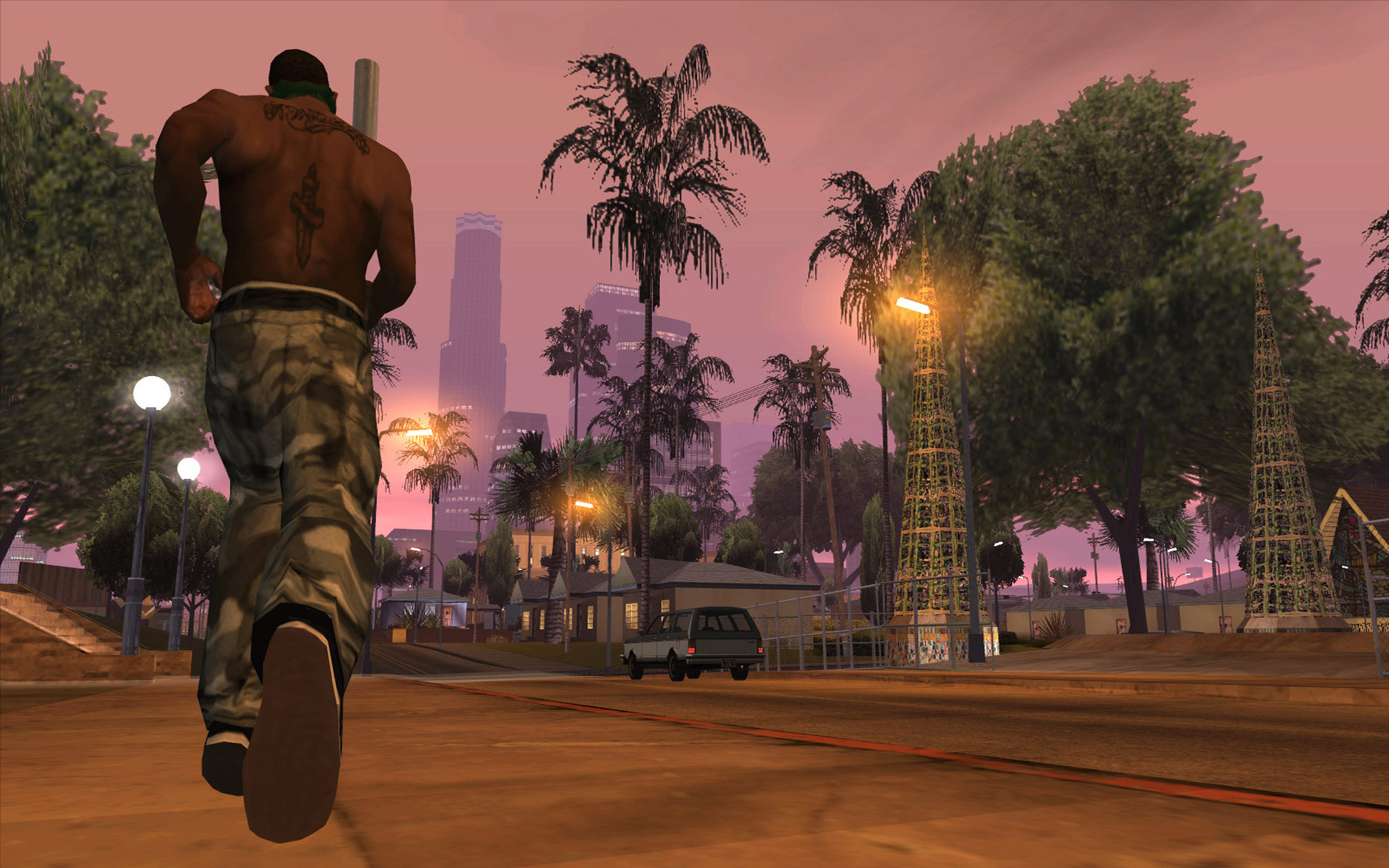
Hillary Clinton, then a senator from New York, urged the FTC to “take immediate action to determine the source of this content,” argued that parents “cannot and should not be expected to second guess” ratings, and called for a $5,000 penalty on retailers who sold violent or sexual games to minors. Such material, in her words, was “stealing the innocence of our children.” By 355 to 21, the House voted for an FTC inquiry. Take-Two and Rockstar reached a settlement with the agency in June 2006, by which point the recall had already cost Take-Two $24.5 million.
Twenty years on, Houser hadn’t forgiven any of it. As he saw it, politicians had needed “a media bogeyman” and decided that Rockstar, of all the companies on the internet, was the pornographer, a charge he found absurd, and they came close to putting the studio out of business. In 2009 he had laid out Rockstar’s side. The goal was simply to tell stories with rounded characters, he said, and he pointed to Goodfellas: “our rounded characters happen to be criminals.” Movies got away with the same thing, he argued, while games were an easier target.
Games reach the Supreme Court
Eventually the argument left the hearing rooms and talk shows and became law. As governor of California, Arnold Schwarzenegger signed a 2005 bill barring the sale of violent video games to minors. The Supreme Court threw it out in June 2011 by a 7–2 vote. For the majority, Justice Antonin Scalia held that games deserved First Amendment protection “like the protected books, plays, and movies that preceded them,” observing that “this country has no tradition of specially restricting children’s access to depictions of violence” and that Grimm’s fairy tales are “grim indeed.” Justice Stephen Breyer, dissenting, asked: “What sense does it make to forbid selling to a 13-year-old boy a magazine with an image of a nude woman, while protecting a sale to that 13-year-old of an interactive video game in which he actively, but virtually, binds and gags the woman, then tortures and kills her?” He lost, and games left the courtroom with the same constitutional standing as books and film.
“like the protected books, plays, and movies that preceded them”
Who was right is a separate question that has never been settled; it comes back every few years. For seventy-five years, Americans have conducted their moral arguments through their entertainment, and over the past twenty, the one over GTA was the biggest.
Chapter 3: How Games Got Bigger Than Hollywood
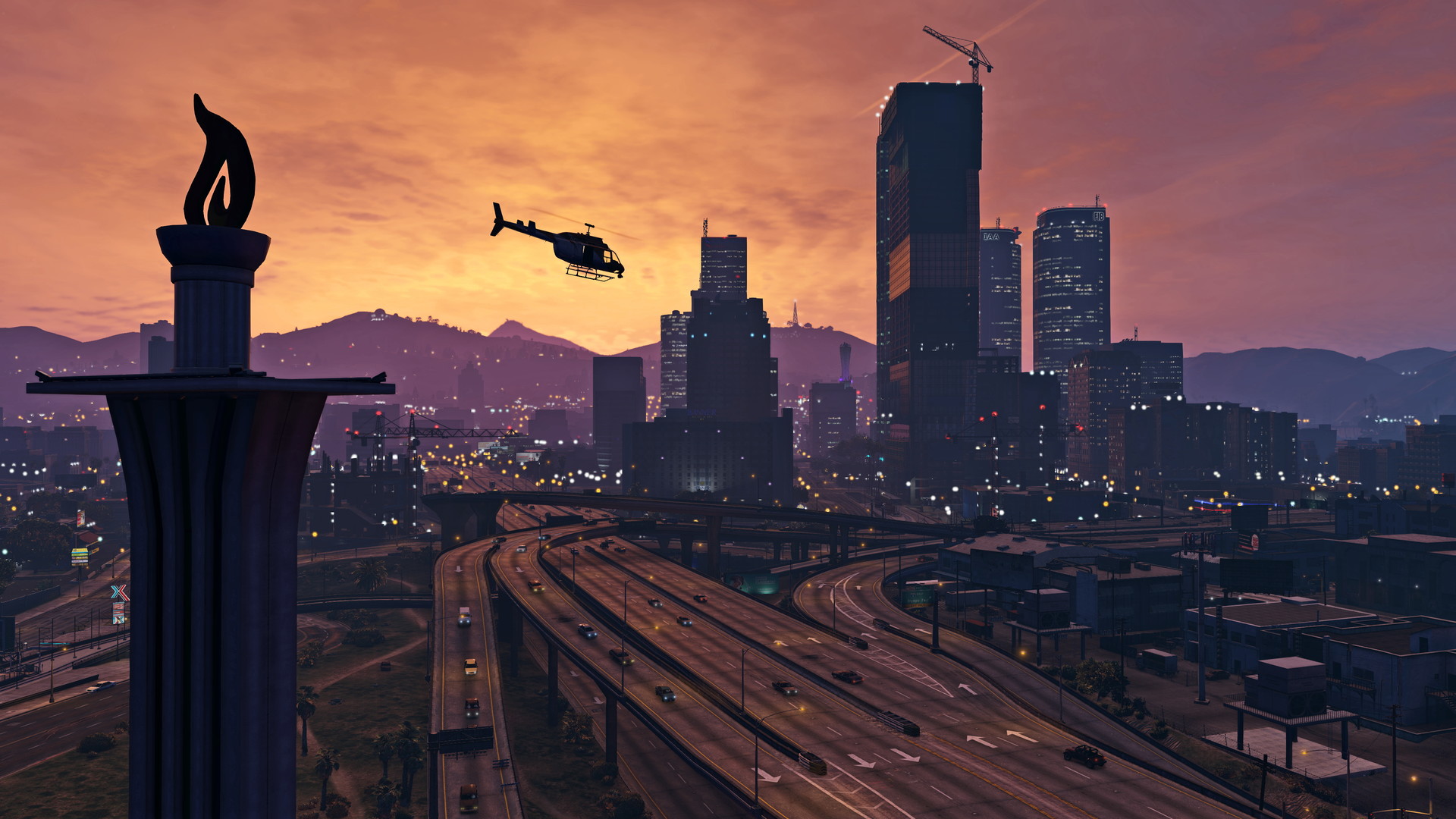
Somewhere in the middle of all this arguing about what games did to children, games stopped being a children’s medium. GTA drew most of the fire, but the growth was much bigger than one franchise. Over the quarter century after GTA III, gaming as a whole became the largest entertainment business in the world.
Global spending on games reached $201.6 billion in 2025. Cinemas worldwide took in $33.6 billion that year and recorded music $31.7 billion, so games brought in about three times as much as both combined. American players alone accounted for $60.8 billion.
Bigger than the box office.
Games also claim a meaningful slice of Americans’ leisure hours, more so for the young. The government’s time-use survey found that in 2025, Americans aged 15 and up averaged 24 minutes of gaming a day. Among 15- to 24-year-olds the figure was 53 minutes.
GTA grew with the industry and kept breaking its records. GTA IV, released April 29, 2008, took $310 million on day one and $500 million in its first week; the previous single-day high, Halo 3‘s, was $170 million. GTA V cleared $1 billion in three days. By 2018, with GTA V at around $6 billion, MarketWatch ran the headline “This violent videogame has made more money than any movie ever.”
The first 24 hours.
The family PC becomes a console
Several things drove the growth, and they fed each other. One of the biggest was that each new device people owned brought games to people who had never bought a console, first through home computers and later through phones.
Computers spread through American homes fast. Eight percent of households had one in 1984, 37 percent in 1997 and slightly more than half in 2000. Children led the way. By 1997, half of American kids had a computer at home and 71 percent of schoolchildren used one in class. Among kids with a computer at home, 83 percent used it for games, second only to educational software.
Anyone who was a kid in the ’90s knows those two categories overlapped. Plenty of children played their first computer game in a classroom, with a teacher’s blessing. Minnesota had created a statewide body to get computers into its schools, the Minnesota Educational Computing Consortium, or MECC, and after picking the Apple II in 1978, it bought enough of them to turn into Apple’s biggest reseller. MECC’s best-known title, The Oregon Trail, had students lead wagon trains west and is remembered mostly for informing them that they had died of dysentery. Its Apple II version arrived in 1985, and the franchise has sold more than 65 million copies. Mavis Beacon Teaches Typing, launched in 1987, is said to have taught 6 million schoolchildren to type by 1998.
Back at home, the family PC was becoming a game console by another name. Microsoft bundled Solitaire with Windows 3.0 in 1990 in part as a mouse tutorial, since dragging cards trained people to drag files. By Microsoft’s own usage data, it became one of the three programs people opened most. Then came Myst. Released on CD-ROM in 1993 for grown-ups who didn’t think of themselves as gamers, it was quiet and exploratory, a puzzle box that gave up its mystery slowly. No CD-ROM game had sold 2 million copies before it, and it persuaded plenty of families to buy a computer with a CD-ROM drive. The SimCity games and The Sims came next and took over. The Sims led all computer games in sales in 2000 and 2001, and in 2002 it overtook Myst as the best-selling PC game ever.
Families without a console had another way in. Games were earning Blockbuster around $150 million a year by 1990, about a tenth of its revenue, and by the mid-’90s rental chains were renting the consoles too, so a household could test a system over a weekend before committing.
From the LAN party to Fortnite
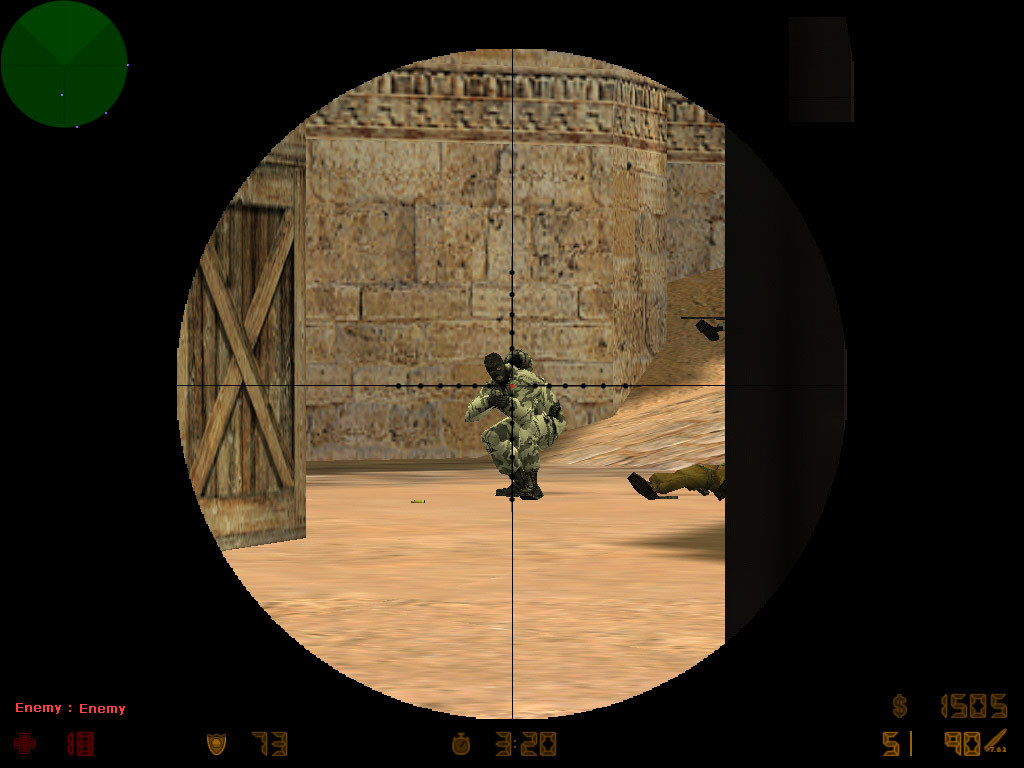
Computers also started linking players together, first on office and campus networks, a preview of what online play would become two decades later. Doom arrived in December 1993 with its first episode free to share, and players networked their machines to stalk one another through its corridors, jamming company and university systems in the process. id Software’s announcement had predicted exactly this, promising the game would be “the number one cause of decreased productivity in businesses around the world.” By the late ’90s, teenagers were lugging desktop towers to a friend’s basement and cabling them together for StarCraft and Counter-Strike, a ritual that lasted until home broadband let everyone play from their own bedroom.
In the late 2000s and 2010s, the iPhone repeated what the PC had done, putting games in the pocket of everyone with a smartphone. The App Store opened in July 2008 and logged 10 million downloads in three days, which Steve Jobs called “a grand slam.” Games took off almost immediately. In 2009, US sales of iPhone games came to roughly $500 million, close to a fifth of everything Americans spent on portable games. Angry Birds demonstrated the new reach of a hit, topping a billion downloads by May 2012. Phones and tablets now take in more than half of all global spending on games, and close to 3 billion people play on them.
Games also turned into where kids gather, the role malls once played. Pew found as early as 2008 that 97 percent of American teens played games and that for most, “gaming is a social activity and a major component of their overall social experience.” In 2024, 85 percent of teens were playing, 89 percent of them with others, and almost half had made a friend through a game.
Fortnite built a business on hanging out. The free battle royale mode launched in September 2017, and within a year the tech writer Owen Williams was calling it “the coveted ‘third place’” for millions, a gathering spot apart from home, school and work. In a 2019 survey, 40 percent of Americans aged 10 to 17 played it weekly, and it took up a quarter of those kids’ free time. Concerts followed. In February 2019, 10.7 million people were inside the game at once for a Marshmello set, and on April 23, 2020, a month into lockdown, 12.3 million showed up for Travis Scott. Netflix had already named the threat. “We compete with (and lose to) Fortnite more than HBO,” it wrote to shareholders in January 2019.

We compete with (and lose to) Fortnite more than HBO.
Even watching became a business
Watching games became a business of its own. Amazon paid close to $1 billion for Twitch in August 2014; in the preceding month, more than 55 million people had streamed over 15 billion minutes on the site, nearly all of it gaming. YouTube reported in 2020 that viewers watched 100 billion hours of gaming content a year across more than 40 million channels. And this year game-watching arrived on Netflix, through the one franchise you’d expect. Grand Theft Auto VI: An Extended Look, a 27-minute preview, premiered on August 27 in what Netflix called “a first-of-its-kind partnership.” It logged 31.1 million views in four days, more than any other title on the service that week, and topped the charts in 87 of the 93 countries Netflix tracks.
Through all of this, games kept finding audiences beyond the stereotype. Myst pulled in casual players. EA reported in 2002 that women made up more than half of new Sims players. Nintendo designed the Wii for people who had never played games; if the controller worked like a TV remote, its president Satoru Iwata reasoned in 2006, “these nongamers would play also.” Wii Bowling was a fixture in retirement homes within a year, and the portion of over-50 Americans who played games rose from 9 percent in 1999 to 24 percent in 2007. Players also aged in place. The average American gamer is 37 now, compared with 29 twenty years ago, and most are 35 or older.
The next generation plays for free
Still, the business isn’t standing still, and there are early signs of change. Young adults are spending differently. Sales data cited by The Wall Street Journal showed Americans 18 to 24 cutting game spending by almost a quarter in early 2025 from a year before, while no other age group cut more than 5 percent. Matthew Ball, the media analyst, found in his yearly industry report that the largest gaming markets were “losing in the War for Attention” to short-form video, sports betting, prediction markets and AI apps.
Kids who do play aren’t buying $80 console releases. They play free games on phones and on Roblox, and when they want GTA, they make their own. Roblox’s GTA-style experiences, including Brookhaven, Jailbreak and outright knockoffs like Grand Treat Auto V, have more than 100 billion plays between them. “The players who aren’t old enough to buy it will simply build it themselves,” observed Joost van Dreunen, an NYU professor who studies the games business.
Building it is getting easier by the month. The week this episode was recorded, Anthropic released Fable 5.2, and the thing people couldn’t stop talking about wasn’t slick game demos. It was finished, playable games. Chapter 6 picks that up.
Before that, there’s the other money in GTA: the money its characters chase, and what the series says about the American dream as those ambitions get smaller.

Chapter 4: The Shrinking American Dream
At its core, GTA tells a very particular American dream story. It grows out of the gangster films its makers grew up on, in which crime is a business and the mobster is a self-made entrepreneur. Houser said in 2025 that Goodfellas was “almost like an open-world game in some ways.”
Few figures in American popular culture are older than the outlaw entrepreneur. The gangster films of the early ’30s, Little Caesar and Scarface among them, presented the criminal’s life as a climb from poverty to wealth and power. Robert Warshow argued in 1948 that these films were really about American success, with the twist that “the successful man is an outlaw.” The Godfather turned organized crime into a family firm, the 1983 Scarface into a rags-to-riches saga, The Sopranos into suburban drama, and Breaking Bad into the story of a chemistry teacher building an empire. GTA was entering crowded territory, and each installment offers its own version of crime as a business.
What sets GTA’s version apart is how it changed. From one game to the next, the criminal’s dream grew darker and narrower, until survival was most of what was left. Rockstar may have intended it as commentary, or its writers may have been absorbing the mood around them. Either way, audiences embraced the grimmer versions. GTA V, the most cynical game in the series, is the second-best-selling game in history, which may tell you something about how Americans rate their odds of getting ahead.
The empire you could keep
The early games kept to the traditional arc of rising from the bottom to the top. The original 1997 GTA scored players in dollars. Each level demanded a cash target, starting at $1 million and earned mainly through gang jobs, and the final boss rewarded you with a payday and retirement. GTA 2 didn’t change the formula. GTA III wrapped the same ascent in a story and a city. Its protagonist, Claude, is betrayed and shot by his girlfriend mid-heist and left for dead, and from there he works his way through the Mafia and the Yakuza. Rockstar’s stated aim was for players to “start out feeling poor and work to being richer.”
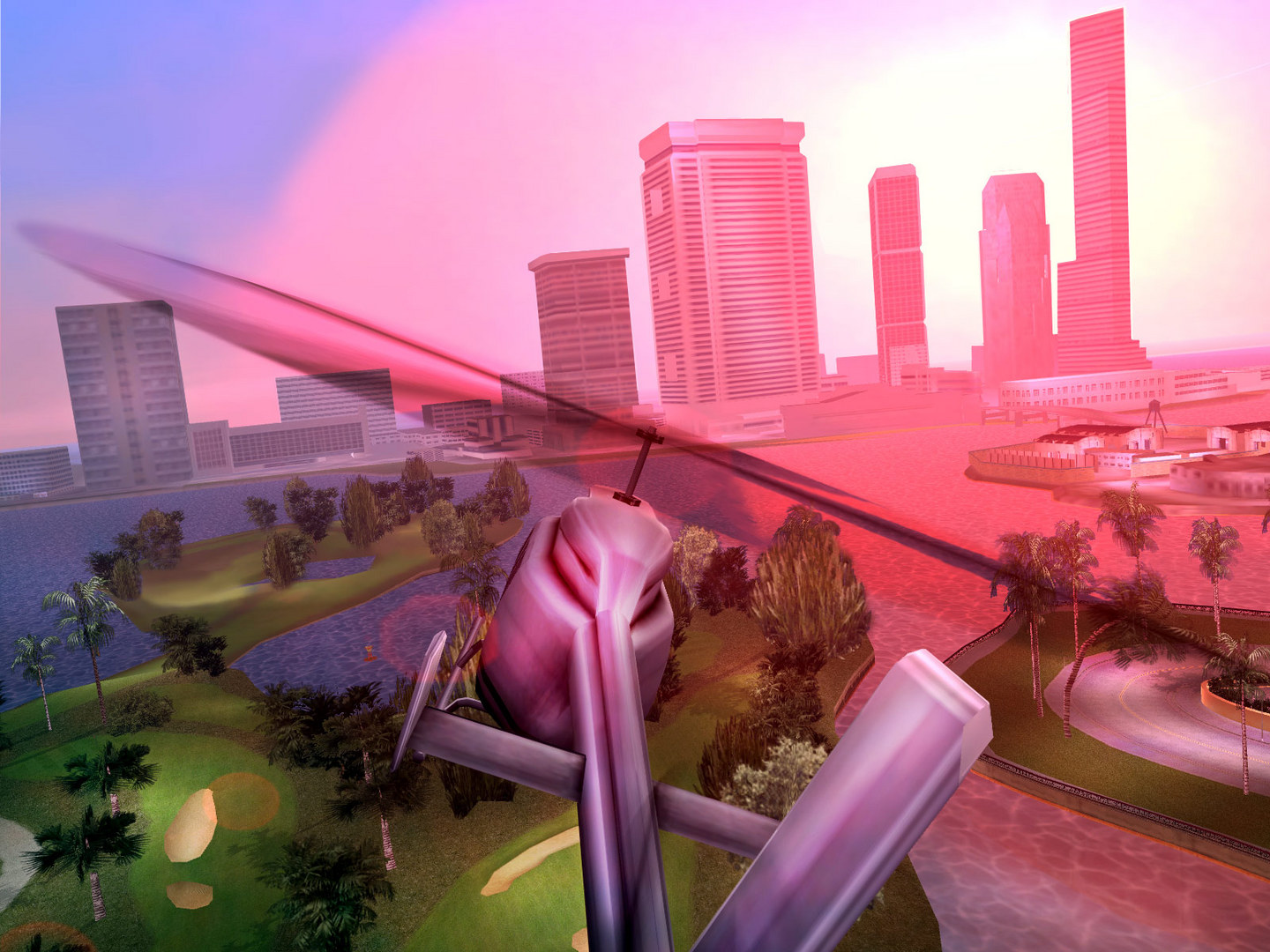
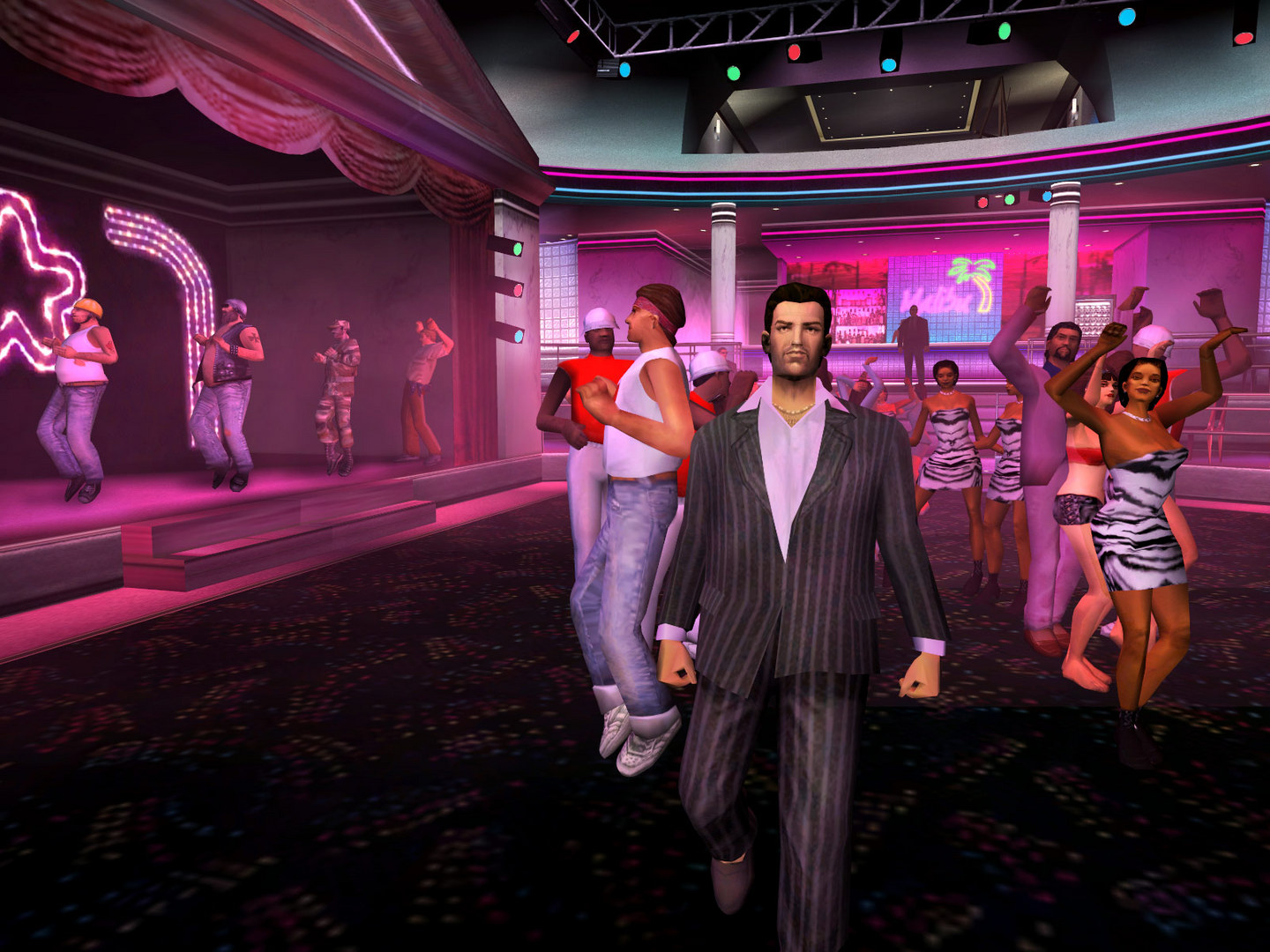
Vice City, released in 2002 and set in 1986, is where the dream peaked. Rockstar marketed it as a return to the ’80s of big hair and pastel suits, “a story of one man’s rise to the top of the criminal pile.” Tommy Vercetti leaves prison, has his first deal ambushed and his money taken, and claws his way to control of the city’s cocaine business. Vice City builds the dream into its mechanics. Tommy acquires businesses one by one (a strip club, a movie studio, an ice cream company), and each generates daily income. By the final mission the city is his.
The model was 1983’s Scarface, in which Tony Montana lands in Miami from Cuba with nothing and seizes its cocaine trade beneath a blimp reading “The World Is Yours.” Each era settles on its own aspirational figure. Recently it was the startup founder; now, more and more, it’s the solopreneur. Applications to form one-person businesses have risen more than 20 percent since early 2025, while applications from businesses expected to hire have held flat. For 1980s Miami and well beyond, the figure was Tony Montana. Hip-hop lionized his ascent and mostly skipped over his downfall. Film and game both climax in a gunfight at the hero’s mansion. Tony dies in his. Tommy survives his and keeps the city.
The America Niko was promised
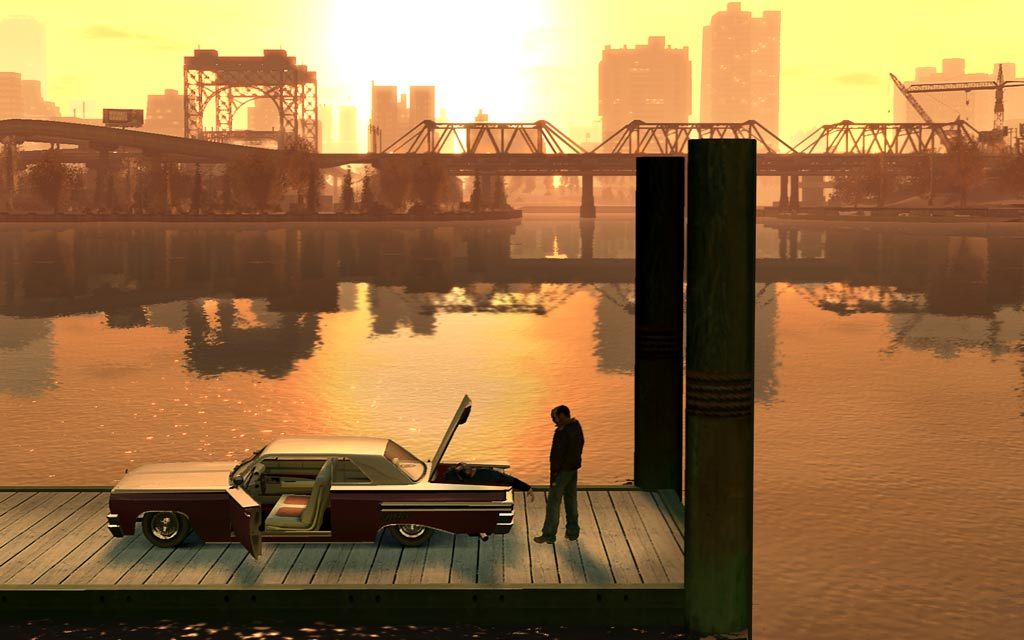
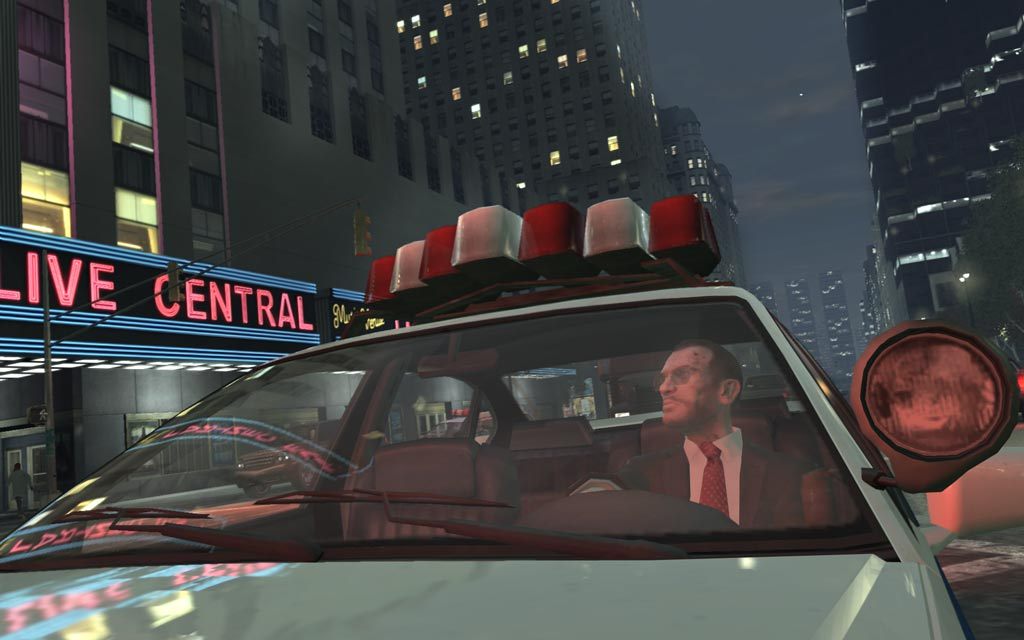
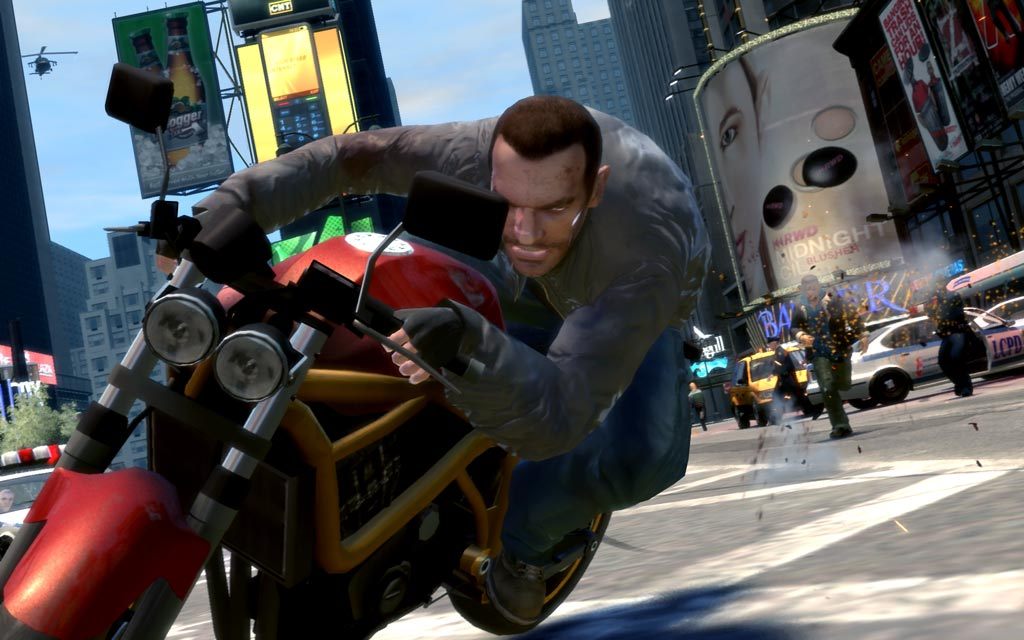
GTA IV engages the American dream most directly, by making its protagonist an immigrant, the original version of starting with nothing. Rockstar printed the question on the box: “What does the American Dream mean today?” Niko Bellic, newly arrived from Europe and a veteran of the Yugoslav wars, hopes it means leaving his past behind. Houser said in 2008 that the team was after “someone who felt tough but also like an alien.”
The game is built on the distance between the America Niko was promised and the one waiting for him. He comes partly on the strength of cousin Roman’s letters, full of “riches, women, sports cars, mansions and luxury.” What he finds is Roman in a cramped apartment, running a struggling cab company and in debt to loan sharks over his gambling. Critics saw GTA IV as the first game in the series to take seriously how far the dream really extends to people who weren’t born here.
Its timing colored how it was received. Rockstar wrote GTA IV before the financial crisis and released it during one, and the match isn’t entirely accidental, because the strain was visible while the game was in production. Homeownership, for most families the core of the dream, topped out at about 69 percent in 2004. New Century, the largest independent subprime lender in the country, collapsed into bankruptcy in April 2007. GTA IV hit stores on April 29, 2008, six weeks after Bear Stearns failed and was absorbed by JPMorgan in a Fed-supported rescue. That September, Lehman Brothers went under with $639 billion in assets, the biggest bankruptcy the country had ever seen. Roman’s version of the dream was built on lies and borrowed money, and so was much of America’s: millions of families had bought homes with mortgages they had no way to repay. Ever since, critics have filed GTA IV under recession games. John Wills, a scholar of American studies, wrote that its bleakness suited a world “freefalling” into recession, preoccupied as it was with debt, hard living and the difficulty of moving up.
A game arrives in a crisis.
- APR 2007NEW CENTURY
The subprime lender files for bankruptcy.
- MAR 2008BEAR STEARNS
A rescue and sale to JPMorgan.
- 29 APR 2008GTA IV
Niko Bellic arrives in Liberty City.
- SEP 2008LEHMAN BROTHERS
The largest bankruptcy in US history.
Once the crash hit, the country’s question changed from how to get ahead to who would pay for the wreckage. Congress approved a $700 billion bank bailout in October 2008. That rescue, and the sense that almost no one responsible faced any consequence, fueled furious movements on both the right and the left. The right produced the Tea Party. On the left, Occupy Wall Street pitched its tents in Zuccotti Park, steps from Wall Street, in September 2011, declared “We are the 99%,” and spread to cities nationwide. Their goals had little in common, but they shared a grievance: the people who caused the crash were bailed out, and hardly anyone was held to account.
No legitimate way up
Rockstar released GTA V‘s first trailer on November 2, 2011, with Occupy’s encampment still in place. The game pulled back from one man’s ordeal to look at a whole society, and at how a time, an economy and a culture box in what any individual can achieve. GTA IV showed the dream failing one immigrant. GTA V shows it failing everybody, with so little room left to rise that hustle alone can’t get anyone there. That was deliberate, Houser said. They wanted the mood of the years after the crash, which fit a game about robbing banks, and he described the result as “the endpoint of the American dream.”
The three playable leads each occupy a different corner of post-crash America, and none of them has a legitimate route up.
Michael is the success story. He escaped his criminal career by betraying his crew in a secret arrangement with a federal agent and settled into a mansion in Rockford Hills, the game’s stand-in for Beverly Hills. His wife and children despise him, and his therapist, whom he pays well, barely listens. What he has is also easily lost. In a burst of fury he tears down a house that belongs, it turns out, to a cartel boss’s mistress, and the $2.5 million he suddenly owes sends him back to robbing.
Franklin is young and trying to escape. His job is repossessing cars for a dealership later investigated for loan scams and predatory financing, which means hauling away vehicles from people who fell behind on payments. The whole post-crash economy fits inside that one job.
Trevor checked out entirely. He lives armed to the teeth in a desert trailer, cooking meth and running guns and answering to no one, the self-sufficiency fantasy of a life without bosses, government or rules. Up close, the game suggests, that fantasy looks like a psychopath living in a trailer. Houser described Trevor as “driven purely by desire, resentment, no thought for tomorrow whatsoever,” and summed up the trio as Michael, “ego gone wild,” Franklin, “naked ambition,” and Trevor, “the id.”
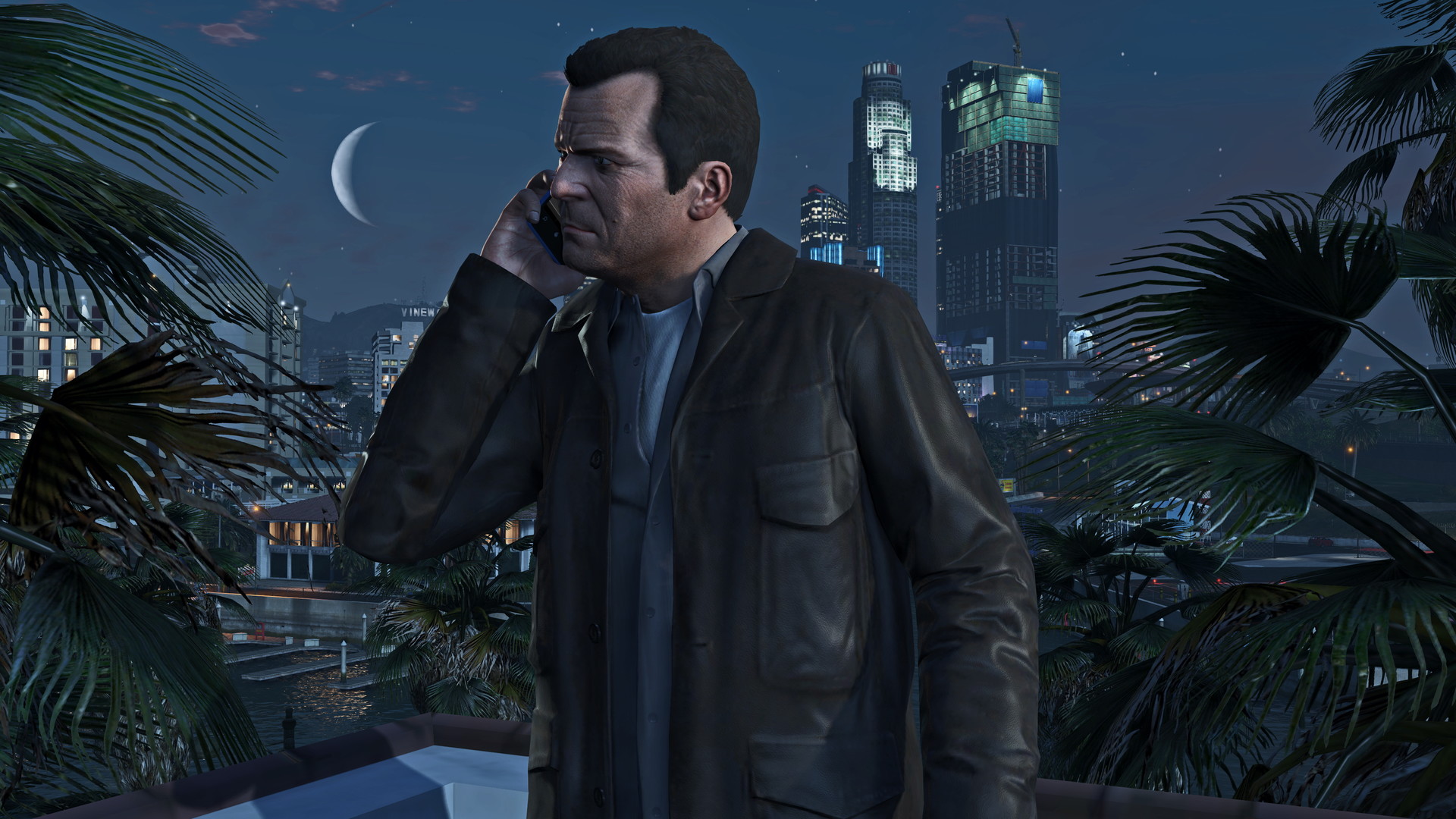
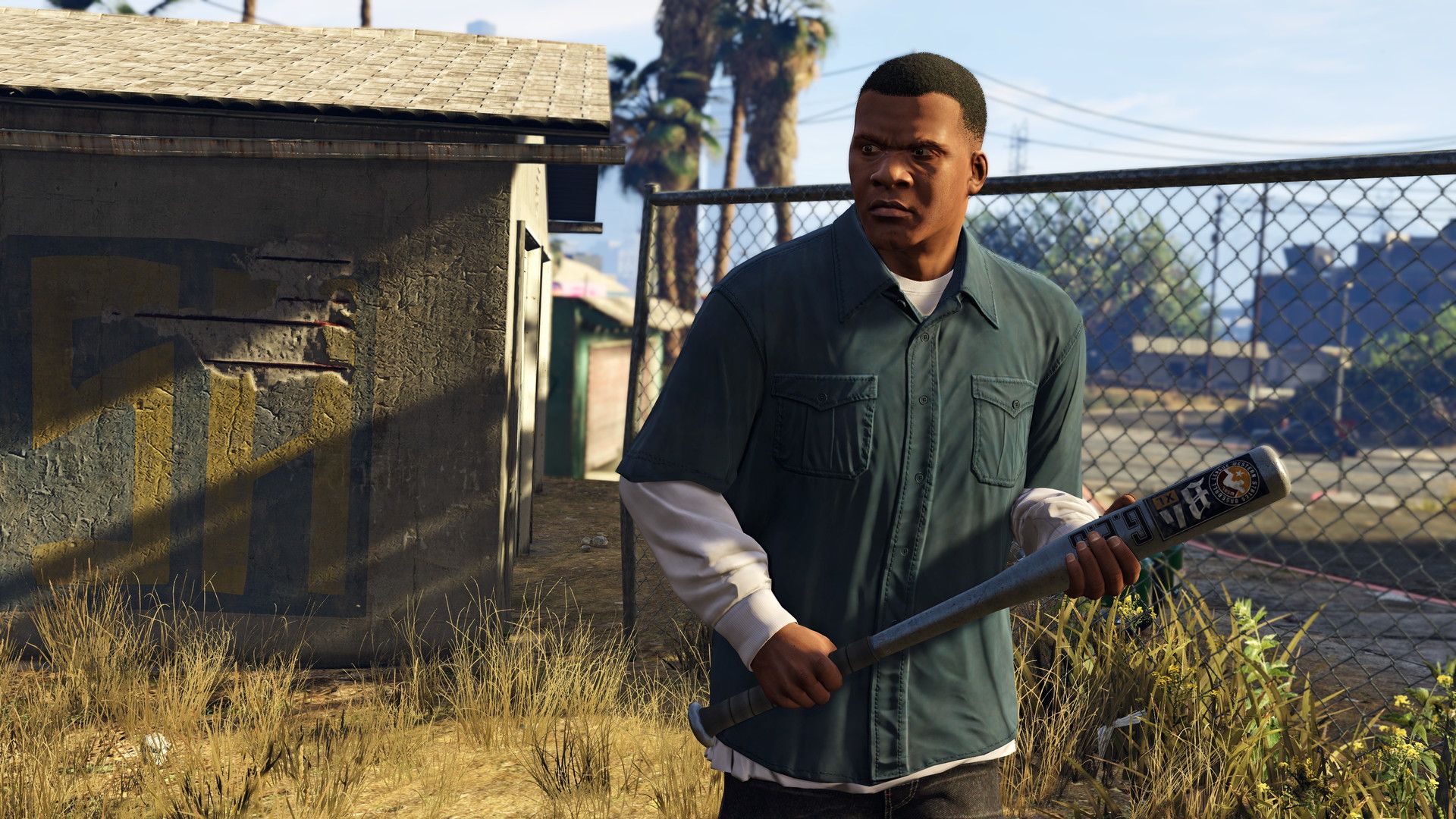
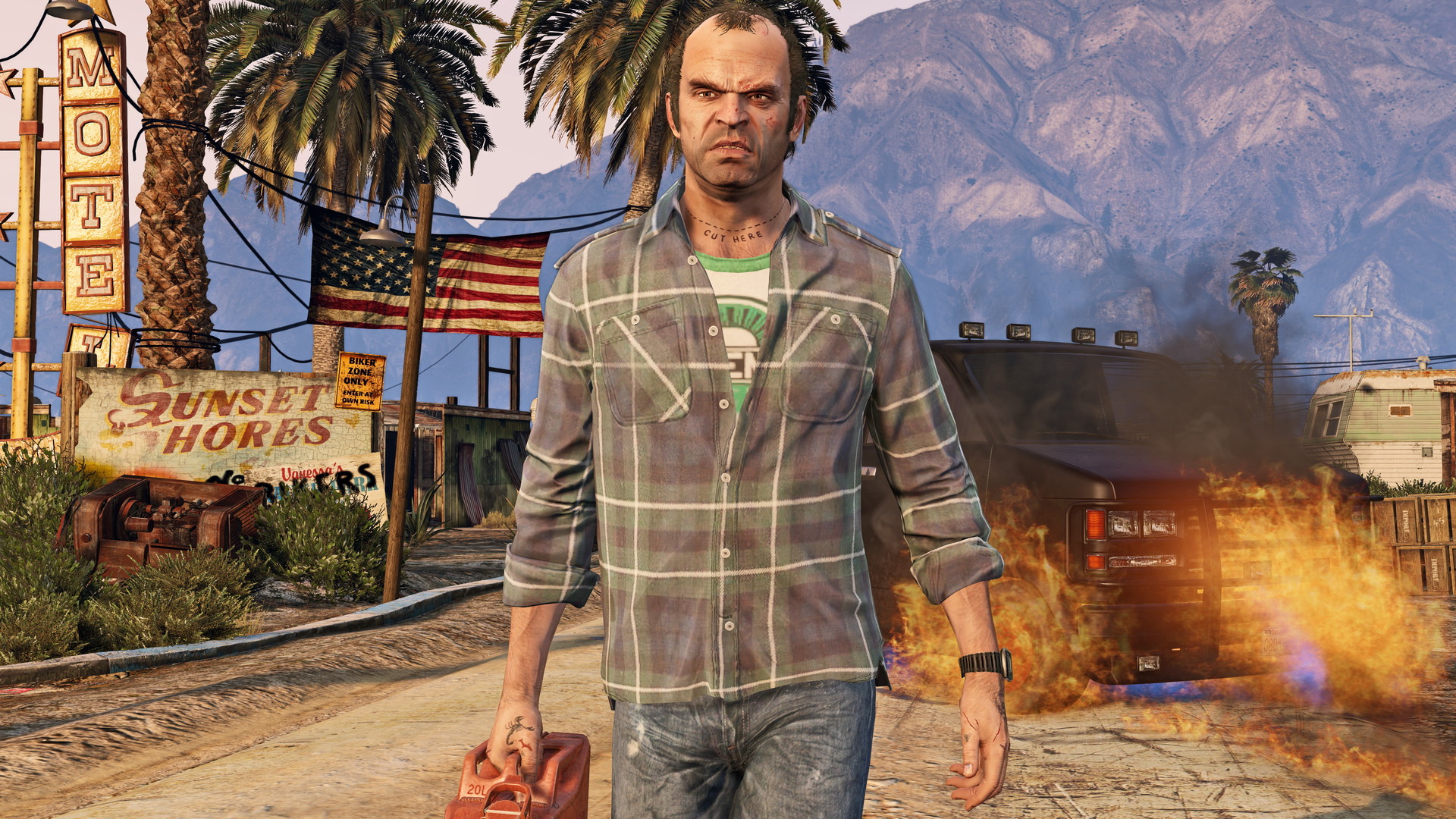
Nobody in GTA V escapes by building a business; there’s no Montana-style empire to be had. The exit is a single enormous robbery. The final heist, “The Big Score,” takes roughly $200 million in gold from the Union Depository, the game’s version of the Federal Reserve Bank of New York. Half a decade after the bank bailouts, the richest prize in the game sits in the Fed’s vault.
Just get out alive
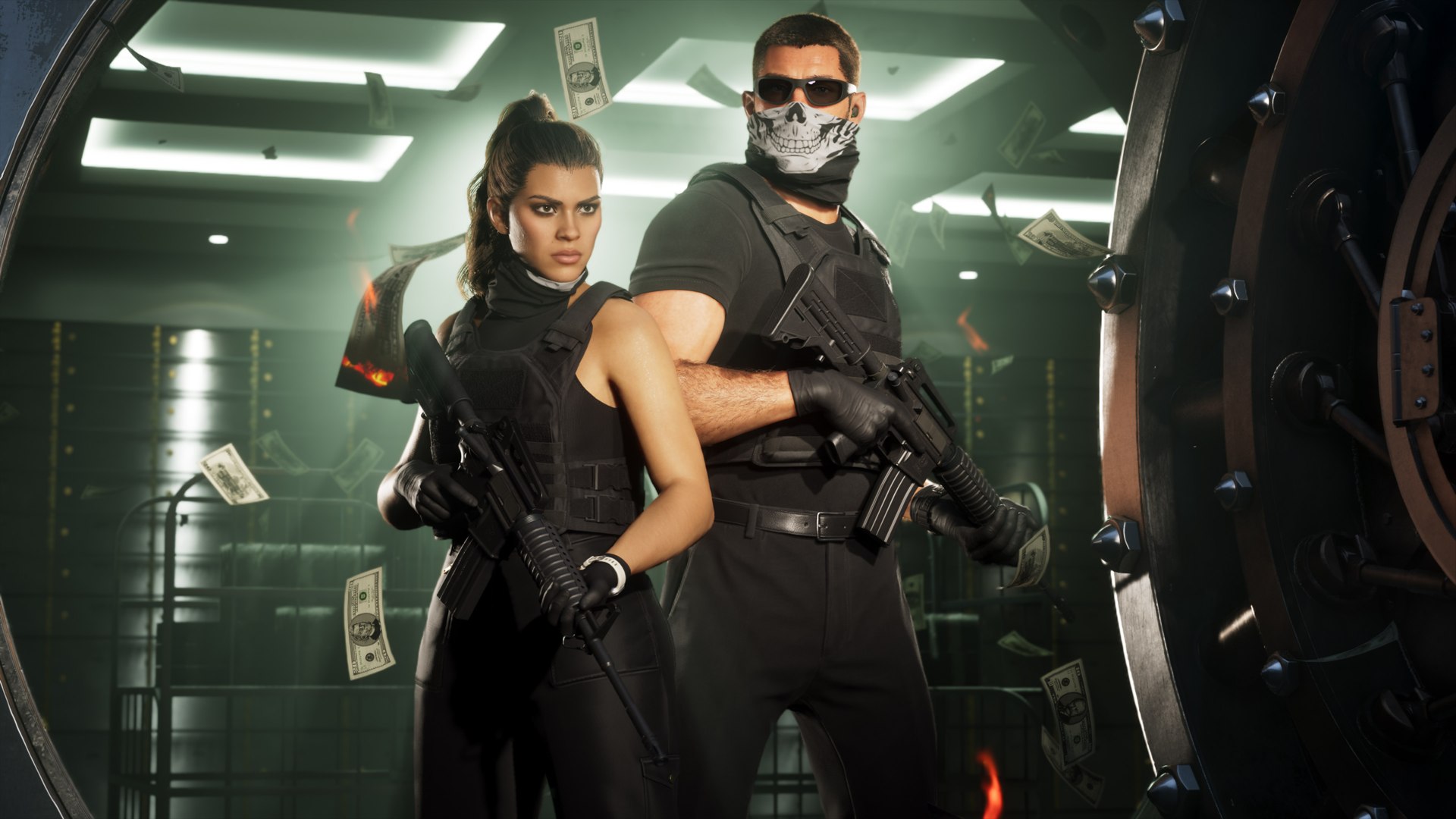
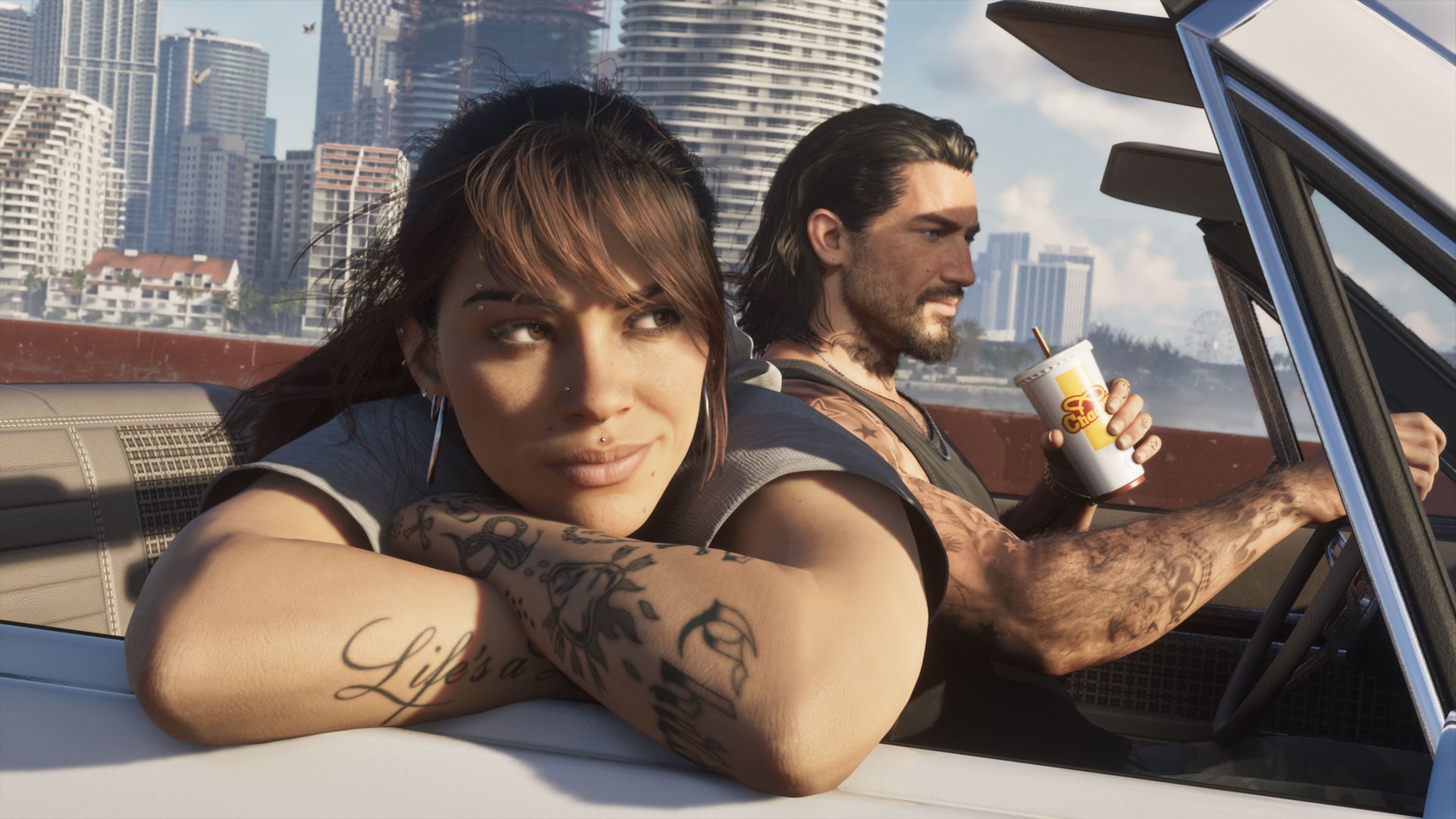
GTA VI returns to Vice City. Tommy Vercetti built his empire there in 2002, in a game set in 1986. Forty years later, in 2026, its protagonists, Jason and Lucia, are just trying to stay alive in it. According to Rockstar, the pair “have always known the deck is stacked against them,” and after an easy job goes bad they’re caught in a criminal conspiracy in the sunniest place in America, depending on each other to get out alive. Their ambitions are modest. Jason, as Rockstar puts it, “wants an easy life, but things just keep getting harder.” Raised around grifters, he enlisted in the Army to leave his adolescence behind, then drifted back to the Keys to do jobs for local drug runners. Lucia did time for fighting for her family and wants the comfortable life her mother always hoped for.
The empire builder hasn’t disappeared from the series; he’s been demoted. Boobie, a Vice City native, turned his street past into a business empire, but he’s a supporting character. In Vice City you were that man. In GTA VI, you’re two young people scraping by.
Across thirteen years, the dream at the center of GTA shrank from a retired robber in a mansion chasing one last job to a couple trying to survive.
Anyone who heard this show’s second episode, How We Made the Wrong Things Cheap, will know the mood didn’t come from nowhere. Raj Chetty and his colleagues found that roughly 90 percent of Americans born in 1940 ended up out-earning their parents, compared with about 50 percent of those born in the 1980s, the cohort that came of age playing GTA. In the year to June 2025, first-time buyers made up a record-low 21 percent of home purchases, and their median age reached a record 40. In a Pew survey this June, 89 percent of Americans under 40 said homebuying is harder for their generation than it was for their parents’. In 2023, only 36 percent still believed in the American dream, defined as the idea that hard work gets you ahead.
Out-earning your parents.
The number in the corner
A handful of themes run through all the games, and through the reactions to them.
The first is an apparent ongoing assault on capitalism, aimed at corporations and wealth. GTA V alone has a private military contractor, a social network that sells whatever it knows about its users, a billionaire who cheats his own hired help, and a stock market that players can move by assassinating a CEO. Many critics find the critique hollow. Brendan Keogh wrote in 2013 that “Grand Theft Auto V is everything it wants to mock.”
The second is populism. The series targets whoever holds power: politicians, police, federal agents, celebrities, billionaires. In the best of GTA V‘s endings, the three protagonists kill both the billionaire who employed them and the crooked federal official who had been controlling Michael. Reactions to the series have followed the same lines. For a quarter century its loudest critics have been powerful people, and it kept growing regardless. Political hostility has never cost it any players.
The third is the climb. Four months before GTA V launched, in May 2013, Game of Thrones aired “The Climb,” the episode in which Petyr Baelish, known as Littlefinger, says, “Chaos isn’t a pit. Chaos is a ladder.” Every GTA runs on that principle. You begin at the bottom, work for whoever pays, and use chaos to rise until you’re above the people who once gave you orders. The games ridicule those at the top and reward you for passing them.
Beneath all three sits one yardstick, and it’s money. Every GTA displays your cash on screen, and every empire in the series is measured by it. The number in the corner is the one constant across the series, and it’s the most American thing about it. Success means having more.
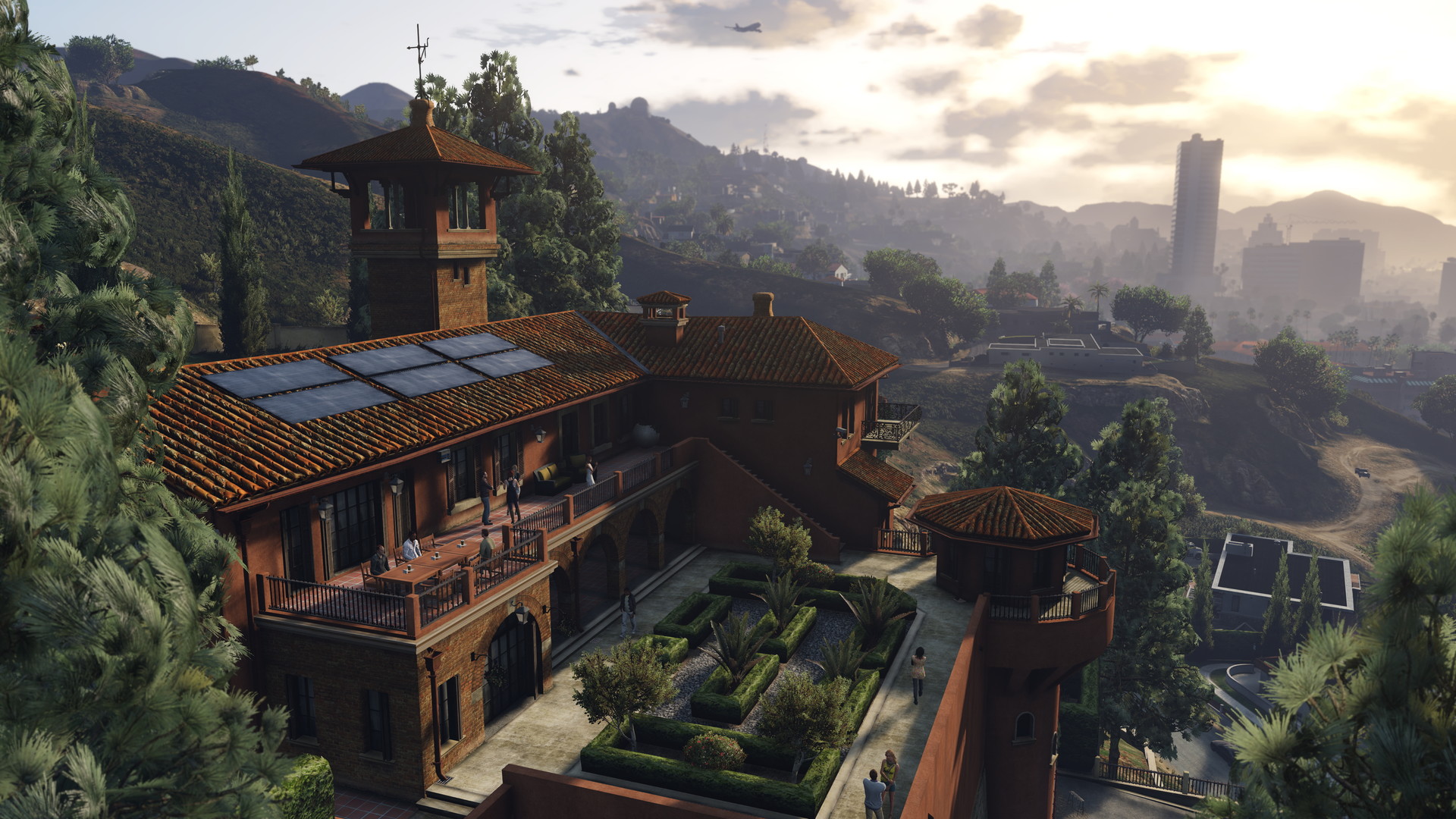
Success means having more.
Chapter 5: Too Crazy to Satirize
Whether the shrinking dream was Rockstar’s intention is open to debate, but there’s no question about the media parody. It’s the one part of GTA’s portrait of America that the company deliberately aimed for, and it did so almost from the start.
Around the tenth anniversary of GTA III, Houser said the games present America as though seen only through film and advertising, the country “as if it’s the way it’s presented in the media.” Beyond the streets, that America lives in the game’s commercials, radio programs, news broadcasts, websites and billboards. The critic Dennis Scimeca argued in Salon in 2013 that those were where the game’s heart was. He conceded that the satire was blunt and often crude enough for some critics to dismiss it as childish, and asked what it says about the society being satirized that such mockery is “not only entirely appropriate, but sadly true.”
The joke on the radio
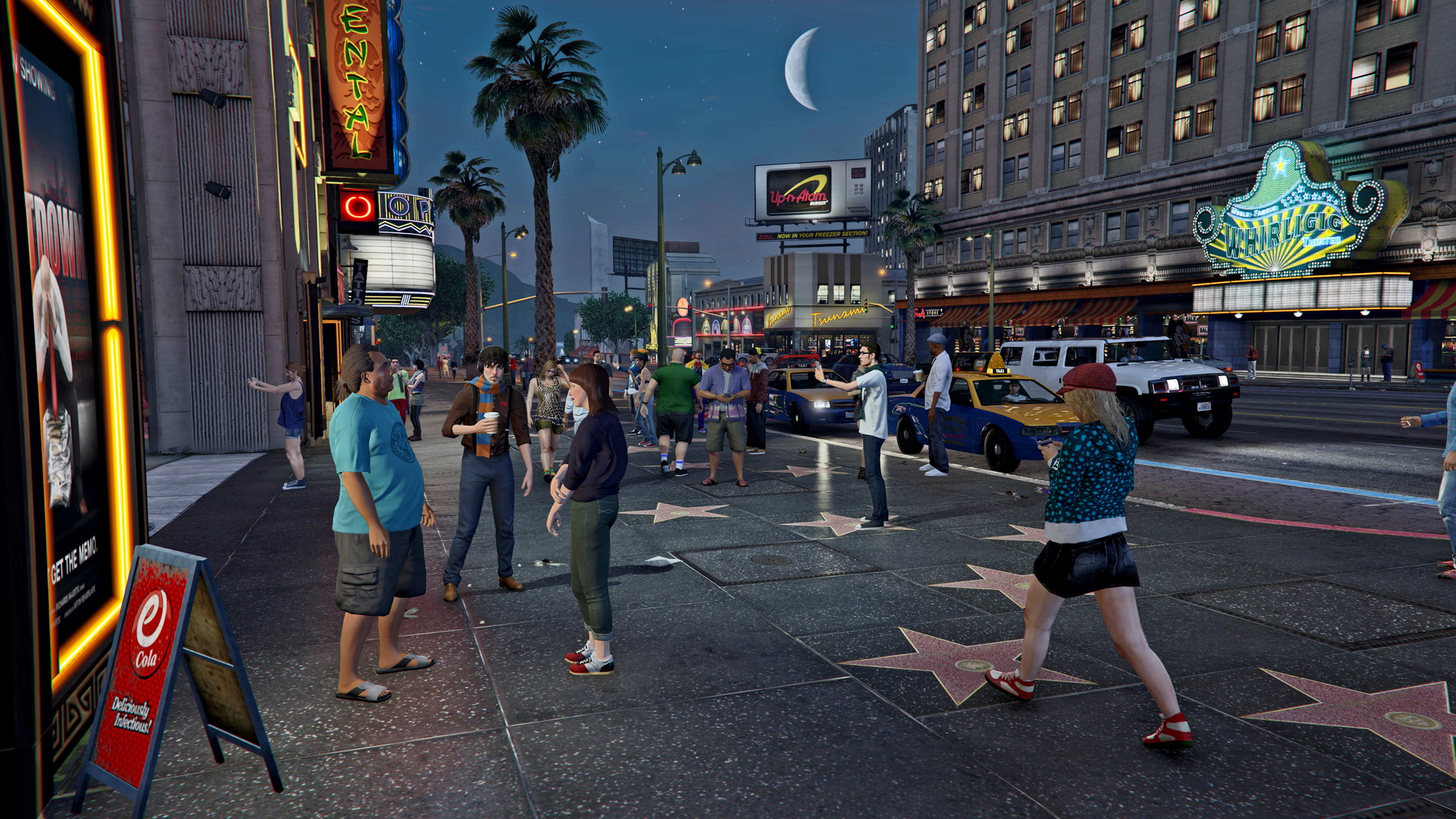
It began on the radio. The 1997 original shipped with seven stations of original music, and one of the series’ most beloved features nearly didn’t exist. The idea came from DMA’s small audio team, tucked away with little supervision and working against their employers’ wishes. By 1999’s GTA 2, radio had become a planned part of the game, with DJs and fake commercials for the likes of 3rd World Bank and Zoom Zoom nasal spray. By GTA III, radio carried most of the satire.
Its writer understood the real industry from the inside. Lazlow Jones hosted actual radio shows: Technofile, a tech program, from 1995 to 2007, and The Lazlow Show, first on New York radio and later on XM. Starting with GTA III, he co-wrote the in-game radio with Houser and hosted programs on it.
The most famous of those programs, GTA III‘s talk station, grew out of a turning point in American broadcasting. The FCC scrapped the Fairness Doctrine in 1987, Rush Limbaugh went into national syndication the following year, and political talk radio grew into a major power in American media. Chatterbox, with Lazlow as host, inverted the formula. Real talk radio casts the host as the provocateur. On Chatterbox, Lazlow is the lone voice of reason and the callers are the entertainment, like the one who insisted that “Guns don’t kill people, death kills people!”
CHATTERBOXFM
“Guns don’t kill people, death kills people!”
A station for every grievance
For GTA IV, Rockstar recruited its angry callers from the public. In July 2007 it set up a phone line and invited people to vent about their lives and the world, including “what’s wrong with America, or what’s wrong with them.” The game also gave each side of politics a station of its own. WKTT, “We Know The Truth,” was the conservative talk outlet. PLR, the NPR stand-in, carried the tagline “The liberals are fighting back, and this time, it’s personal,” and one PLR show starred an actor who takes up progressive causes mostly for the publicity, alongside a child genius brought up as a showcase of liberal parenting who has grown into an elitist. The point of having both was never the policy positions of either camp. It was the product: partisan media selling listeners the pleasure of being right.
Cable news got the same treatment. GTA IV‘s Weazel News, generally understood as its Fox News, used the slogan “Reporting the right news.” In GTA V, the slogan became “Confirming your prejudices.”
By 2013 the media had a new heavyweight, and GTA V went after social media too. Its Facebook was Lifeinvader, whose founder made a fortune selling a billion users’ data to corporations and the government. Some saw the joke as prophetic. It was written before Edward Snowden revealed, that summer, that the NSA was gathering data from American tech companies, and years before Cambridge Analytica and the scandals that came after it.
Reality overtakes the writers
Then the method stopped working. GTA satirized in the traditional way, by taking what American media already did and stretching it a little further, until it turned absurd. That works only as long as reality lags behind the joke. By 2018 Houser didn’t think it did. He told GQ that some of what he was seeing was “straightforwardly beyond satire.” With viral clips outdoing anything GTA could invent, he said he couldn’t tell what Rockstar would even do with the material, never mind how angry people would be at the result.
straightforwardly beyond satire.
Losing the ability to satirize a place, once the place and its media had merged, may help explain why Houser left Rockstar in March 2020. Lazlow, his partner on GTA’s fake media, followed a month later.
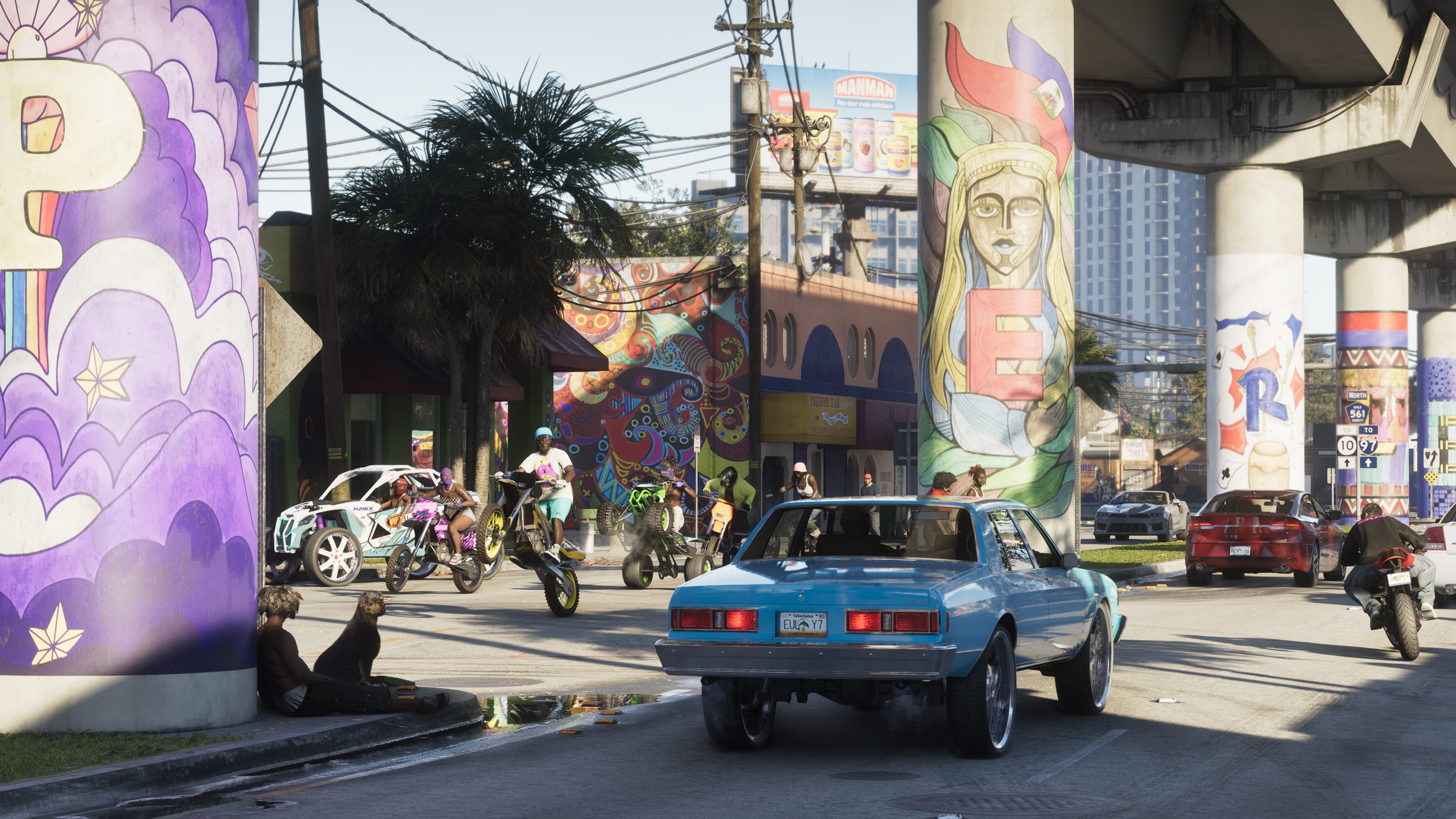
What GTA VI‘s satire will look like won’t be clear until people are playing it. Rockstar has said it is consciously staying away from direct political references, whether from decorum or just to keep its jokes from going stale before launch.
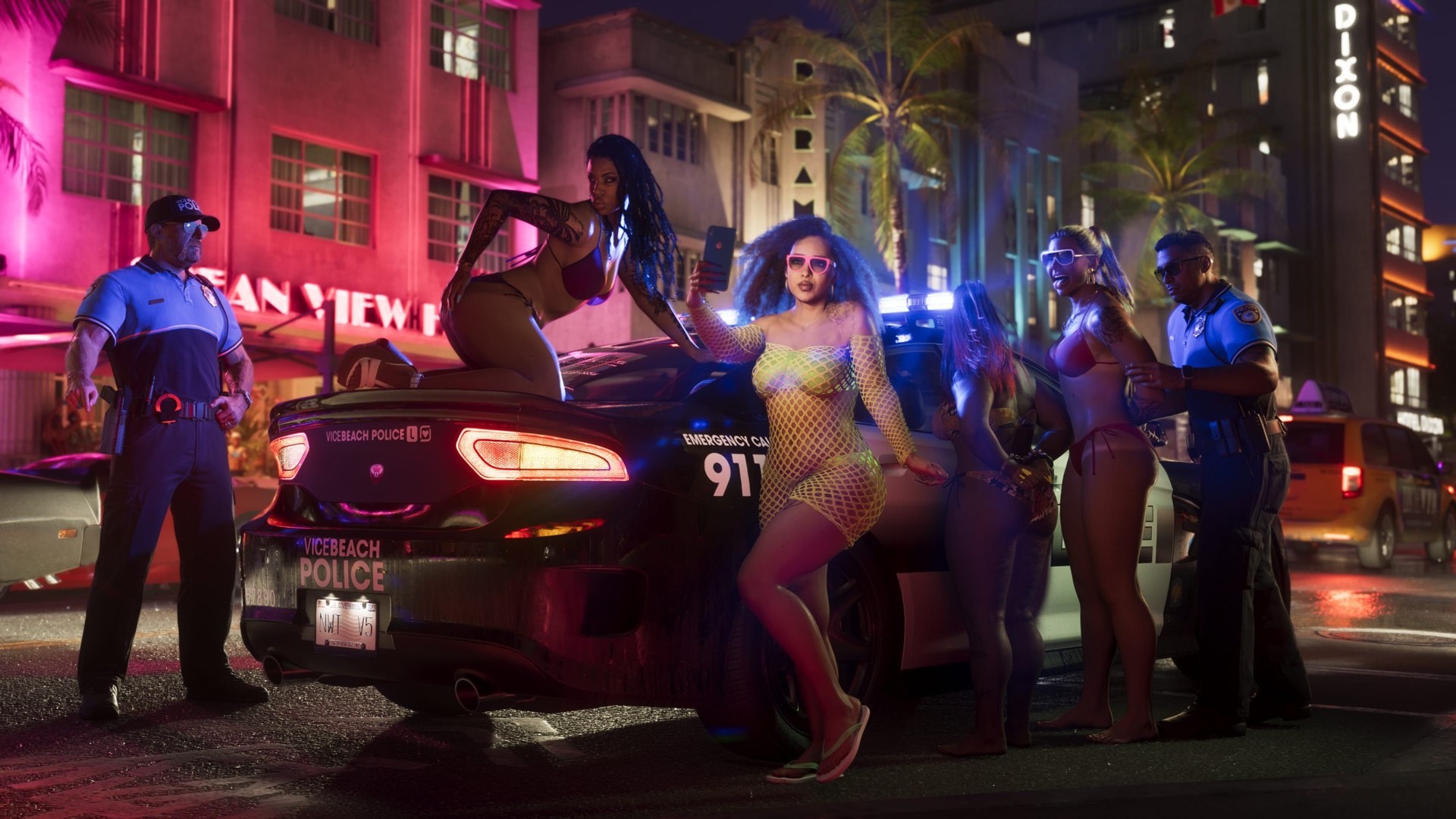
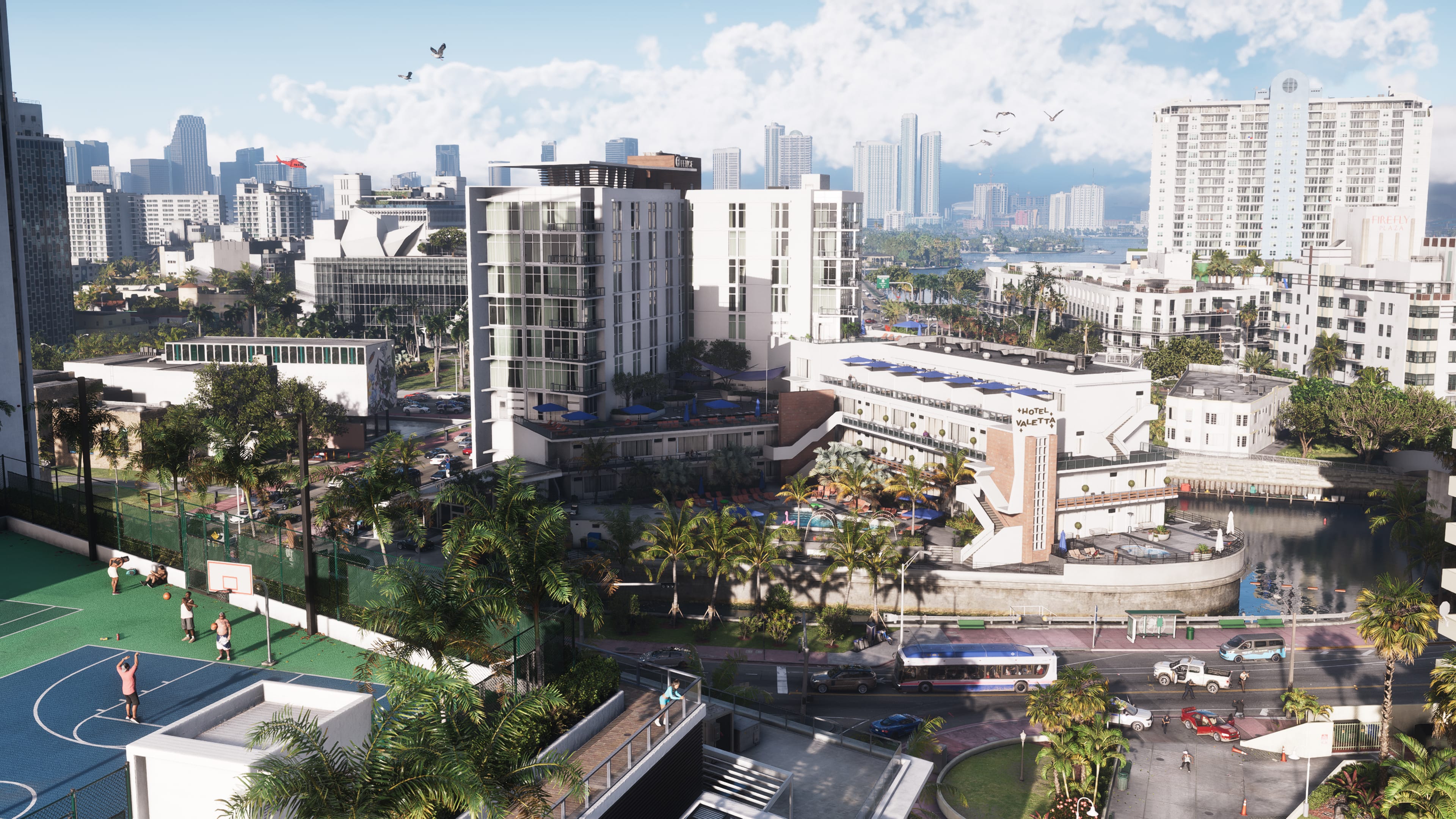
The early signs point toward a different media establishment, one with no line at all between the media and ordinary life. The targets appear to be influencers, streamers and police bodycam footage, and GTA V‘s phone camera app, Snapmatic, has become a TikTok parody. The first trailer, in December 2023, nearly completed the collapse of satire into reality: rather than exaggerating the real world, it reproduced it. Real viral videos were recreated in the game engine. There was the woman twerking on the roof of a car speeding across a causeway, the trapper hauling an alligator out of a swimming pool and the man doing yard work naked, most of them framed as vertical phone videos shot by the city’s own residents. PC Gamer saw in it “a social climate where everything is content.”
Chapter 6: A Handmade Game at the Edge of AI
The mirror has shown four things so far. In the first, America argued out its morals through its entertainment. In the second, the country’s time and money moved toward games, which took over ground that used to belong to the movies and outgrew Hollywood. In the third, the American dream on offer shrank from one game to the next. In the fourth, a long-running parody of American media ran out of road once the country became stranger than the satire.
The fifth looms larger every day. The shift is big enough that GTA VI could fairly be called the last game built without AI. Ethan Mollick, the Wharton professor, made the same point on X shortly before launch. He called GTA VI “the last human game,” argued that no AAA game this size will ever again be made without AI assistance, and predicted that future generations will look at a billion-dollar game made entirely by people and wonder how it was done, the way they wonder about the pyramids.
Last or not, it feels like the summit, and it’s landing at the edge of a major shift. Bloomberg has reported that work on GTA VI began around 2014. GTA V had more than 6,000 people working on it, and with the scope only growing, GTA VI likely needed at least as many. All of that work began long before the generative AI boom. ChatGPT launched in November 2022, roughly eight years into the project. The game arrives in the fourth year of the generative AI era and carries many of that era’s worries and conflicts.
A world built across two eras.
- ~2014DEVELOPMENT BEGINS
Work on GTA VI gets under way.
- NOV 2022CHATGPT LAUNCHES
Roughly eight years into the project.
- 2026GRAND THEFT AUTO VI
A handmade world meets the generative AI era.
The backlash against AI
People outside gaming culture tend to underestimate how intensely gamers dislike generative AI. Quantic Foundry, a research firm, surveyed roughly 1,800 mostly committed gamers between October and December 2025 and found 85 percent negative about generative AI in games, with 63 percent choosing the most negative option offered. The trend is worsening. Twelve months earlier, 46 percent had been negative about AI-written quests and dialogue. This time it was around 80 percent.
The audience pushes back.
of surveyed gamers were negative about generative AI in games.
So far the hostility hits anyone caught using AI, regardless of reputation. In December 2025, Clair Obscur: Expedition 33 was named Game of the Year at The Game Awards, and that same month the Indie Game Awards rescinded its own Game of the Year and Debut Game honors for it, after AI-generated placeholder textures were discovered in the shipped game. Also in December, Larian, the studio that made Baldur’s Gate 3, drew a wave of fury when its CEO simply discussed using generative AI in work on the next Divinity. In March, the developer of Crimson Desert apologized after players spotted AI-generated art, acknowledging that “we should have clearly disclosed our use of AI.” And the week this episode was recorded, House House, maker of Untitled Goose Game, revealed that chatbots had a hand in “well under 0.1%” of the code in its much-loved Big Walk, and the game was flooded with negative reviews.
The cost of AI
The anger has several roots. Part of it is the belief that AI was built on the uncompensated work of human artists. Part of it is jobs. Roughly 35,000 jobs disappeared from game companies between 2023 and 2025. Voice and motion-capture performers in video games struck for nearly a year, from July 2024 to July 2025, chiefly over AI. AI is a central concern for the union at Rockstar’s UK studios. In the Game Developers Conference’s yearly survey, developers who believed generative AI was harming the industry rose from 18 percent in 2024 to 30 percent in 2025 and 52 percent this year. Only 7 percent thought it was helping.
Developers turn against it.
Gamers have a reason of their own to resent AI, beyond solidarity with the people who make games: they are paying for it. Consoles usually drop in price over their lifespan, and this generation has done the reverse. Microsoft’s Xbox Series X debuted at $499 in 2020, rose to $599 in May 2025 on what the company called market conditions, and to $649 in October, increases attributed to tariffs. In June it jumped to $800, and memory was the culprit. AI data centers had absorbed the world’s supply of memory chips, Microsoft said “console storage and memory prices have increased by more than 2.5x,” and buyers covered the difference. (How tech went from the most trusted industry of the early 2010s to the villain it is today is the subject of this show’s first episode, How Tech Lost America.)
The studios press ahead
Yet however justified the anger, the evidence all points one way. AI is entering game development regardless of what players want, and it’s already in a large share of new releases. Since 2024, Steam has required developers to declare any generative AI they used. Sulka Haro tallied three years of Steam releases, more than 53,000 games, and found that by mid-2026 about a third of new releases came with an AI disclosure.
The money is pushing in the same direction. In September 2025, a consortium headed by Saudi Arabia’s Public Investment Fund, joined by Silver Lake and Jared Kushner’s Affinity Partners (much-loved names in American finance, every one), agreed to buy Electronic Arts for $55 billion, $20 billion of it debt that EA would take on. The buyers, the Financial Times reported, were relying on AI to lower EA’s costs and help service that debt. When the deal closed in August, Silver Lake’s Egon Durban spoke of investing in EA’s growth, including “what AI can do to enhance game development and player experience.”
Epic Games’ Tim Sweeney is intent on making it through. Epic cut more than 1,000 jobs in March, pointing to declining Fortnite engagement and spending far beyond its revenue, and Sweeney insisted at the time that AI wasn’t the reason. In October he went further than he ever had in saying the world was changing and that Epic would ride the change rather than be flattened by it. The company, he posted, was “moving developers around to retool for maximum AI acceleration,” with the aim not of doing the same work with a smaller staff but of letting everyone build more and better things, and of passing those gains on to all the teams that use Unreal. The tech world cheered a major gaming figure for staking out a position. Not everyone did. Andrei Apanasik, an independent developer, replied that his “inability to read the room is really really astounding.” Sweeney’s response: “Much of the room wants it to be 2016 again, but it’s not.” Epic supplies tools to much of the industry, he went on, so it has to design for the present and the near future, and he said he was optimistic and saw AI as empowering for creators.
Much of the room wants it to be 2016 again, but it’s not.
Then there’s GTA VI. Take-Two’s CEO, Strauss Zelnick, has been categorical that generative AI had no role in making it. “Their worlds are handcrafted,” he said. “That’s what differentiates them.” But GTA is an exception even within Take-Two. In many of the same conversations, Zelnick described the rest of the company as embracing generative AI, with hundreds of pilot projects under way.
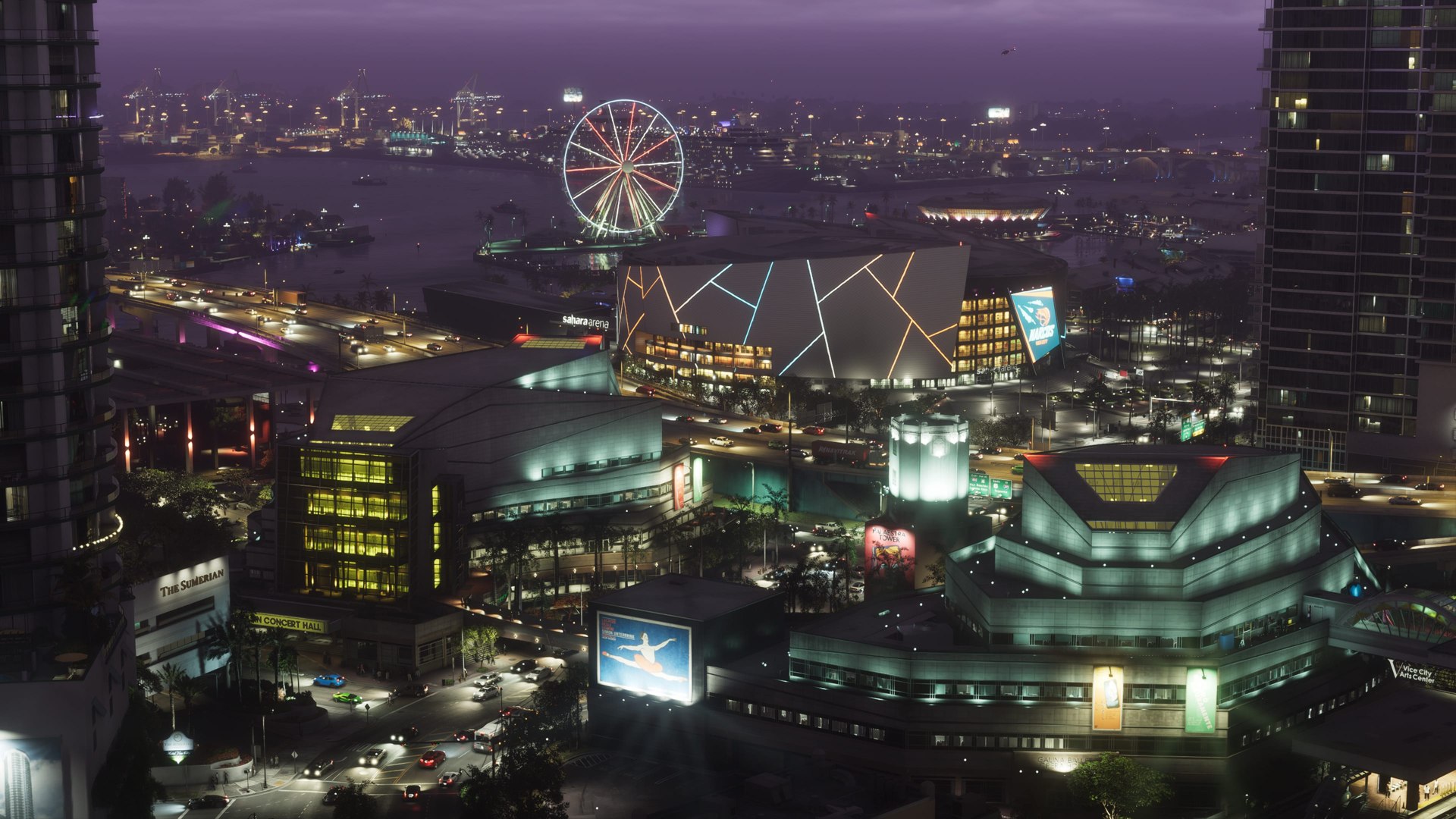
Their worlds are handcrafted.
Who gets to build a world?
Seen from further back, the AI question in games is quickly becoming about more than production. It’s turning into a question about who gets to make games at all, and about what a game is.
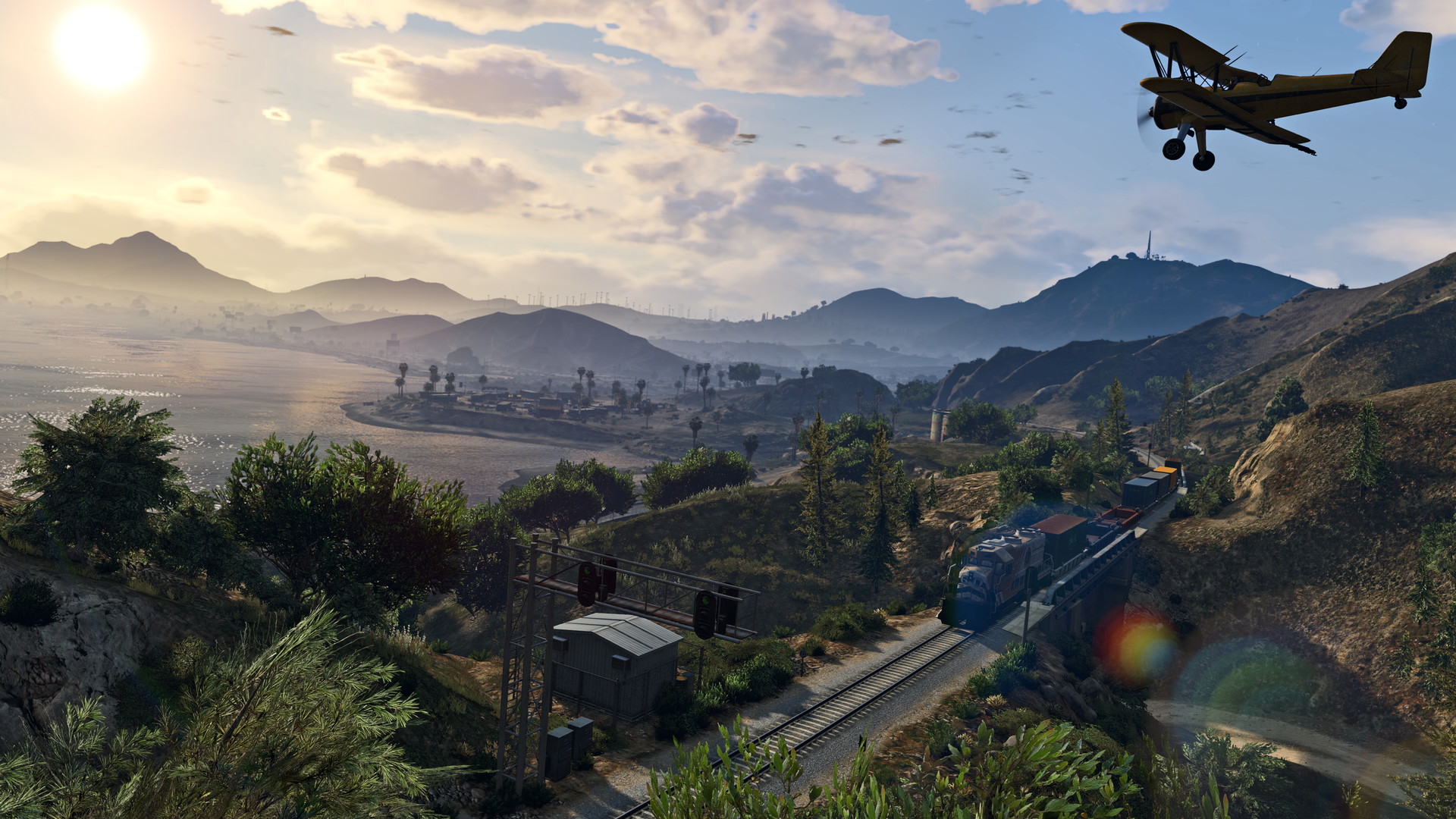
GTA III established the open world as the model for big-budget games in 2001: an entire city to roam, a world worth experiencing whether or not you ever touched the missions. Big games have spent the twenty-five years since stretching that idea, pushing their maps ever wider. AI world models suggest a far larger leap, a world with no edge at all, generated as you travel through it.
Google DeepMind unveiled Genie 3 in August 2025 and described it as “a general purpose world model.” A typed description becomes a world you can explore in real time. Even in that first demonstration the world held together, and users could alter it from inside, dropping in characters, changing the weather or interacting with objects. Google made Project Genie available to its top-tier US subscribers on January 29 of this year, and the market drew its conclusions immediately. On January 30, Take-Two shares lost 7.9 percent, about the same as the hit they took when the latest GTA VI delay was announced in November 2025, while Unity dropped 24 percent and Roblox 13 percent. Investors reasoned that if a sentence can produce a world, hand-built worlds are worth much less.
Progress hasn’t paused. World models are still young, but what language models can do with games advanced dramatically over 2026. Attractive game-style demos had been a showcase for successive model releases for months. With Fable 5.2, the difference appears to be that it can also build the mechanics underneath and deliver complete, compelling games. Naturally, people quickly tried to beat Rockstar to the finish line. The day after Anthropic released its first Fable model in June, a startup founder named Ziwen Xu set out to have AI agents build his own GTA 6 before the real one arrived.
Speaking on the earnings call that followed January’s selloff, Zelnick argued that generating interactive video and making a compelling game are different things. Genie, he said, was “a procedurally generated interactive video.” Few people would claim that a hit game requires nothing beyond the ability to program one. Most released games never become hits, which shows how hard it is to make one that works. Even so, it’s hard to look ahead and see anything other than huge change, at a moment when anyone can begin to approximate the output of entire design and development teams by typing a few words into the newest model.
GTA VI may end up as the record of what came before: the high-water mark of building a hit game by hand, and the last one built that way.

Chapter 7: Where We Go From Here
GTA VI is out this week, or close enough that the wait is effectively over, and arguably the most eagerly awaited game ever made will finally belong to the people who play it. Once they do, they’ll discover new things in the mirror: what it says about who Americans are, or who they appear to be, and who they hope to be. Then the question becomes what America GTA VII will find.
Thirteen years from now or three, GTA VII will be holding its mirror up to a different country. Its players will have changed, for a start. Parents who grew up with GTA are raising kids around games now. Seventy-five percent of American parents play every week, 81 percent of those parents regularly play with their kids, and 73 percent prefer that their children’s screen time go to games rather than social media.
Will gaming still look like gaming? If GTA VII takes a while, AI will almost certainly have changed how games are made, what sort of games get made and who is making them.
AI’s reach won’t stop at games, either. The debate over what it will do is ferocious. One side expects the worst, with AI destroying jobs, eroding people’s ability to think for themselves and endangering democracy. Another side, which gets less coverage, believes it could, as Anthropic’s founders wrote in the company’s IPO prospectus, “bring forth an age of miracles.” Hardly anyone thinks it will change nothing.
Whatever GTA VII turns out to be, and whatever kind of America it reflects, it will arrive to a line of people who have been waiting years to play it.
That’s how we got here.
BACK TO THE TOP ↑