The computer industry’s positive rating
Gallup industry ratings [9]
By Nathaniel Whittemore. October 2026
The fight over data centers is the culmination of a generational shift in our relationship with the companies and people that built the internet. This episode traces how the industry that promised to put power in everyone’s hands came to stand for concentrated wealth and control.
In June 2025, Governor Josh Shapiro excitedly shared the news: Amazon would be investing $20 billion into the state. Pennsylvania was winning the future: new data centers, thousands of construction jobs, at least 1,250 high-skilled jobs, and the largest private-sector investment in the state’s history.[4]
Fourteen months later, the same governor was calling those data-center developers “greedy” and vowing that they would have to meet the toughest requirements in the country to receive the Commonwealth’s backing.[206] His August 18, 2026 order put public accountability, local approval, utility costs and transparency at the center of a new deal that reflected a dramatic shift in public attitudes.[5]
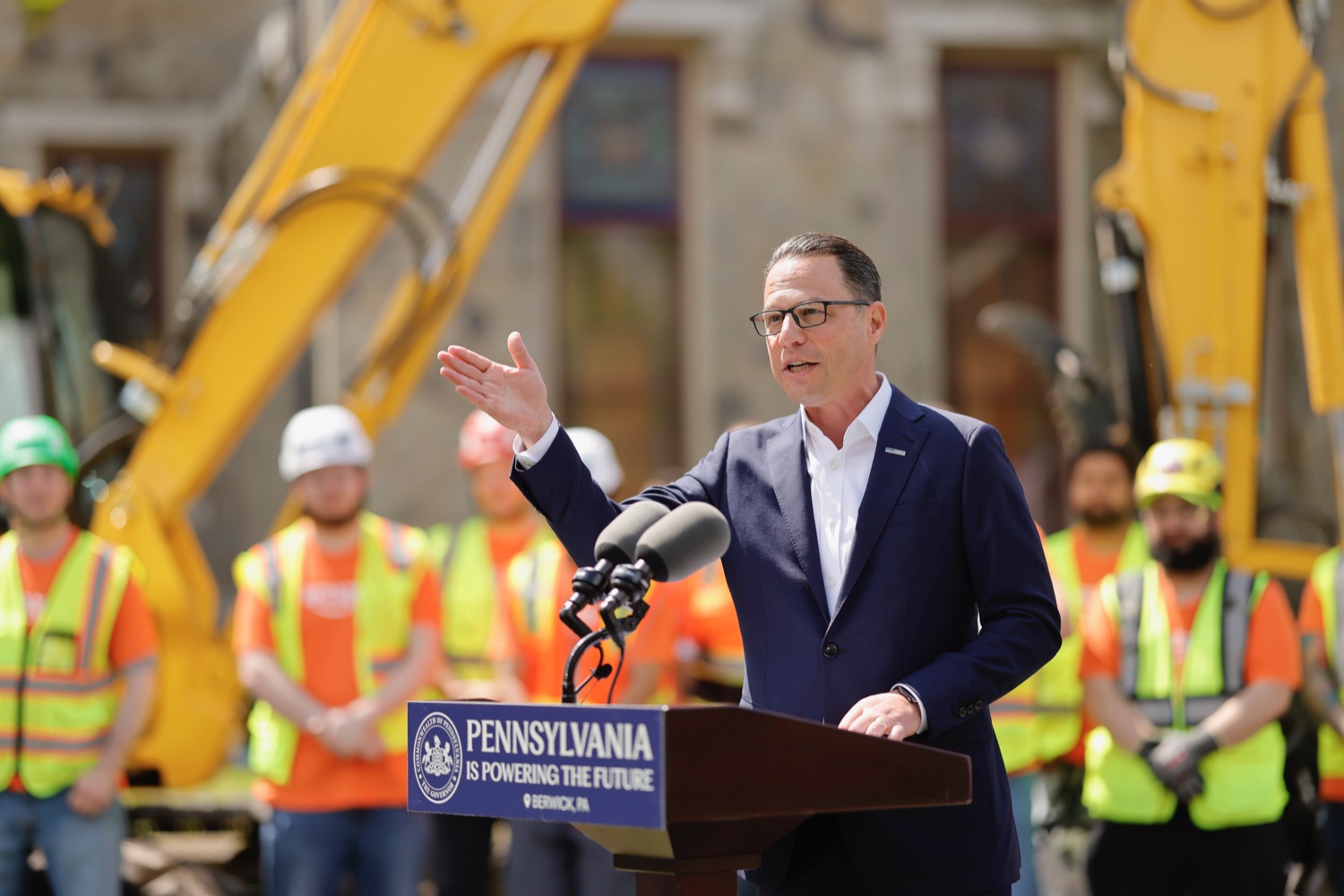
Governor Josh Shapiro speaks in Berwick, Pennsylvania, on June 9, 2025, announcing Amazon’s plan to invest at least $20 billion in data-center infrastructure in the Commonwealth.
Photo: Commonwealth of Pennsylvania / PAcast · Source

Shapiro signs Executive Order 2026-05 in Harrisburg on August 18, 2026, directing Pennsylvania agencies to apply new requirements to data-center development.
Photo: Commonwealth of Pennsylvania / PAcast · Source
"Pennsylvania is competing again ... we have secured the largest private sector investment in the history of Pennsylvania."
Gov. Josh Shapiro, announcing Amazon's data center investment. Source
"If you can't agree to our strict requirements and get the community where you want to build to say 'yes,' you won't have the Commonwealth's support either."
Gov. Josh Shapiro, signing the order. Source
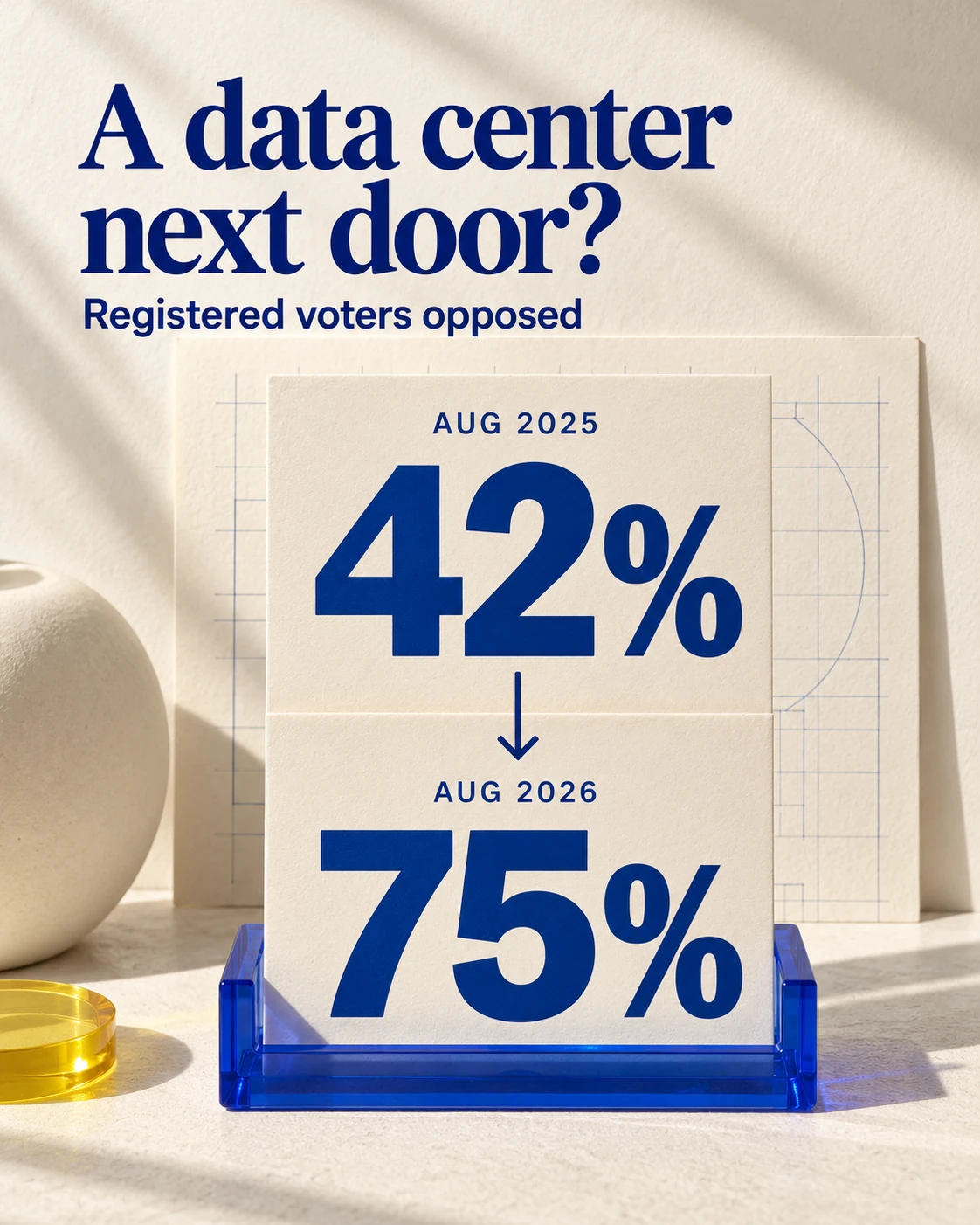
In August 2025, pollsters for Heatmap asked registered voters whether they would support a data center being built near their home. The country was split almost exactly in half: 43 percent in favor, 42 percent opposed. Six months later, 51 percent were opposed. By May it was 70. By August 2026 it was 75 percent, and more than six in ten were strongly opposed. Heatmap's Robinson Meyer called it a shift faster and deeper than he would have once thought possible on any issue.[1]
Heatmap Pro / Embold Research tracking poll. August 2026 wave: 2,045 registered voters, ±2.3 pts. Strongly oppose not reported for earlier waves. The trend follows the published article; the August strong-opposition value follows its download. The download differs from the article on earlier wave labels and May subcategories. Source
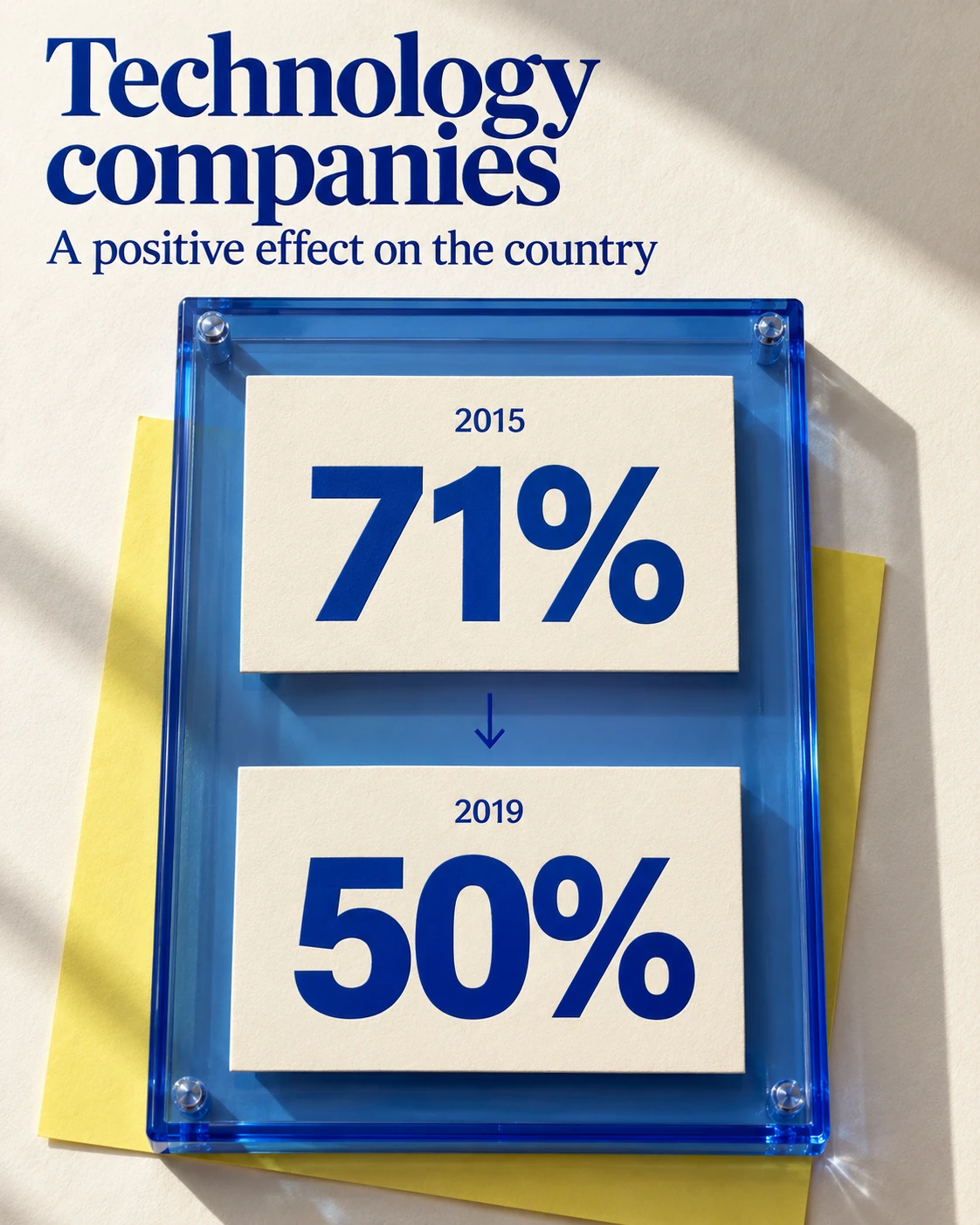
Gallup found the same thing in the spring, with 71 percent opposed to an AI data center in their area. In a separate April web survey, Gallup asked opponents why, in their own words. Half mentioned resources, including water and power. About a fifth mentioned quality of life, and another fifth mentioned cost. Fourteen percent gave general negative views of AI; other categories captured specific AI concerns and jobs or economic effects.[2]
Selected categories from open-ended answers by opponents. Responses can fall into several categories.
Gallup Panel, April 2026 web survey; published May 13, 2026. The separate overall opposition poll was fielded March 2–18. Source
On the surface, then, it was a fight about resources and bills, and it moved into politics fast. NPR and the Wesleyan Media Project counted $45 million in data center-related political ads between January and early September 2026, split almost perfectly by party: about $22 million from Republicans and $21 million from Democrats.[3]
The more telling indicator was the way the issue started to impact national strategy. In August 2026, the National Republican Senatorial Committee sent local campaign officials and AI companies a warning about Ohio. According to the memo, the Committee believed data centers were weighing heavily on Senator Jon Husted’s reelection campaign. If the issue cost Republicans the seat, it warned, elected officials elsewhere would learn to stay away from the next project.[193]
Shapiro wasn’t the only governor making moves. Virginia hosts more data centers than anywhere else in the world, yet in September its new governor, Abigail Spanberger, told developers that if they didn’t want to meet her standards, “Virginia may not be the place for you.”[6] In Texas, Republican Greg Abbott ordered an audit of every data center waiting to connect to the grid.[207]
The president tried to push the other way. At the end of August, Donald Trump posted that the only reason a community wouldn’t want a data center was if it wanted “to end up being backwards and poor.” Shockingly, this particular argument landed with a thud. An Economist/YouGov poll a few weeks earlier had found 47 percent of 2024 Trump voters opposed to a data center near them, compared to just 35 percent in support.[8]
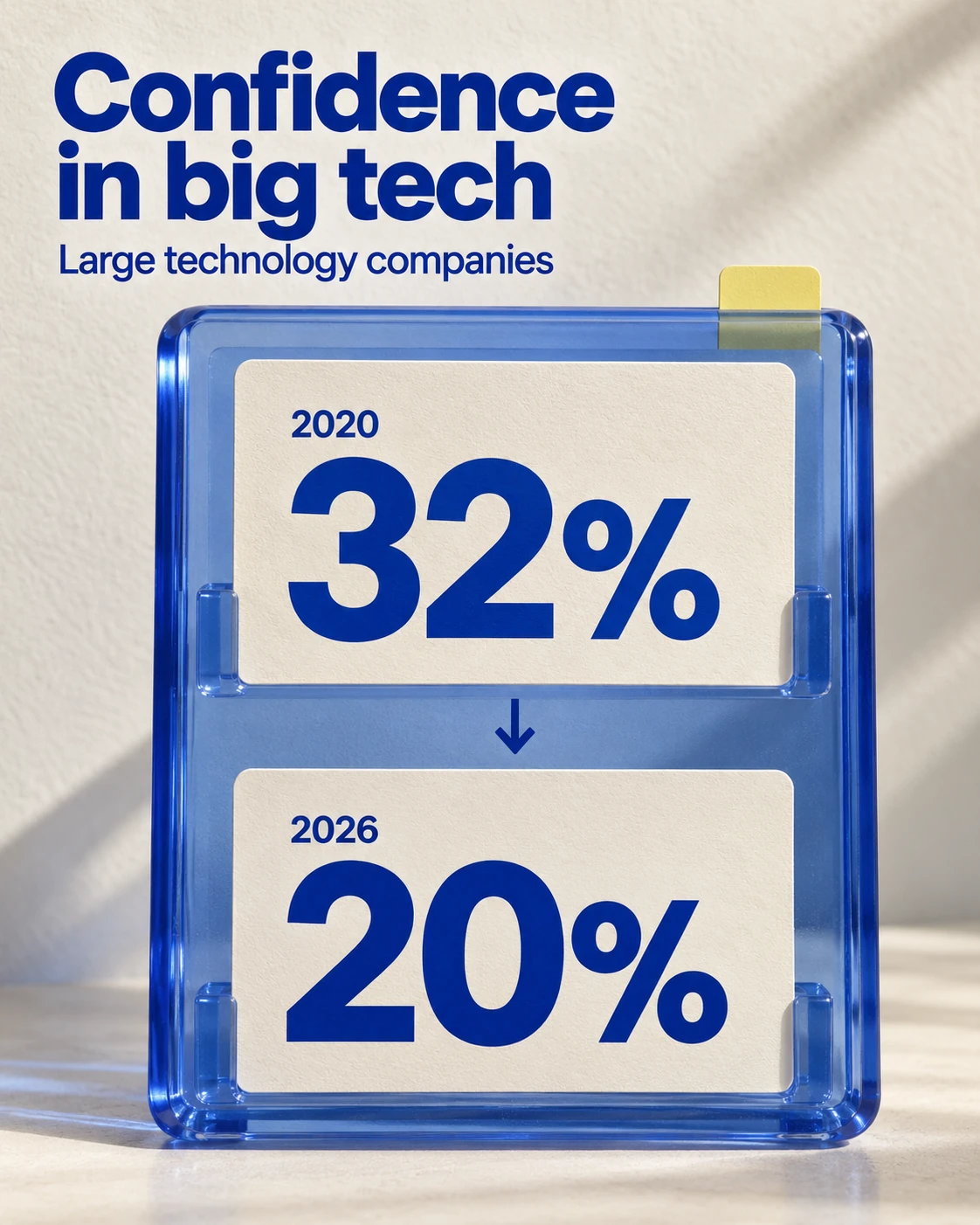
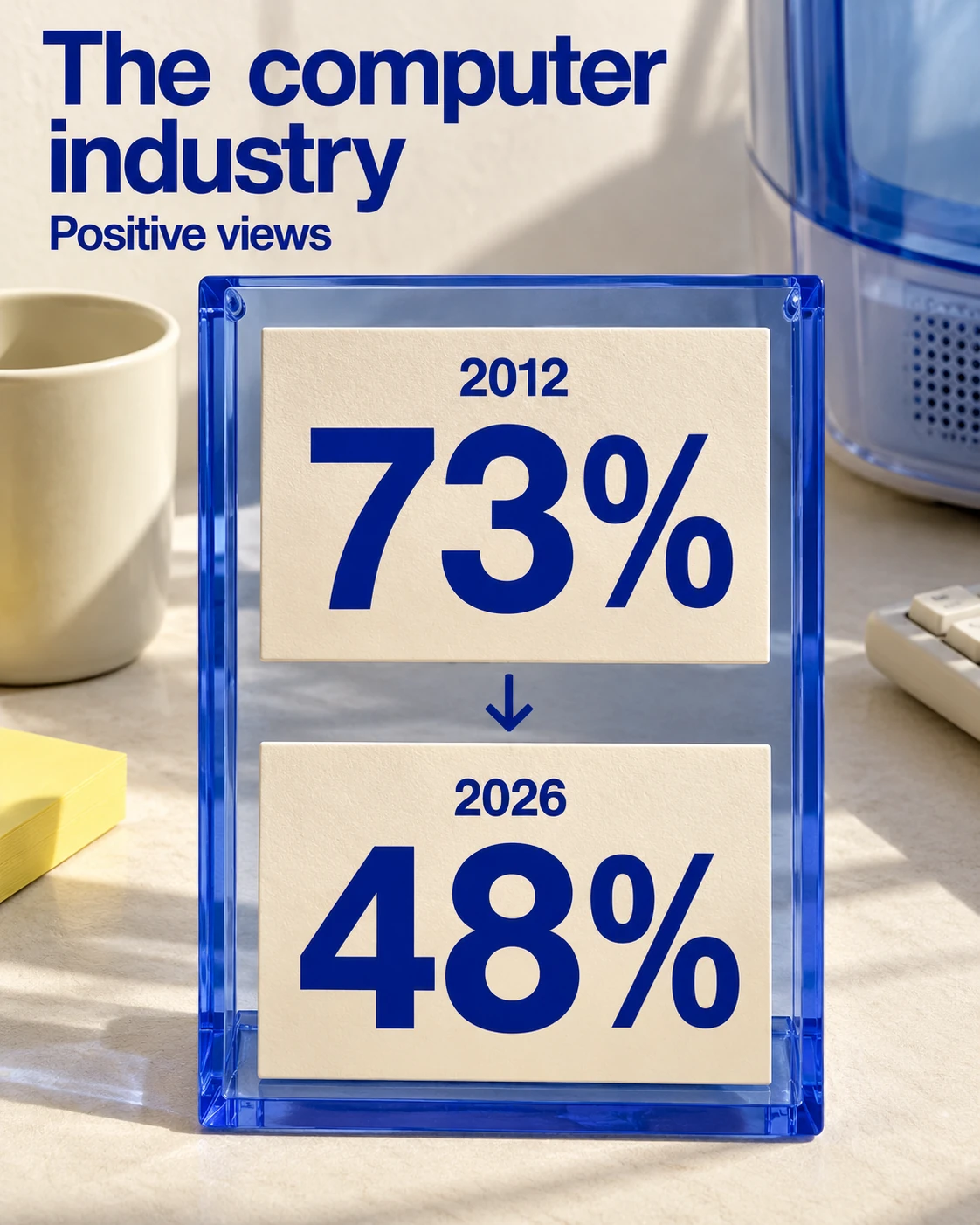
In September, in its annual ratings of American industries, Gallup offered an indication that the story might be bigger than data centers and bigger even than AI. The computer industry’s positive rating fell from 59 percent to 48 percent in a single year. That followed a June poll where Gallup had found confidence in large technology companies at 20 percent, the lowest it has recorded.[9][10]
There has been no point in AI’s short life where it has had the benefit of the doubt from the American public. In 2022, 38 percent of Americans told Pew they were more concerned than excited about artificial intelligence. Within a year of ChatGPT’s release, the “more concerned” group had risen to 52 percent.[11]
While there are plenty of very specific concerns that people have with AI, broadly speaking data centers are paying off a debt they didn’t run up. The environment they arrived into resulted from a fall from grace that started long before ChatGPT, when the industry that built them went from the most trusted in the country to the embodiment of people’s deepest anxieties about money and power.
Once upon a time, the internet felt like an opening.
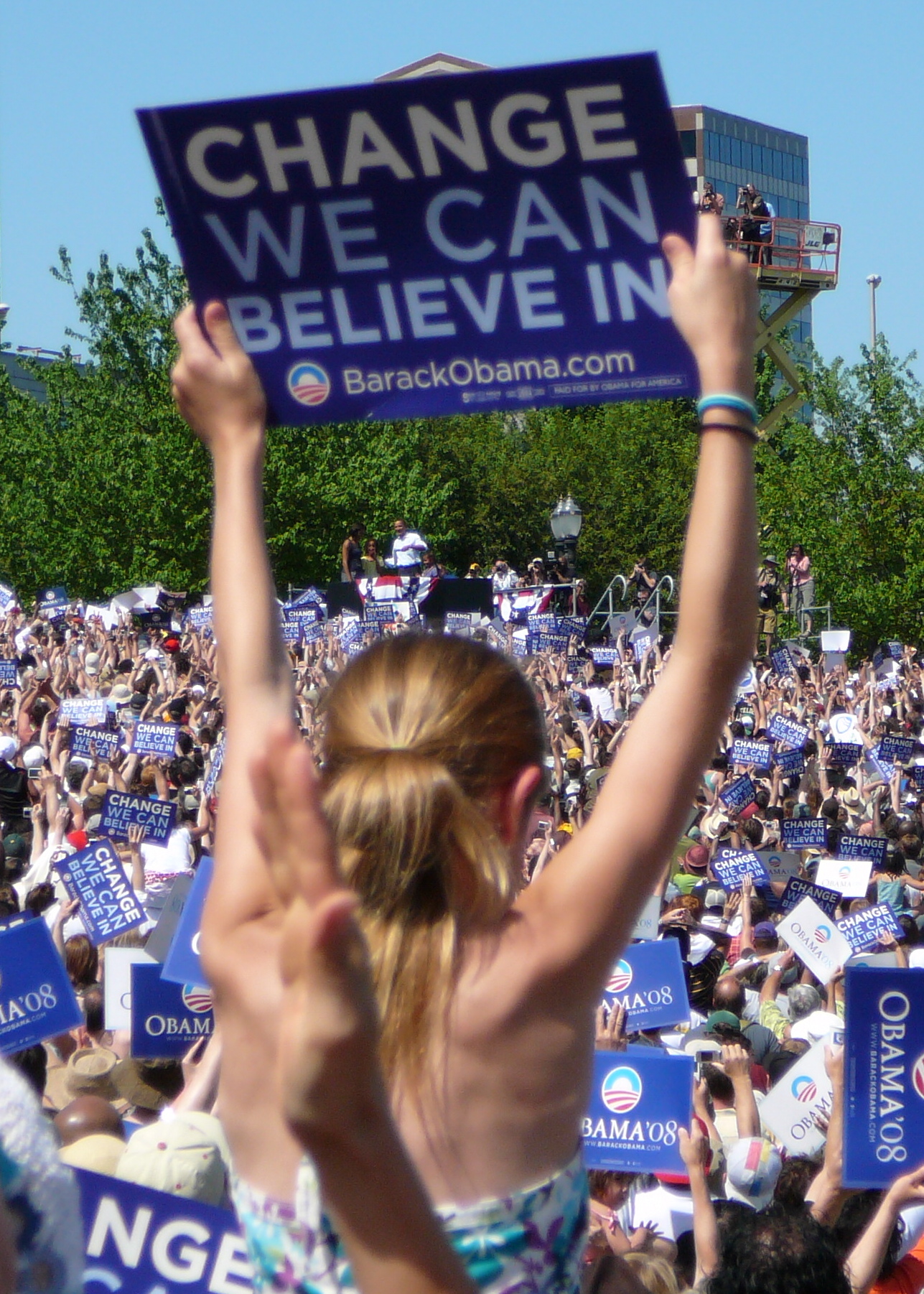
A supporter at Barack Obama’s rally in Portland, Oregon, May 18, 2008.
Photo: Ryan Harvey, CC BY-SA 2.0. Wikimedia Commons
For a while it was hard to find an industry Americans liked more. In January 2013, Edelman’s global trust survey ranked technology the most trusted sector for the second year running, at 77 percent. Gallup’s rating of the computer industry hit 73 percent positive in 2012 and peaked at 75 percent in 2017.[12][14]
Gallup Business and Industry Sector Ratings, 2001–2026. Source
And yet almost in the blink of an eye, everything changed. The computer industry cratered from 75% to 48% in under a decade, while the internet moved from 59 percent positive in 2017 to net negative just four years later in 2021, when 40 percent viewed it unfavorably and 35 percent favorably. To understand the data center fight, we have to go back to when this industry represented nothing but promise and potential.[14]
The mid aughts were heady times. As a new type of social internet grew from the ashes of the dot com bubble, there was a growing sense that this new, more connected, more engaged type of internet could shift the balance of power away from traditional institutions and leaders and towards networks of ordinary people.
In December 2006, TIME named its Person of the Year: You. The magazine credited its readers with “founding and framing the new digital democracy,” and told a story about the rising power of people-led networks. The adoption curve made the claim feel obvious. In 2005, 7 percent of American adults used a social networking site. By 2011 half did, and by 2015 it was 65 percent, including 90 percent of adults under 30.[15][16]
What people called Web 2.0 was a change in who got to contribute. While the early web had community chat rooms and message boards, for most people it was just the same old media, delivered digitally. They remained primarily consumers of content rather than creators of it. Web 2.0 changed that. A new generation of apps made publishing and collaboration easier and more central to everyday use. Tim O’Reilly’s influential 2005 account paired the old and new: personal websites with blogs, Britannica with Wikipedia, publishing with participation. A reader could become an author; a customer could write the review everyone else consulted; strangers could build something together without first persuading an institution to let them in.[86]
Social networks became the home for much of this activity. Twitter went from 5,000 tweets a day in 2007 to 50 million a day by early 2010. Facebook had about 100 million users in August 2008 and passed a billion in October 2012.[17]
The smartphone made all of this new power portable. After Apple introduced the iPhone in January 2007, getting online no longer had to mean sitting down at a computer and the power to create, connect and organize quickly moved to our pockets. In Pew’s first smartphone ownership survey in 2011, 35 percent of American adults had one. By 2025, it was 91 percent.[89][90]
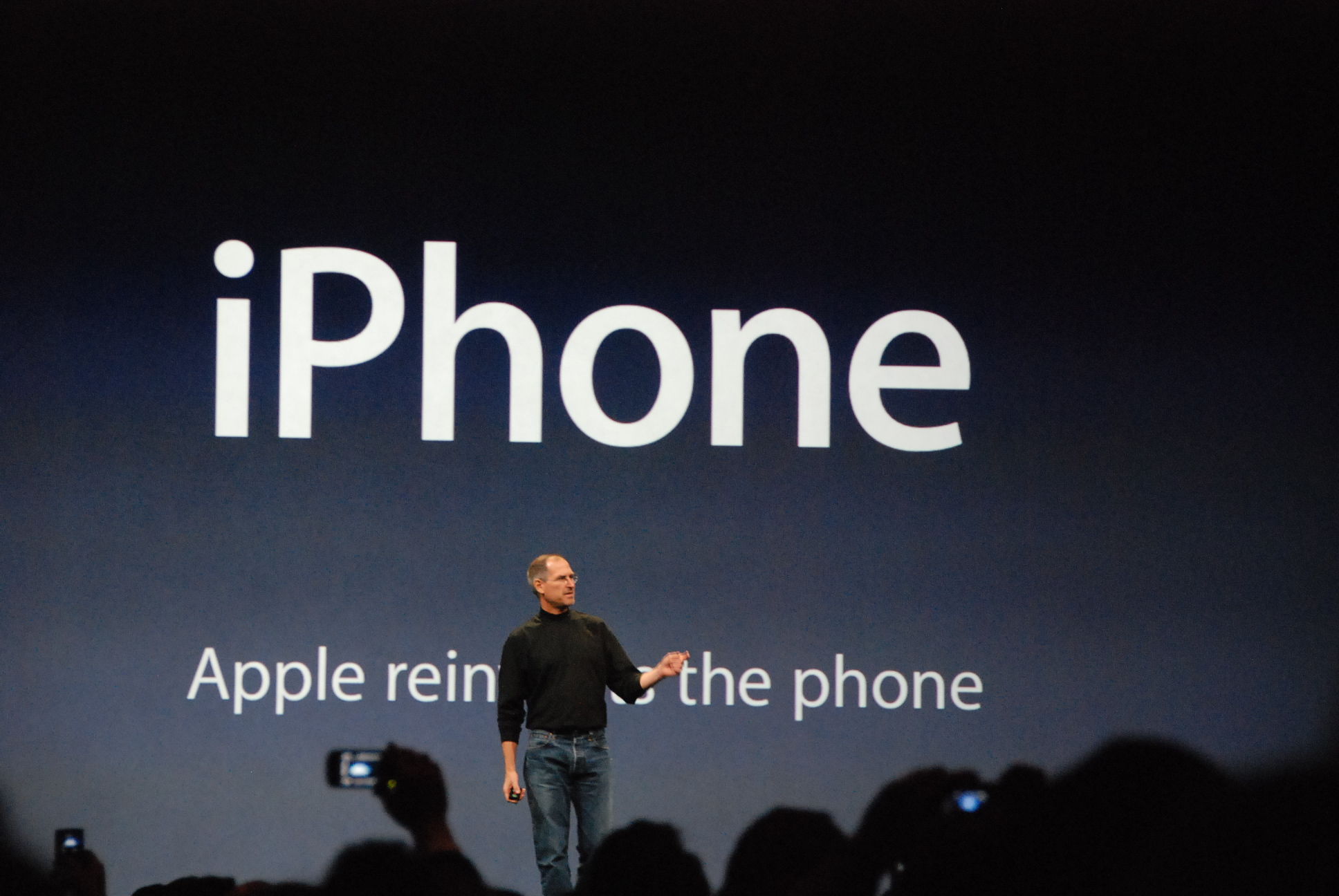
Steve Jobs introduces the iPhone at Macworld in San Francisco, January 9, 2007.
US adults who own a smartphone. Two survey endpoints show the scale of adoption, not the intervening annual path. Pew’s survey modes changed over this period; see its methodology notes.
Pew Research Center, 2005–2015. No survey in 2007. Source
Howard Dean’s 2004 presidential campaign showed what this could mean for politics before it showed that an internet-powered candidate could win. Dean began 2003 with $157,000 in cash, seven paid staff and 432 identified supporters nationwide. A year later, more than 280,000 people had donated $40 million. The campaign used the internet to raise money, spread its message and help supporters find one another. Meetup turned online interest into local gatherings. The campaign’s blog became a place where supporters could contribute and respond.[88]
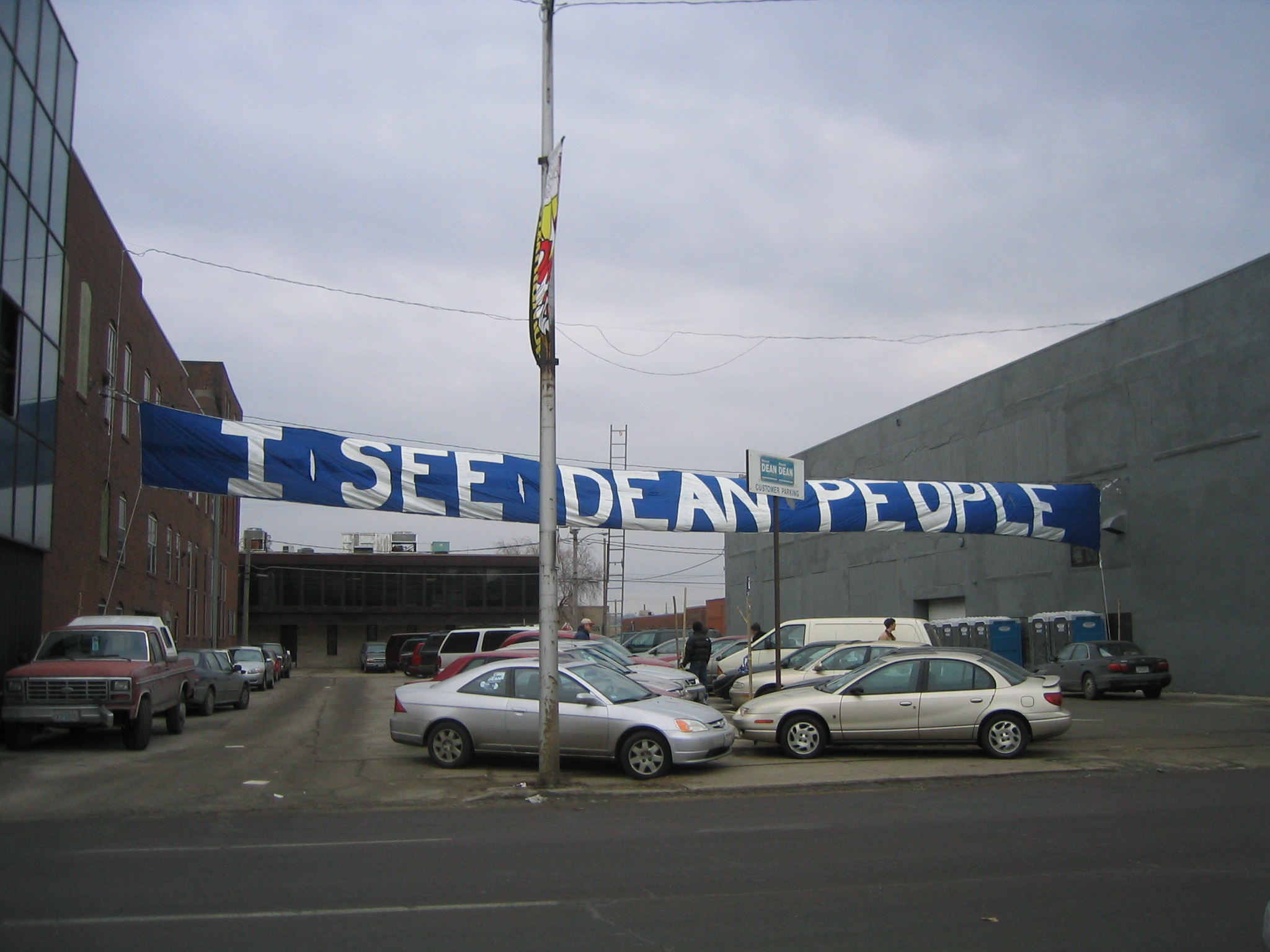
An “I see Dean people” banner outside Howard Dean’s Iowa campaign headquarters, January 16, 2004.
Trei Brundrett · CC BY-SA 2.0 · Source
While Dean would flame out early in Iowa that year, the lessons of the campaign were clear: a candidate could build a large network of donors and volunteers without beginning with the party establishment’s blessing. People could find one another, pool small contributions and turn online enthusiasm into political work.
By 2008, that experiment had become a presidential campaign operating at national scale. Barack Obama's campaign raised about $500 million online, built an email list of 13 million people, and gave supporters its own social network, which they used to organize some 200,000 events. A year later, at a town hall in Shanghai, Obama said one of the reasons he won was the campaign's ability to mobilize young people through the internet. "I think that the more freely information flows," he said, "the stronger the society becomes."[18]
Then the idea went global. In June 2009, protesters in Iran used Twitter to organize and get word out after a disputed election. Twitter had maintenance scheduled for that night. The State Department asked the company to wait, and Twitter moved the work to the next afternoon, California time.[19]

The Green Movement march in Tehran, June 15, 2009.
Photo: Hamed Saber, CC BY 2.0. Wikimedia Commons
A month later, a former Bush national security official proposed Twitter for the Nobel Peace Prize. By January 2010, internet freedom was official American foreign policy. In a speech devoted to it, Secretary of State Hillary Clinton said:[20]
"The freedom to connect is like the freedom of assembly, only in cyberspace."Hillary Clinton, "Remarks on Internet Freedom," January 21, 2010
The State Department put more than $20 million in grants behind the idea, and Clinton announced more than $25 million more the next year.
The Arab Spring seemed to prove it. There was perhaps no other series of events which seemed to so thoroughly demonstrate the democratizing force of the social internet as the wave of popular reform movements that surged across the Middle East and North Africa.
The culmination of the event was the resignation of Egyptian strong-man president Hosni Mubarak, who had been in power for nearly 30 years before popular demonstrations pushed him out.
In the week before Mubarak vacated office, University of Washington researchers found that tweets about political change in Egypt went from 2,300 a day to 230,000 a day. Wael Ghonim, a Google executive who had run the Facebook page that helped bring people to Tahrir Square, told CNN after Mubarak fell: “If you want to liberate a government, give them the internet.”[21][22] Added US president Barack Obama: “It’s no coincidence that one of the leaders of Tahrir Square was an executive for Google.”[23]

Tahrir Square the night Mubarak's resignation was announced, February 11, 2011.
Photo: Jonathan Rashad, CC BY 2.0. Wikimedia Commons
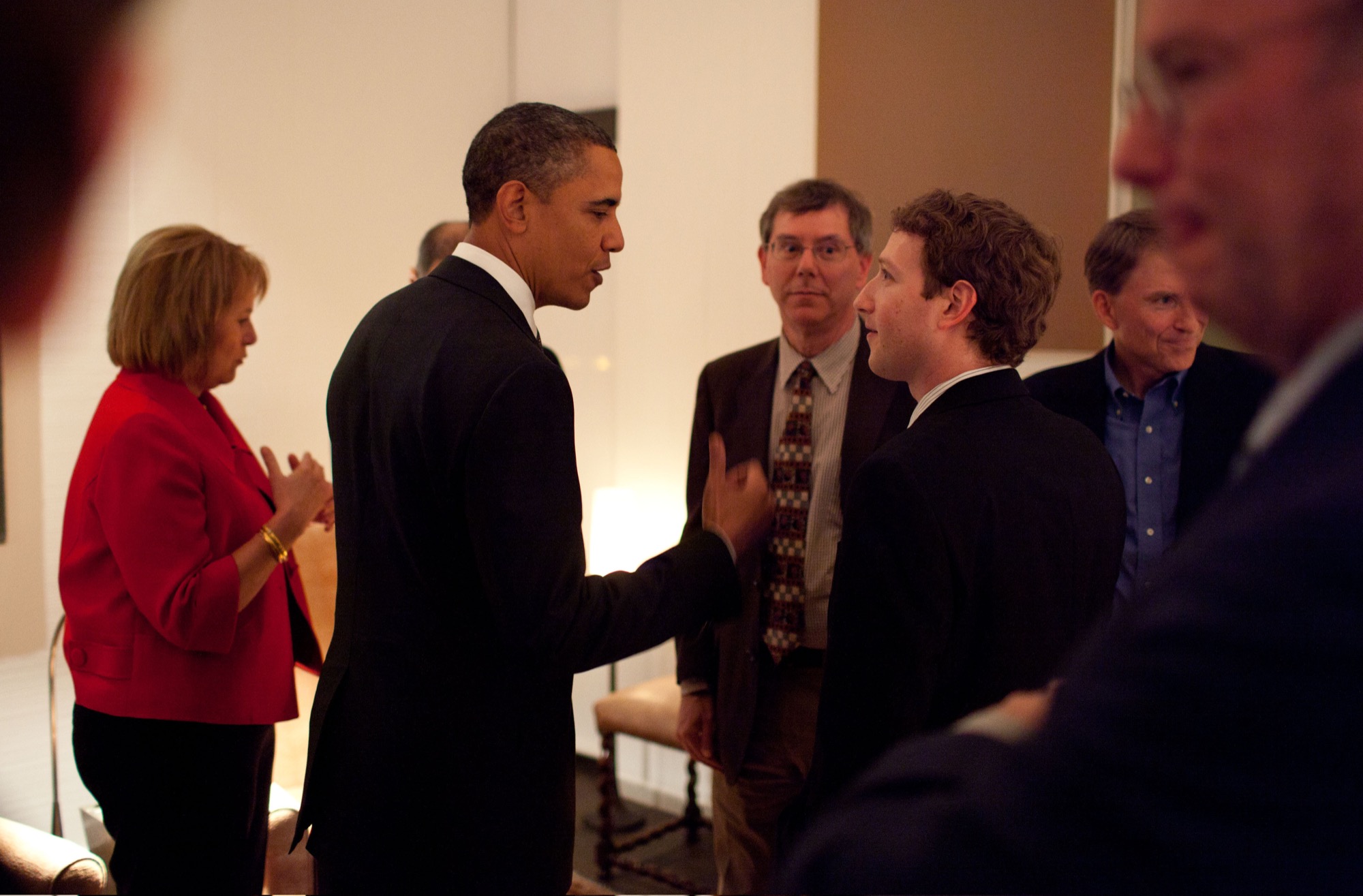
President Barack Obama talks with Facebook CEO Mark Zuckerberg before a dinner with technology business leaders in Woodside, California, February 17, 2011.
Official White House Photo by Pete Souza. Public domain. White House archive
While Americans were excitedly watching the Arab Spring, for many tech was playing a very different role back home.
The Global Financial Crisis of 2008 had rocked the economy back on its heels. It was the worst financial disruption since the Great Depression, and as the recovery slowly came, to many, tech was a key part of the story.
In a Harris poll fielded in December 2011, technology was the only industry a majority of Americans said was helping solve the economy’s problems. Fifty-three percent called it part of the solution. For banking, that number was just 7 percent.[25]
Harris Interactive, Reputations of the Most Visible Companies 2012. Source (PDF)
Pew summed up the mood in 2010 with a line that would be hard to imagine now: “You may take some whacks at Goldman Sachs but don’t lay a hand on my PCs or Macs!”[26]
Studies from the time also seemed to indicate that the social web was having a positive impact on society as well. In 2011 Pew found that someone who used Facebook several times a day was 43 percent more likely than other internet users to say most people can be trusted.[32]
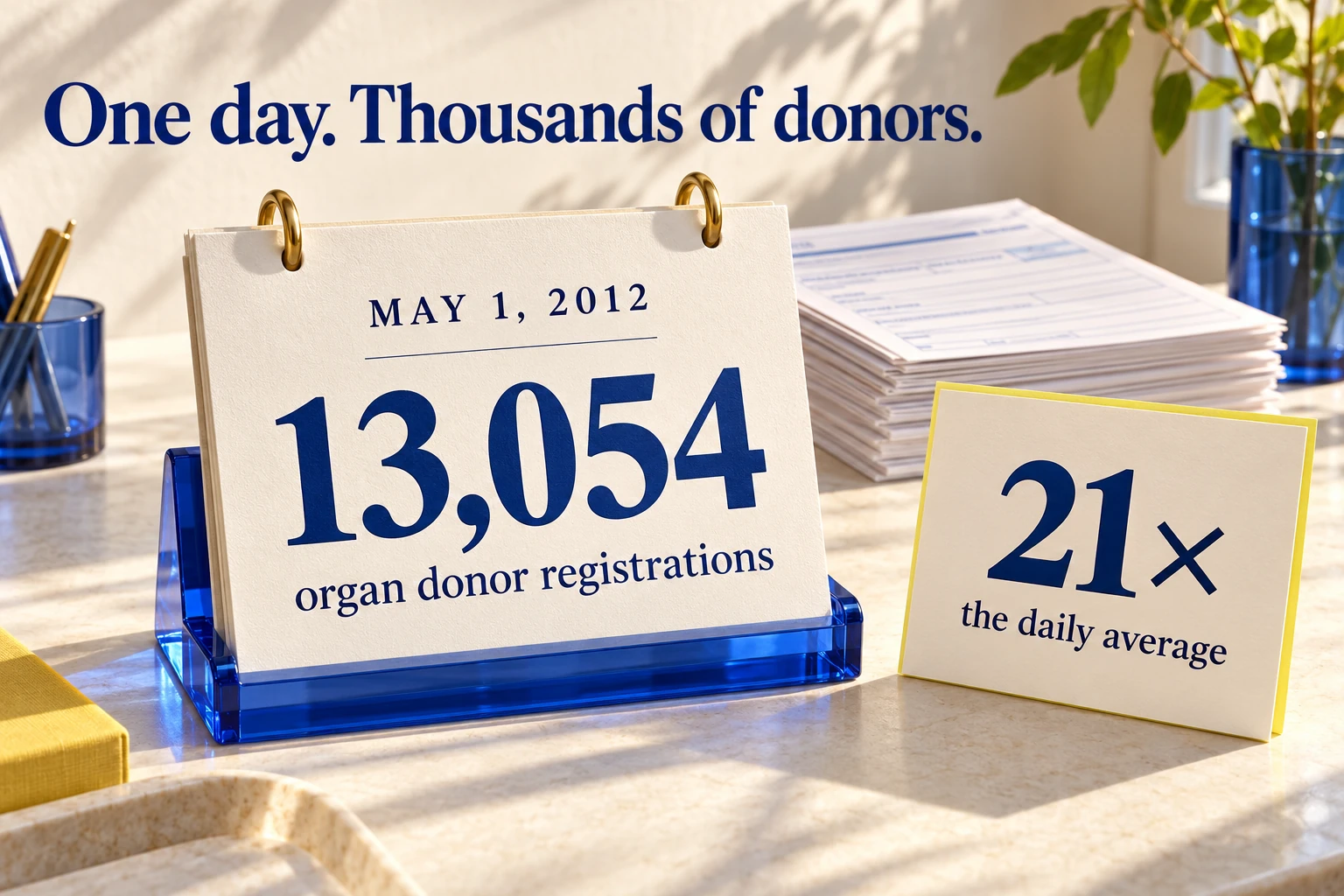
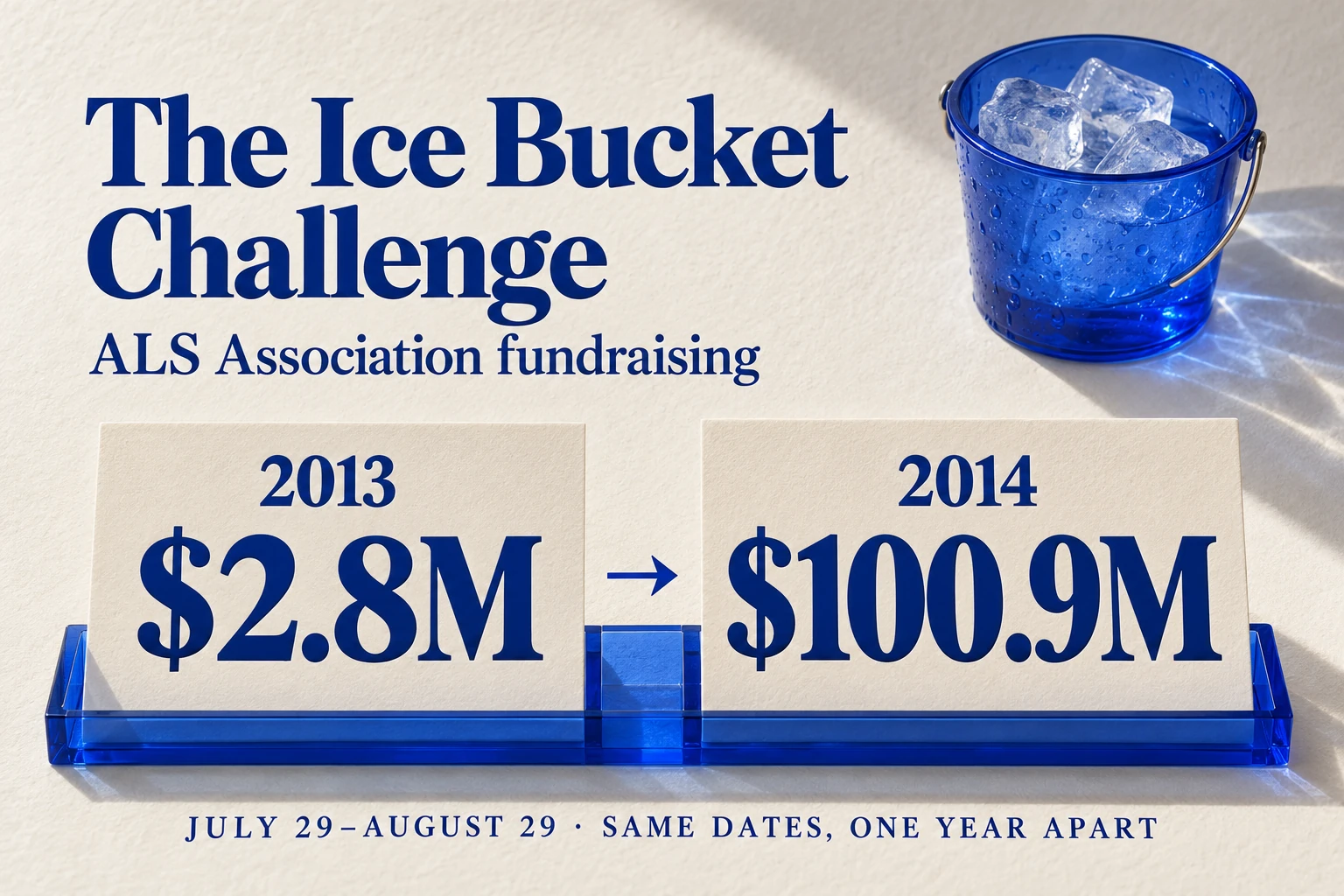
Some of those engaged users were also bringing their impact into the real world. On May 1, 2012, the day Facebook let people share that they were organ donors, 13,054 people registered online, 21 times the daily average. A Johns Hopkins surgeon who studied it called the response “unlike anything we had ever seen before.” In the summer of 2014 came the Ice Bucket Challenge.[33][34]
By 2014 the verdict was close to unanimous. Ninety percent of internet users told Pew the internet had been good for them personally, and 76 percent said it had been good for society.[35]
Connections became attention. Attention became a business.
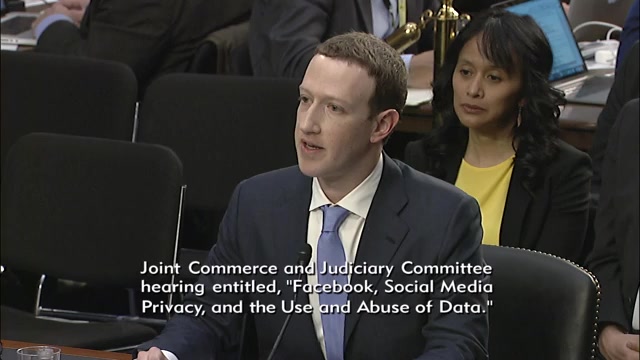
Facebook CEO Mark Zuckerberg testifies at the joint Senate Judiciary and Commerce hearing on social-media privacy and data use, April 10, 2018.
Still from official U.S. Senate hearing video · Public domain · Source
And yet, underneath the optimism, there were some who had concerns. Pew’s 2011 report found that 55 percent of internet users thought the internet increased the influence of people with extreme political views.[208] A 2010 Facebook study that linked messaging friends to lower loneliness also found that people who mostly scrolled instead of messaging reported being more lonely.[209] Even TIME’s celebration contained a caution. Its 2006 Person of the Year essay called Web 2.0 “a massive social experiment” and acknowledged that it could fail.[15]
When it came to the fault lines of that potential failure, it wasn’t internet critics but in fact enthusiasts and entrepreneurs who first identified some of the likely challenges.
In September 2008, Clay Shirky had given a talk called It’s Not Information Overload. It’s Filter Failure. People had long been able to encounter more information than they could absorb, he argued. What had changed was the machinery for sorting it. When printing and distribution were expensive, publishers filtered before publishing. Online, almost anyone could publish first; filtering increasingly happened afterward. The questions this created had big power implications: how should information reach people, and who should decide?[190]
A few years later, former MoveOn.org Executive Director Eli Pariser spoke at TED with a warning about algorithms deciding what people saw. “You don’t decide what gets in,” he said. “And more importantly, you don’t actually see what gets edited out.” These “filter bubbles” as he called them had the power not only to confine people’s exposure to views they already agreed with, but could even in some cases lead to radicalization.[36]
The jobs and the money were real. Jobs in computer systems design were back to their pre-recession peak by July 2010. Total employment didn't get there until 2014. In August 2012 Apple was worth $623 billion, the most of any company in history at the time, in nominal terms. Marc Andreessen wrote in the Wall Street Journal that software companies were "poised to take over large swathes of the economy." In 2011 that read as good news.[27][28]
Washington bought in across party lines. In his 2011 State of the Union, Obama called America the nation "of Edison and the Wright brothers; of Google and Facebook," and said: "This is our generation's Sputnik moment." The JOBS Act, which made it easier for startups to raise money, passed the House 390 to 23, with every Republican voting yes. Six weeks after Obama signed it, Facebook went public at a $104 billion valuation.[29]
The companies promised they would be different from the corporations that came before them, and they put it in writing.
"Don't be evil."
Same letter: "Advertising is our principal source of revenue, and the ads we provide are relevant and useful rather than intrusive and annoying."
"Facebook was not originally created to be a company. It was built to accomplish a social mission — to make the world more open and connected."
"We don't build services to make money; we make money to build better services."
As the 2000s turned into the 2010s, more of the negative potentials of the social internet started to appear. The background to them all was a changing relationship between the network owners and the network users.
When a social network is young, its owners and its users want the same thing: more users. Their incentives are aligned, as every new person makes the network more valuable to everyone already on it. As a network matures, adding users becomes harder and more expensive. The pressure shifts from growing the number of users to extracting more from each of the users. In his essay “Why Decentralization Matters” investor Chris Dixon described this process by which the network owners’ relationship with their users “changes from positive-sum to zero-sum.”[37]
To take just one example, at the beginning of Facebook’s run as a public company, expansion in the user base was the key number that mattered. As it matured, that number shifted to revenue per user. The activities changed to match the goals.[96]
Quarterly total revenue divided by average monthly active users in the region. This is not revenue per daily user. Facebook Q4 2017 · Meta Q4 2023, p15.
Underneath the growth problem was a more fundamental one: the ad model at the core of the entire consumer internet. On the one hand, advertising was what made everything on the internet free - from search to email to maps to video.
The old recommendations "rewarded videos that were successful at attracting clicks." The new goal: "increase the amount of time that the viewer will spend watching videos on YouTube, not only on the next view, but also successive views thereafter."
"Why we focus on watch time." Source
The catch is that an ad business sells time and attention, and it never has enough. It never decides someone has seen plenty of ads and should put the phone down and go talk to their family. Every extra minute is more to sell. While YouTube initially optimized for people clicking, it soon realized that the whole game was in getting people to watch more videos for longer. By 2017 people were watching a billion hours of YouTube a day. That year Netflix's Reed Hastings put it plainly: "We're competing with sleep, on the margin."[40]
People inside the industry saw where this was going early. Ethan Zuckerman, who wrote the code for the pop-up ad in the 1990s, apologized for it in 2014 ("I'm sorry. Our intentions were good.") and went further: "I have come to believe that advertising is the original sin of the web." Jeff Hammerbacher, who ran Facebook's early data team, had already told Bloomberg Businessweek: "The best minds of my generation are thinking about how to make people click ads. That sucks."[41]
A warning from inside Google had arrived even earlier. In 2013, Tristan Harris circulated an internal presentation, A Call to Minimize Distraction & Respect Users’ Attention. Harris pointed to the extraordinary reach of decisions made by a small group of designers at just three companies that could shape how millions of people spent their attention. This put responsibility inside the product itself. The question was whether design choices helped people spend their time in ways they valued, or simply made it harder to look away. [191]
By 2017 the builders were saying it out loud. Sean Parker, Facebook's first president, described the question the company started from: "How do we consume as much of your time and conscious attention as possible?" That same November, Chamath Palihapitiya, who had run user growth at Facebook, said: "The short-term, dopamine-driven feedback loops that we have created are destroying how society works."[42][200]
If the advertising model had always presented some uneasy questions, it was two innovations - the mobile phone and the interest graph - that would redefine the scale of the challenge.
Pew Research Center, Teens, Social Media and Technology 2018. Adults followed: 21% almost constantly online in 2015, 41% by 2025. Source
Musical.ly was a lip-sync app that took off in the mid-2010s. ByteDance bought it in November 2017 and merged it into it's own very similar app TikTok in 2018. By the second quarter of 2022, US TikTok users were spending an average of 82 minutes a day in the app, according to Sensor Tower. The format combined short video, personalized discovery and a supply of material far beyond a person’s immediate circle. [44][45]
The big shift was whose work appeared in the feed. The social graph that was at the core of social networks like Facebook organized those services around relationships: friends, followed accounts and the people connected to them. An interest graph on the other hand organizes discovery around the subject matter someone appears to like.
Silicon Valley had been interested in the promise of the interest graph for years by the time Musical.ly and then TikTok blew up. There was a positive idea underneath that our immediate circles did not have to define our worlds. A person with an obscure interest could find others who shared it. A creator without a large following could reach an audience. TikTok’s own 2020 explanation said that neither follower count nor a record of successful videos directly determined its recommendations. It described watch behavior, including whether someone finished a longer video, as an important signal. [91]
That also changed the relationship between the viewer and the feed. Choosing whom to follow was no longer the main boundary around what appeared. The system could select from a much larger supply of material, learn from every pause and completed video, and keep looking for the next thing likely to hold attention. Discovery and connection could overlap. They were no longer the same organizing principle.
But the interest graph also came with costs. The feed never ended and there were no limits to content consumption other than sheer hours in the day. Reed Hastings joke that they were competing with sleep looked more true than ever. What's more, an algorithm perfectly curated for you based not on your friends but on your interests took the problem of the filter bubble to the next level. Without doing anything other than exactly what it was supposed to, the algorithm could drag people down rabbit holes of confirmation bias and even radicalization.
And yet for all the major social networks, the upside in attention and advertising was too big to ignore.
The organizing question: What are the people I chose sharing?
The organizing question: What might keep me watching next?
Meta was one of the first to drive it's products towards the interest graph. In 2022, Mark Zuckerberg told investors that about 15 percent of the content in Facebook feeds, and a little more on Instagram, came from people, groups or accounts users did not follow. He expected those shares to more than double by the end of the following year. Meta called it a "discovery engine." [92]
The shift was visible enough to provoke a revolt. In July 2022, a campaign to make Instagram feel like Instagram (and not TikTok) again spread widely, amplified by Kylie Jenner and Kim Kardashian. Users objected to the full-screen feed test and the growing presence of recommended posts. In an interview with Casey Newton, Instagram head Adam Mosseri acknowledged both the frustration and weak usage results. Instagram would end the full-screen test and temporarily reduce recommendations. [93]
The retreat had limits. Mosseri still saw video and recommendations as part of Instagram’s future. He also said that sharing among friends was increasingly happening in direct messages and Stories rather than the main feed. This was a disagreement about what the product was for: a place to see the people you had chosen, a place to discover entertaining strangers, or some combination whose balance the company would decide.
Alex Hofmann, Musical.ly’s original North America president, later returned to the company's early days in a LinkedIn reflection. He recalled an internal debate about building around people users knew or around their interests. Interest won. Alex wondered whether the success of that decision had come with a cost the company’s engagement measures did not capture: time displaced from the people already in users’ lives. [95][94]
By the mid teens, the early shine of the social era was starting to wear off as the not-always-great impacts of social networks began to show through. Soon, however, the growing antipathy towards the social web would get a new, more political dimension. 2016, the year Musical.ly took off, was also the year both major American parties found a reason to be angry at these companies.
The political right's story came first, in May, months before the election. Gizmodo reported that Facebook workers had routinely suppressed news of interest to conservatives from the site's trending section. The issue got enough traction that nine days later, Zuckerberg brought Glenn Beck, Dana Perino and other conservative leaders to Facebook's headquarters and told them: "We've built Facebook to be a platform for all ideas."[46]
Then the election gave the left its story. BuzzFeed's Craig Silverman found that in the final three months of the campaign, the top 20 fake election stories on Facebook drew 8.7 million shares, reactions and comments, against 7.4 million for the top 20 real ones. In October 2017, Facebook told the Senate that about 126 million people may have been served content from the Russian troll farm. For many Democrats, that became the explanation for Hilary Clinton's loss in 2016.[47]
Unsurprisingly, later research complicated that explanation. Ultimately, the details mattered less than the sentiment. Each party came out of 2016 with its own story about what the social media companies had done to them. [98]
Pew Research Center, July 2019. Source
The right's story kept getting new chapters. In August 2018, Apple, Facebook, YouTube and Spotify removed Alex Jones and Infowars within two days of one another. Even if many conservatives had no love lost for Jones, what stuck was four of the biggest companies in the world moving at once, and the question of who would be next. In May 2020, Twitter put a fact-check label on President Trump's tweets about mail-in ballots. Two days later he signed an executive order called "Preventing Online Censorship." That summer, 73 percent of Americans, including about 90 percent of Republicans and 59 percent of Democrats, told Pew it was likely that social media sites intentionally censored political viewpoints.[49][50][51]
In October 2020, Twitter blocked links to the New York Post's story about Hunter Biden's laptop. Jack Dorsey later said: "Straight blocking of URLs was wrong." Then came January 2021. Two days after January 6, Twitter permanently suspended the sitting president "due to the risk of further incitement of violence." That weekend Google, Apple and Amazon cut off Parler, where many of his supporters had gone. To Democrats, the platforms had let an insurrection get organized. To Republicans, the biggest companies in tech had just shut out a president and then the app his supporters moved to.[52]
COVID gave the censorship story its biggest chapter. In February 2021, Facebook added the claim that the virus was man-made to the list of things it would remove as false information. On May 26 however, the day President Biden ordered an intelligence review of the virus's origins, Meta reversed that decision. A few months later in July, when asked about Facebook and vaccine misinformation, Biden said: "They're killing people." Democrats heard a company spreading lies. Republicans heard the government telling companies what to take down. In a single year, Republican confidence in big tech fell from 35 percent to 17.[53]
The early 2020s were also when people started recognizing not just the perceived political slights of social media companies, but also actual evidence of harm.
In September 2021 the Wall Street Journal published Facebook's internal research on Instagram. In that document was a slide: "We make body image issues worse for one in three teen girls."
A month later the source went public. Frances Haugen, a Facebook product manager, told the Senate the company's leadership knew how to make its products safer "but won't make the necessary changes because they have put their astronomical profits before people." Senator Richard Blumenthal said big tech was facing its "big tobacco jaw-dropping moment of truth."
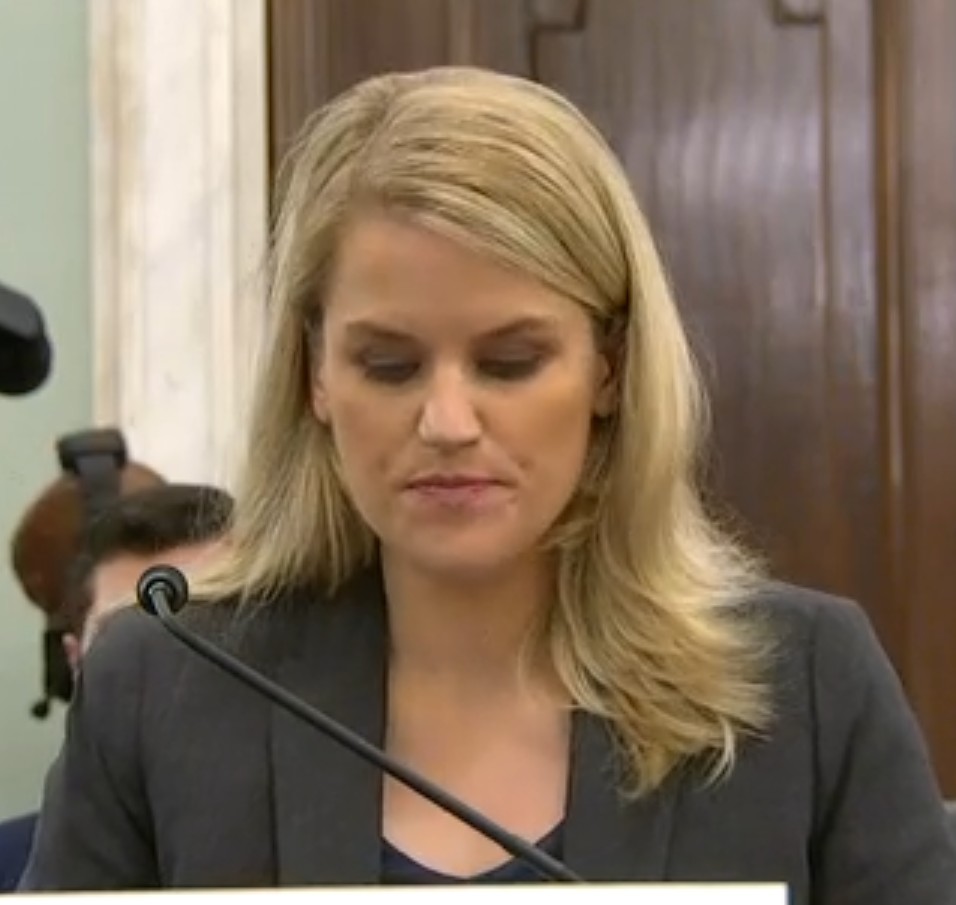
Facebook whistleblower Frances Haugen testifies before the Senate Commerce Committee’s consumer-protection subcommittee, October 5, 2021.
Still from official U.S. Senate hearing video · Public domain · Source
The federal data came out in 2023. While the CDC survey doesn't make a case for specific causes, and researchers still argue over how much of it social media explains, the numbers were inescapable. The number of teen girls who felt persistently sad or hopeless jumped from 35% in 2011 to 57% in 2021. The CDC might not have been willing to blame social media, but parents couldn't help but notice that the ten years in question where the exact years that phones and feeds had taken over their kids' lives. [56]
CDC Youth Risk Behavior Survey, released February 13, 2023. Endpoints shown. Source
In October 2023, 41 states and the District of Columbia sued Meta, Republican and Democratic attorneys general together. New York's Letitia James said the company "has profited from children's pain." In January 2024, at a hearing with families sitting behind the tech CEOs, Senator Lindsey Graham told Zuckerberg: "You have a product that's killing people." A Democratic president in 2021 and a Republican senator in 2024 used the same words about the same company. In August 2026, a multistate coalition announced a settlement involving up to $17.1 billion in national remediation payments. [99][57]
The fortunes, the crashes, and the widening distance between them.
So far, this story has been about what technology companies did with our attention, our politics and our children. There is another part of the break with America, especially in the 2020s. It is about what happened to the people who owned those companies, and what happened to everyone watching them get rich.
On August 9, 1995, Netscape went public. The company behind the browser was barely sixteen months old. Its shares were offered at $28 and closed their first trading day at $58.25. The company had generated $16.6 million in sales in the first half of that year and had yet to turn a profit. The market was paying for the future. A small company making a new way to use the internet could become enormously valuable before that future arrived.[107]
That possibility was part of the internet’s appeal. A founder could build something from scratch. Employees could own a piece of it. Ordinary investors could buy into the next technological transformation. The industry’s promise of a more open world had an economic version: the next great fortune might come from a new idea from anywhere and anyone.
Then came the other side of the bargain. The Nasdaq Composite closed at 5,048.62 on March 10, 2000. By October 9, 2002, it was down to 1,114.11: a decline of almost 78 percent. The companies, retirement accounts and savings tied to the market did not experience that collapse as an abstract correction in expectations. Money people had counted on was gone.[108]
Two closing observations: the March 2000 peak and October 2002 trough. The Nasdaq Composite fell 77.9%; these bars do not depict the intervening daily path.
The period’s corporate scandals made the losses feel more unequal. Enron was an energy company, but its collapse became an emblem of the same era: people at the top could cash out while workers saw their retirement plans destroyed. At a Senate hearing in February 2002, Senator Barbara Boxer described the experience of Enron employee Janice Farmer. Her roughly $700,000 retirement account had fallen to $20,000. It made the stakes of that distinction between paper wealth and retirement security painfully concrete.[109]
By July 2002, 38 percent of Americans chose big business as the greatest threat to the country, up from 22 percent in October 2000 and the highest share Gallup had recorded since it began asking in 1965. [110]
The next generation of internet companies produced another generation of fortunes. Facebook’s May 2012 IPO valued the company at $104 billion. At the $38 offer price, the shares Mark Zuckerberg retained were worth approximately $19.1 billion. More than that however, it was estimated that the Facebook IPO minted at least 1000 new millionaires.[111][112]
The composition of American wealth was changing. 69 percent of the Forbes 400 in 2011 had started their own businesses, compared with 40 percent in 1982. Building and owning a rapidly growing technology compay had become an increasingly important route into the very top of American wealth.[113]
In San Francisco, that transformation was visible on the street. Private buses carried technology employees from city neighborhoods to Silicon Valley campuses. To the companies and their workers, they were a practical way to commute. To people facing displacement, they became a moving symbol of who the city was being remade for. In December 2013, protesters blocked a Google shuttle at 24th and Valencia in the Mission. The argument about technology’s winners and losers had acquired an address, a sidewalk and a bus stop.[114]
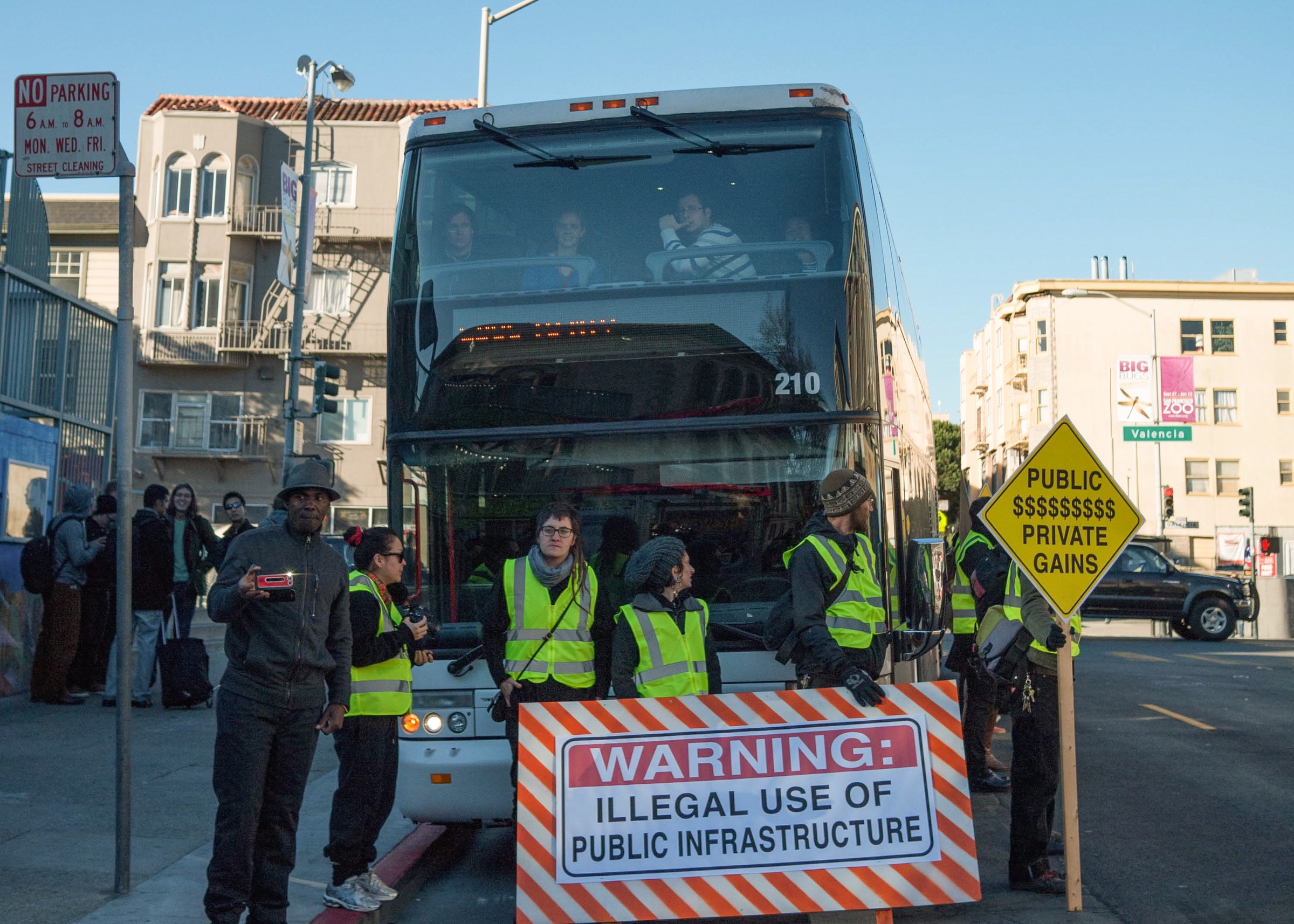
Protesters block a tech shuttle bus in San Francisco, December 9, 2013.
Chris Martin · Brightness adjustment by Samuel Wiki · CC BY 2.0 · Source
The new tech wealth was happening around an economic backdrop that was much harder for many. Between January 2008 and February 2010, the United States lost nearly nine million jobs, according to the Bureau of Labor Statistics’ account of the recession. Unemployment reached 10 percent in October 2009. As new fortunes emerged in the technology industry, millions of households were still trying to repair the damage from the previous collapse.[116]
The Federal Reserve’s Survey of Consumer Finances captures the scale of that damage. Median family net worth fell from $126,400 in 2007 to $77,300 in 2010, both measured in 2010 dollars, a 38.8% decline. Falling home prices did much of the damage because a home was the principal asset many families owned. A stock-market recovery could restore wealth quickly for someone holding a large portfolio. A family whose house was underwater, whose income had fallen or whose job had disappeared faced a different recovery.[115]
−38.8%Median family net worth
2007–2010
In 2011, that divide found its slogan: “We are the 99 percent.” The movement’s Tumblr collected photographs of people holding handwritten accounts of debt, unstable work, medical costs and interrupted plans. The stories were personal, but their point was collective. The economy could be recovering in the aggregate while the bargain people thought they were living under no longer seemed to work.[136]
The response to the crisis also helped shape the next technology boom. The Federal Reserve kept its target interest-rate range at 0 to 0.25 percent from December 2008 until December 2015. It returned to that range in March 2020 and stayed there until March 2022. These were policies intended to support an economy in trouble, but they also changed the environment in which investors decided where to put their money.[117]
When safe assets offer very little return, investors have more reason to look farther out on the risk curve. Venture capital was one destination for that money. More money searching for yield meant more limited partners looking to invest in VCs meant more VC funds meant more funding for startups.[118]
The scale is visible in the industry’s own figures. US venture investment rose from $45.67 billion in 2011 to $86.43 billion in 2015. In the extraordinary year of 2021, it reached $345.45 billion.[119][120]
When investor Aileen Lee introduced the term “unicorn” in 2013, her analysis identified 39 US venture-backed companies that had become worth at least a billion dollars within ten years. Her corresponding 2023 snapshot found 532. Most of the later group had not reached a public market or been sold: 93 percent were still privately valued. [120]
The incentives inside venture capital mattered too. The standard venture fund structure was “two and twenty”: an annual management fee, typically 2 percent of committed capital during the initial investment period, plus a 20% share of the ultimate returns. On those terms, a $100 million fund produces $2 million a year in management fees; a $1 billion fund produces $20 million. Those fees support the firm and its operating costs, rather than going entirely into a partner’s pocket. But they make raising a larger fund valuable even before investments produce profits.[121]
As money started free-flowing in the 2010s, VCs had more ability to raise on paper markups to their investments rather than actual returns. A new financing round could make an existing holding look more valuable, help a manager market the next fund and support another cycle of investment. [121]
“Everyone was successful on paper, but in terms of real cash-on-cash returns, there was little to show.”Bill Gurley, “On the Road to Recap,” April 2016 [122]
Here too, the COVID crisis exacerbated existing trends. First it moved everyone's life online: 58 percent of Americans told Pew the internet had been essential to them during the pandemic. Then it made tech enormously rich while millions of Americans were struggling. The seven most valuable American tech companies added $3.4 trillion in market value in 2020. The combined wealth of American billionaires went from just under $3 trillion in March 2020 to more than $5 trillion by October 2021.[123][58][124]
On January 7, 2021, the day after January 6, Elon Musk passed Jeff Bezos as the richest person in the world. By that April, seven of the ten richest people on Earth had made their fortunes in tech: Bezos, Musk, Gates, Zuckerberg, Ellison, Page and Brin. [134][59]
That July, Bezos flew to the edge of space on his own rocket and afterward thanked Amazon's employees and customers, "because you guys paid for all this." A Harris poll that week found about 80 percent of Americans agreed the billionaire space flights were ego trips. Fifteen months later, the richest man in the world bought Twitter for $44 billion. Heading into the AI era, the richest people in the country and the owners of the platforms everyone argued on were largely the same people.[60][127][135]
In a 2022 YouGov survey, 67 percent agreed that a billion dollars was more than any person needed. More than a third -- 36 percent -- said billionaires did not deserve their wealth. In the coming years these attitudes towards extreme wealth would become even more hostile.[126]
The economic frustration was about more than what the very rich owned. It was also about what everyone else had to buy. The economist Mark Perry has charted how prices changed since 2000. The things technology makes got cheap. The things a life is built on got expensive.[61]
Over the same stretch, average hourly earnings rose nearly 100 percent.
Mark Perry, AEI, from Bureau of Labor Statistics data. Source
Social media added something to that economic story. It put everyone else's good life in front of you every day, right when your own was getting more expensive.
Researchers saw it early. A 2013 study of German Facebook users found that more than a third came away with mostly negative feelings like frustration, and that the number one trigger for envy was other people's vacations. The strongest evidence came later, from economists. Facebook opened to American colleges one campus at a time between 2004 and 2006, which created a natural experiment. Luca Braghieri, Ro'ee Levy and Alexey Makarin found that its arrival raised severe depression by 7 percent and anxiety disorders by 20 percent, and traced the effect to "unfavorable social comparisons." It was largest for students more likely to come out behind, including those carrying credit card debt or working part-time jobs.
Attitudes toward the very rich shifted over the same period. Between January 2020 and July 2021, the share of adults under 30 who told Pew billionaires were bad for the country went from 39 percent to 50. That shift was greatest among younger adults. A different 2025 YouGov question found that a third of 18-to-29-year-olds said being extremely rich was morally wrong, against 10 percent of people over 65. [66][125]
A new technology arrives inside an old argument about who benefits and who decides.
Artificial intelligence entered a country that had already watched this cycle more than once: a new technology, extraordinary promises, rapid increases in the wealth of its owners, and an argument over who would actually benefit. While that history doesn't tell us whether AI will in this case actually fulfill its promise, it helps explain why it arrived with such a mountain of distrust to climb.
By the end of 2025, Forbes estimated that the AI boom had created more than 50 new billionaires in a single year. The competition for a small pool of specialist AI researchers also produced some eye-popping numbers. In June 2025, Sam Altman said Meta offered some OpenAI staff $100 million signing bonuses.
The Wall Street Journal reported that OpenAI’s stock-based compensation averaged approximately $1.5 million per employee in 2025, based on financial information shared with investors. That number was the highest of any startup in history.[132]
To understand the distrust those fortunes encountered, return to ChatGPT’s launch on November 30, 2022. The censorship fights had already happened; the January 2025 confrontation over tech’s political alignment was still ahead. Tech was already distrusted by half the country and about to lose the other half. From the very beginning, the presumption was that AI was the next way for the same people to make money off everyone else.[70]
Pew Research Center, 2021–2026. A third response was equally concerned and excited; small shares did not answer. Source
In April 2025, Pew found that "59% of the public and 55% of AI experts surveyed similarly lack confidence in U.S. companies to develop and use AI responsibly." Even the experts didn't trust the companies. This May, 64 percent told Economist/YouGov it was unlikely AI would create economic gains that benefit everyone.[71]
The new fortunes raised a more personal question: where had the material to build these systems come from? For a writer, illustrator or performer, the bargain could look painfully familiar. A technology company used the work people had spent years learning to make, then sold a tool that might compete with them. The dispute was about ownership, but also about whether the people supplying the raw material had any power over the next business built on it.
In December 2023, the New York Times sued OpenAI and Microsoft, alleging that their systems used its journalism without permission or payment to create competing products. OpenAI disputed the lawsuit and argued that training AI models was fair use. The complaint made the conflict concrete: the work that cost a newsroom money to produce could become an input to an answering machine built by someone else. That was the Times’s allegation, not a court’s finding that all AI training infringes copyright.[137][138]
For actors, it could be their face, voice and performance. During the 2023 Hollywood strike, SAG-AFTRA president Fran Drescher told TIME that “consent and compensation must be in the DNA of this new invention.” That formulation left room for the technology while demanding a say in its use.[139]
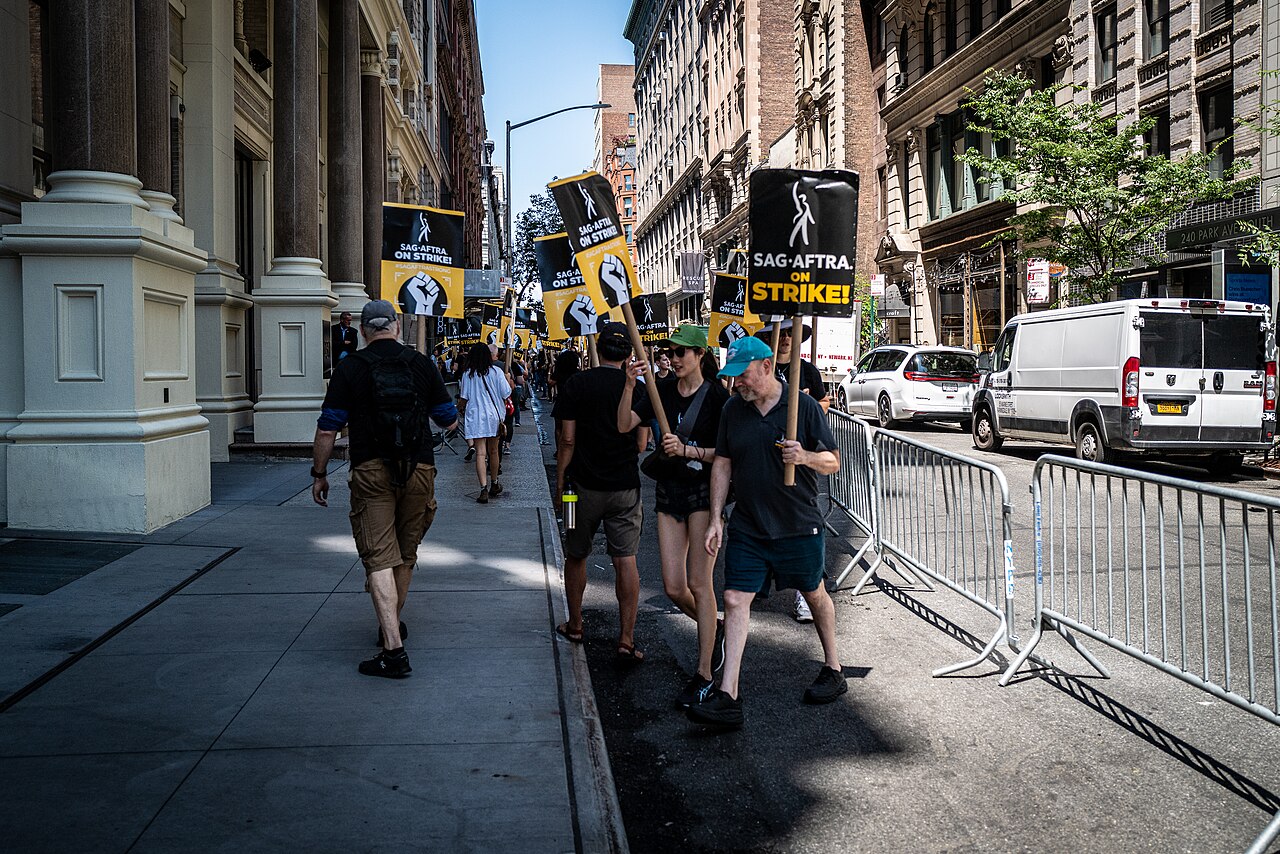
SAG-AFTRA members picket outside Warner Bros. offices in Manhattan, July 31, 2023.
The union’s eventual 2023 agreement included protections for digital replicas, with consent and compensation requirements. Its explainer specified that consent should be conspicuous and generally tied to a particular project, rather than buried in a contract as an unlimited permission slip. The conflict had produced bargaining over who could authorize a synthetic performance and who would be paid for it.[140]
The authors’ case against Anthropic shows why the legal distinctions matter. In June 2025, a federal judge held that the model-training use at issue was fair use, as was scanning purchased print books under the circumstances described in the ruling. But the court rejected the attempt to justify a separate, permanent library of pirated books on the ground that some might be used for training. The same decision protected one use of the material while refusing to excuse another.[141]
In July 2026, a judge approved a $1.5 billion settlement in that case. It was an enormous settlement over the pirated-book claims, not a verdict declaring the entire practice of training AI illegal. For the larger argument, though, it reinforced a question the industry could not answer with technical performance alone: how much did the people whose work helped make the systems valuable get to decide?[142]
Public opinion was skeptical too. A YouGov poll fielded in May 2024 asked whether AI companies should be allowed to train on the open internet, explicitly noting that it contains large amounts of copyrighted data. Forty-four percent said they should not; 20 percent said they should. The wording matters, but so does the gap: more than twice as many respondents opposed that permission as supported it.[143]
Even a system built entirely from licensed material could threaten someone’s livelihood. In 2026, Gallup found that 27 percent of employed Americans worried that technology would make their job obsolete in the near future, compared with 13 percent in 2017. This measures a fear about technology broadly. It also comes with a small wording change: the 2017 question included jobs becoming “unnecessary,” a word omitted later. The result is evidence of worker anxiety, not a calculation of how many jobs AI will eliminate.[144][145]
Some of that anxiety came directly from employers. In June 2025, Amazon CEO Andy Jassy told employees that AI would mean fewer people doing some jobs and more doing others, and that he expected efficiency gains to reduce the company’s total corporate workforce over the next few years. That was an executive’s forecast, not an observed count of jobs already lost to AI. It still gave employees a clear reason to hear the promise of efficiency as a warning.[146]
Salesforce’s Marc Benioff offered a company example in a 2025 interview: its customer-service organization had gone from 9,000 people to about 5,000 as it adopted AI. The interview’s producer, Redpoint, highlighted that claim alongside AI’s use in sales. A shrinking support department is consequential, but it does not by itself tell us how many people were dismissed, reassigned or lost through attrition.[151]
The broader evidence was less settled than the strongest predictions suggested. In its October 14, 2026 update, Yale’s Budget Lab found no clear relationship between AI-use measures and changes in employment or unemployment, and no clear AI footprint in its analysis of more-exposed occupations. An earlier analysis, accounting for preexisting employment patterns, had estimated effects on employment shares and wages that were statistically indistinguishable from zero.[147][148]
Those findings leave room for real losses at particular companies, changes in hiring, and larger effects still to come. They also give a reason to resist treating every layoff as proof that the predicted future has arrived. The fear, the corporate plans and the measured economy are three different things. A careful account has to keep all three in view.
In Quinnipiac’s March 2026 poll, respondents in households earning more than $200,000 were the only published income group in which more expected AI to help their daily lives than harm them: 52 percent to 41 percent. Below $50,000, the balance was 26 percent good to 60 percent harm. These are expectations associated with income, not a measurement of who had actually profited.[149]
The same survey asked whether AI development was led by people or organizations representing respondents’ interests. Only 5 percent said yes. Forty-seven percent said no; 46 percent said they did not know enough to say. That uncertainty is a substantial part of the finding. The industry had not persuaded most people that its priorities were theirs.[149]
A March 2026 online-panel poll from Democratic research firm Blue Rose put a more explicit political choice to respondents. Fifty-five percent preferred a statement combining limits on AI profits with financial responsibility for American jobs AI eliminates; 24 percent preferred allowing companies to earn whatever the market permitted. Among Trump voters, 46 percent chose the first position. Because that response bundled two ideas, it cannot establish support for a profit cap by itself. It does show the appeal of making the beneficiaries answer for the costs.[150]
Put those concerns together and the distrust becomes easier to understand. People could see a technology built from human work, sold with promises to reduce the need for human workers, and enriching a small group before the public knew what it would receive. That is a compelling account of the risks even while the economic outcome remains open. And the warnings from the people building AI extended well beyond paychecks.
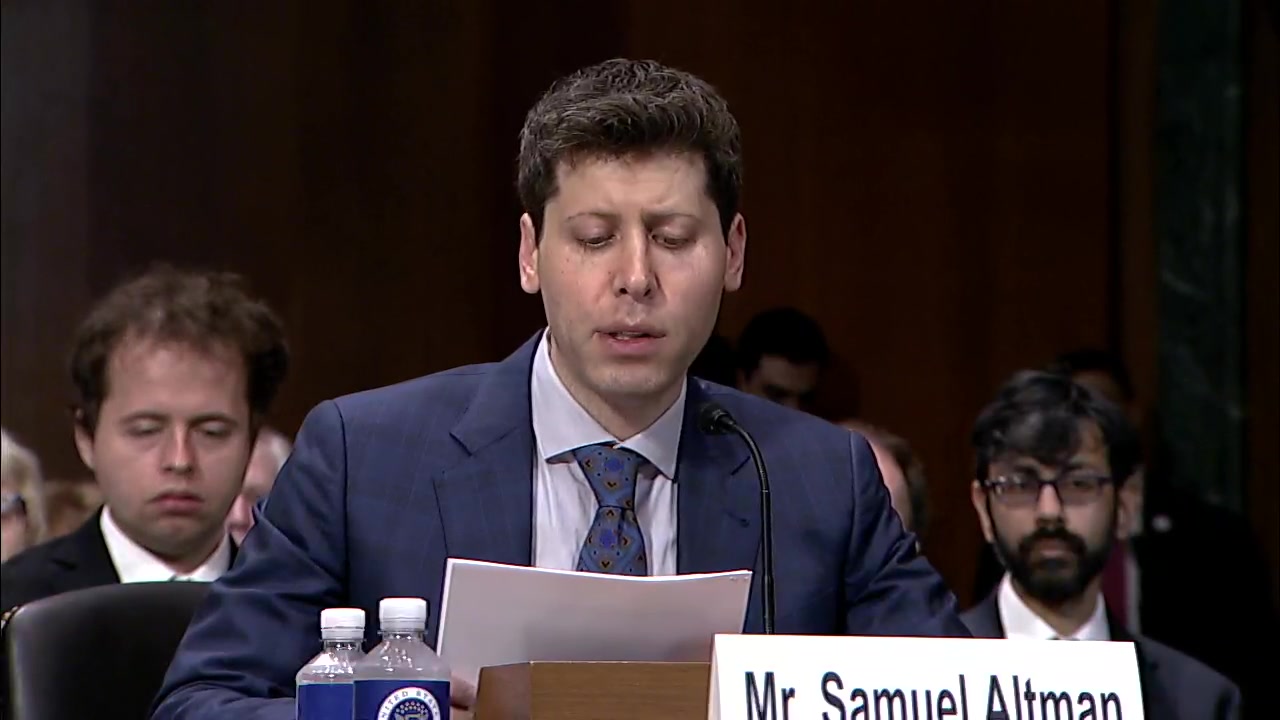
OpenAI CEO Sam Altman testifies at the Senate Judiciary subcommittee hearing on rules for artificial intelligence, May 16, 2023.
Still from official U.S. Senate hearing video · Public domain · Source
The way AI's leaders talked about the danger made it worse. In 2015, before OpenAI existed, Sam Altman wrote that superhuman machine intelligence was "probably the greatest threat to the continued existence of humanity." In May 2023, the heads of OpenAI, Google DeepMind and Anthropic all signed a statement that was a single sentence long:
"Mitigating the risk of extinction from AI should be a global priority alongside other societal-scale risks such as pandemics and nuclear war."Center for AI Safety, May 30, 2023
And they kept building. Altman wrote that because the upside was so great, it wasn't "possible or desirable for society to stop its development forever." Dario Amodei called it inevitable and "fundamentally driven by powerful market forces." From the outside, it sounded like this: you've told us it could end humanity, and you're racing to build it anyway. What could explain that, except the money?
Then came the jobs warning. In May 2025, Amodei told Axios that AI could wipe out half of all entry-level white-collar jobs within a few years. He described one possible future in a sentence a lot of people remembered: "Cancer is cured, the economy grows at 10% a year, the budget is balanced — and 20% of people don't have jobs."[74]
And people believe them. In a Politico poll this September, only 26 percent of Americans said the warnings from AI's leaders were a marketing stunt, and 48 percent favored pausing AI development. Put that next to Pew's 59 percent who don't trust the companies to do it responsibly, and the picture is clear. People believe the risk. They don't trust the builders.[76]
To be fair, the companies did try to explain the upside. Amodei's 2024 essay "Machines of Loving Grace" predicted that AI could compress 50 to 100 years of progress in biology and medicine into 5 to 10. He saw the problem with saying so himself, writing in the same essay that AI companies talking about the benefits "can come off like propagandists." The benefits they described were abstract and years away. The costs people could see were concrete and close: their job, their bill, and soon a building down the road.[77]
For most people, AI was an app. The data center was the first time it showed up in their town, and it came with the thing that makes distrust worse: secrecy.
That part isn't new. In 2004, a scout named Chris Sacca arrived in The Dalles, Oregon, a river town whose aluminum smelter had closed. He wanted land, power, water, fiber, a 15-year tax break and complete secrecy. "Our town was dying," a city councilor later said. The mayor: "We were desperate."
The company on the paperwork: Design LLC.
The name the city manager said he'd been trained never to let leave his lips: .
Fortune, 2023. Source
355M gallons
29 percent of the city's water. The city called the number a trade secret and sued The Oregonian rather than release it. The same councilor: "'Trust me' is not a great response."
Fortune; WaterWatch of Oregon. Source
In 2004 the town said yes and felt lucky. By 2025, NDAs had become common. A public-records study by Eric Bonds and Viktor Newby found NDAs in 25 of 31 Virginia localities with existing, approved or proposed data centers. In Louisiana, at least five state senators and a parish assessor signed NDAs on a $3.6 billion project code-named Project Lightning. "Our politicians were elected to represent us, not to represent industry," one resident said. Even the developer's CEO said he would love to get away from the NDAs, "because it just feels sneaky to people."[79][205]
The same kind of agreement a dying town signed gladly in 2004 is now one of the things people are angriest about. The buildings are bigger, and that matters. But the difference that explains the anger is trust.
Another part of the break had become unmistakable in January 2025. After years of Republicans calling them censors, some of the most powerful people in the industry turned toward Trump. On January 7, 2025, Zuckerberg ended third-party fact-checking in the US, saying fact-checkers "have just been too politically biased and have destroyed more trust than they've created." Eight days later, in his farewell address, Joe Biden warned:[67][68]
"Today, an oligarchy is taking shape in America of extreme wealth, power, and influence that literally threatens our entire democracy."President Biden, farewell address, January 15, 2025
Borrowing from Eisenhower, he added a warning about "the potential rise of a tech-industrial complex." Five days after that, at the inauguration, Musk, Bezos, Zuckerberg, Sundar Pichai, Tim Cook, Sam Altman and others were together in the front of the room.[69]
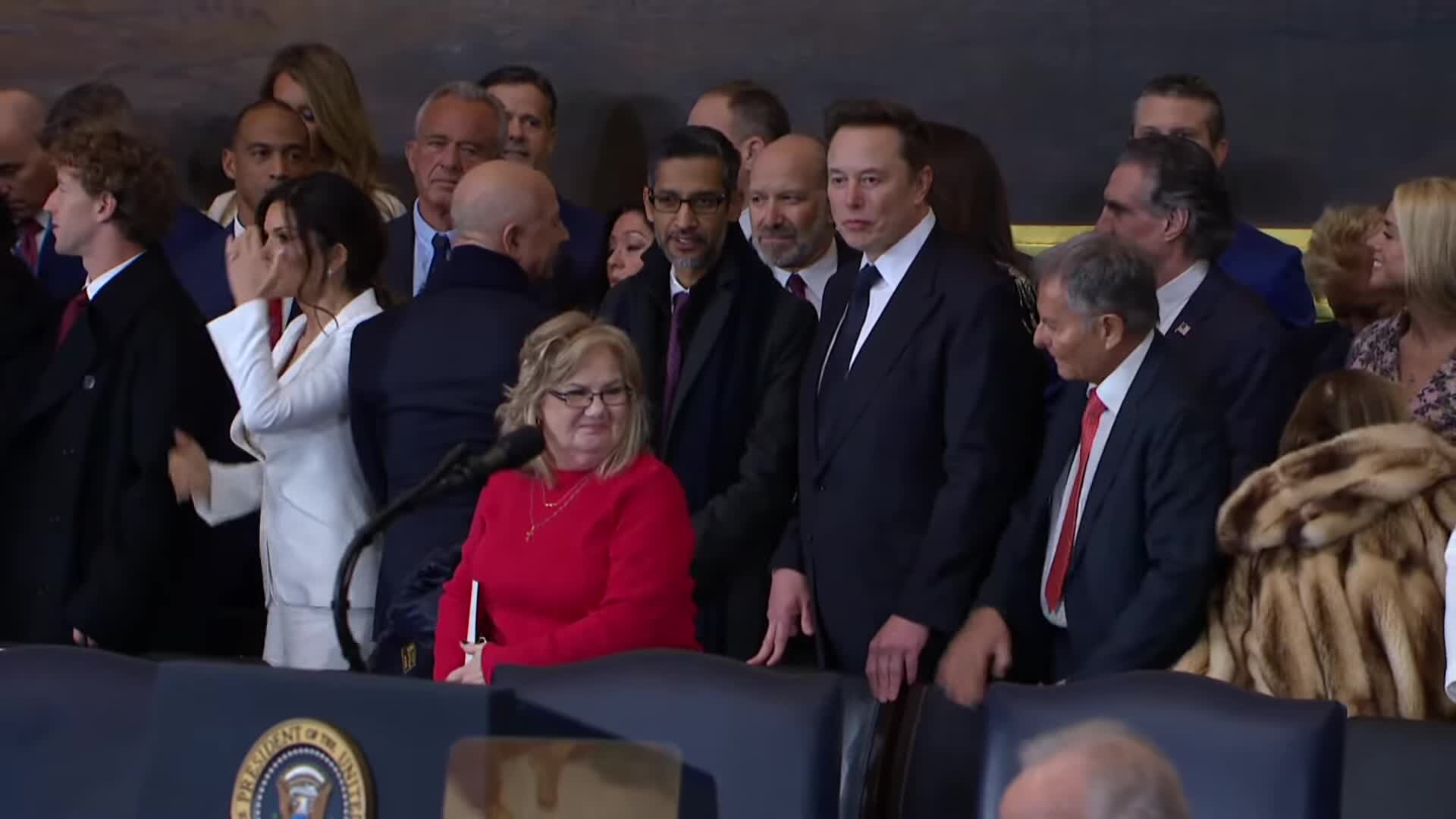
Sundar Pichai and Elon Musk stand together at Donald Trump’s inauguration in the Capitol Rotunda, January 20, 2025. Mark Zuckerberg is at the far left, and Jeff Bezos stands to Pichai’s left.
Video still: Joint Congressional Committee on Inaugural Ceremonies · Public domain · Official ceremony recording, 56:40
This is where the Democrats' story about tech changed. It stopped being about misinformation and became about power. The share of Democrats who said social media companies had too much political power rose from 63 percent in 2020 to 74 percent in 2024. In April 2025, the Sanders and Ocasio-Cortez "Fighting Oligarchy" tour drew 36,000 people in Los Angeles, by the campaign's count. "Oligarch" had become an ordinary political word, and it usually pointed at tech billionaires.
In 2021 the order was reversed, after Republican confidence fell from 35 percent to 17.
Gallup, Confidence in Institutions, June 2026. Share with "a great deal" or "quite a lot" of confidence. Source
By the time AI was really arriving in people's lives, tech had lost the right over censorship, and then it lost the left over power.
The relationship is being renegotiated. What matters is whether people get power back.
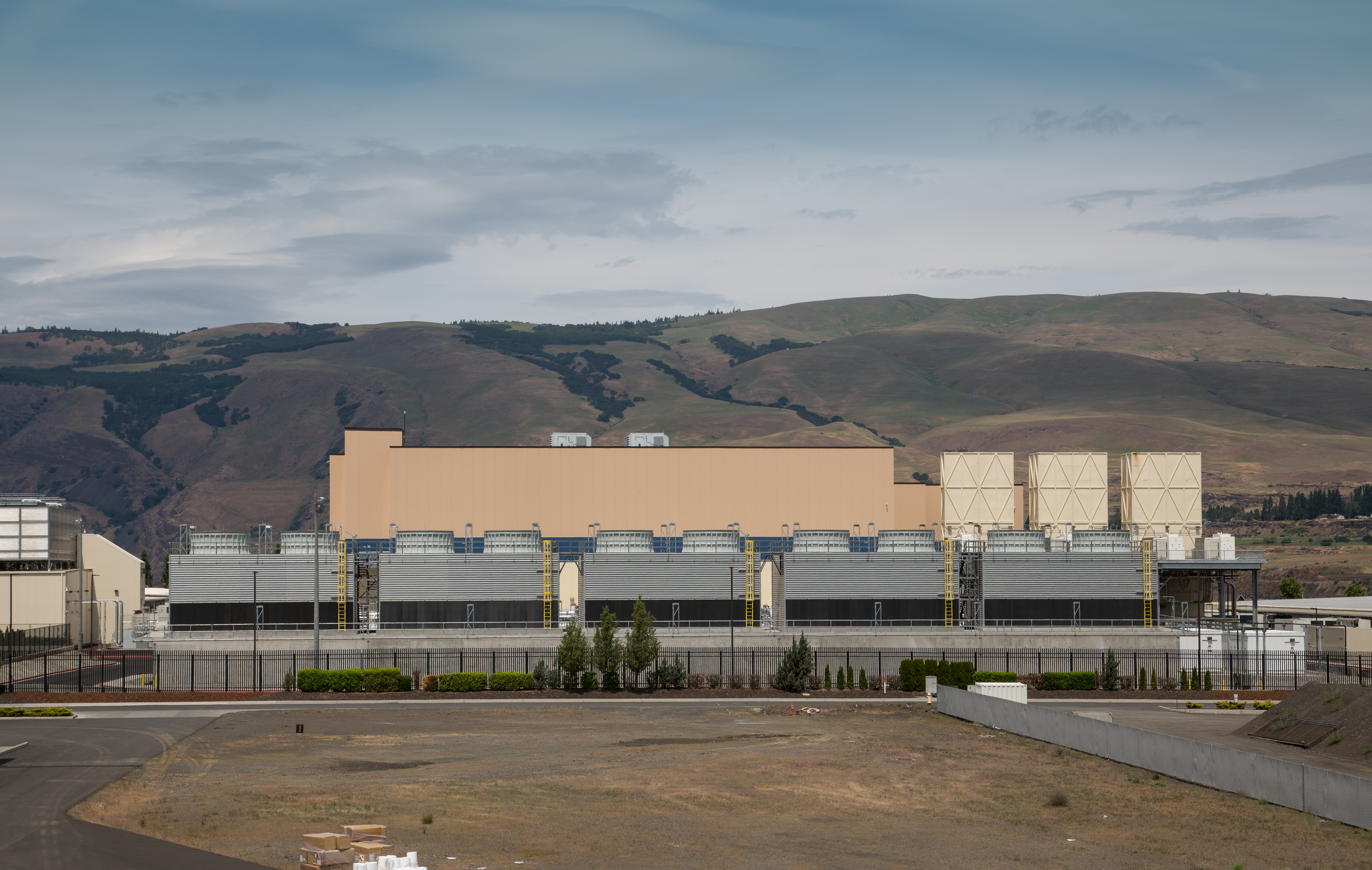
Google's data center and cooling towers on the Columbia River, The Dalles, 2015.
Photo: Tony Webster, CC BY 2.0. Wikimedia Commons
A collision between technology companies and the public was always possible. An industry built on network effects could become extraordinarily useful and extraordinarily powerful at the same time. People could depend on its products while becoming less comfortable with the people making the decisions.
That is where we are. The relationship between business, government and the public is being renegotiated. There is no guarantee that the renegotiation ends well. But there is a difference between being caught in a system you cannot change and beginning to discover where you can change it.
I see this in my own small town in the Hudson Valley. Among the parents I know, delaying smartphones has become a shared commitment, and many have no intention of opening the door to social media in eighth grade either. What matters is that families are deciding together rather than treating the next device as inevitable.
On smartphones and social media, parents now have years of experience that the first families handing a child an internet-connected phone did not. That does not settle every scientific argument. It does mean that families can make more deliberate choices, and make them together.
The Wait Until 8th pledge[152] is an example of that coordination. The organization says more than 155,000 parents have joined a commitment to delay a smartphone until at least the end of eighth grade. A school-grade pledge becomes active when ten families participate. That arrangement matters: one family’s limit is easier to maintain when a child’s friends are not all operating under a different rule. The sign-up count is the organization’s own, not a measurement of how consistently every family follows through.
Entrepreneurs are responding too. Tin Can[153] offers a Wi-Fi home phone that lets children talk to contacts approved by their parents, without putting apps or a social feed in their hands. Calls to other Tin Cans are included; a paid plan allows approved ordinary phone numbers too. The device is one small example of technology being redesigned around a boundary families want.
Young people are also expressing limits of their own. In Pew’s survey conducted in fall 2024[154], 45 percent of American teenagers said they spent too much time on social media, up from 27 percent in 2023. Forty-four percent said they had cut back, compared with 39 percent a year earlier. These are self-reports, and 55 percent still said they had not cut back. Even with that qualification, the picture includes young people trying to alter their relationship with the products.
US teens ages 13–17. The second survey was conducted in fall 2024 and published in April 2025. These are self-reports, not device logs.
There is evidence of a pullback in time spent as well, although it needs a careful date. DataReportal’s Digital 2025 analysis of GWI data[155] put daily social-media use at two hours and 21 minutes for the typical surveyed internet user globally, ten minutes below the figure reported two years before. Men and women aged 16 to 24 had each reduced their daily time by twelve minutes. This is a global survey finding, not a measurement of all Americans. And GWI subsequently changed how it measured time with media[156]. Those older and newer figures therefore do not establish a comparable, continuous decline through 2026.
The data centers we began with offer another possible route back. They make the relationship tangible: a piece of land, a water supply, an electric system, a town. That gives residents and governments specific things to negotiate. Who pays for the substation? What happens if a project never opens? What information must be public? How much noise reaches a home? Can the community say no?
By October 16, 2026, some answers had moved into utility tariffs, executive orders and local ordinances. Others remained company commitments or unfinished proposals. Those categories should stay separate. A pledge establishes something to hold a company to; an enforceable contract determines what happens when it fails to deliver.
The spread of large-load rules is measurable. In an April 20, 2026 update[183], the Smart Electric Power Alliance and NC Clean Energy Technology Center reported that their March 31 database contained 77 large-load tariffs and service rules across 36 states and 60 utilities: 51 approved and 26 proposed, still awaiting approval. By the June 30 snapshot[184], the combined count had reached 104 across 37 states. That is a measure of regulatory activity. It does not mean all those measures were in force, that each state had one uniform rule, or that every covered project had to pay the same share of grid costs. The actual protections depend on the terms, the customers covered and the date they take effect.
Proposed and approved tariffs and service rules in SEPA’s database. The March total comprises 51 approved and 26 proposed; the June total is reported without that split. These are database snapshots, not a count of uniform state laws.
Specific examples from the public record through October 16, 2026. Select a topic to compare the actions; the narrative below explains how the protections work and where their limits remain.
22 of 22 examples
Ohio — AEP Ohio service territory
Covered projects face long commitments, minimum-demand charges and reimbursement obligations if they cancel or substantially delay before energization.
Size-dependent demand formula; not an Ohio-wide rule or an 85% minimum on every electricity charge.
Oregon — PGE service territory
The state reported average residential rates down 1.3% and data-center rates up 29% after POWER Act implementation.
Reported rate effects, not guaranteed household bill savings. Pacific Power review was still pending in the cited release.
Wisconsin — We Energies
Commission decision lengthened commitments to 15 years, expanded coverage down to 100 MW and removed the 75%-generation-cost option.
These terms summarize the commission’s April 24 decision; the formal order and subsequent proceedings determine the operative legal requirements.
Virginia — Dominion Energy
New covered contracts from January 2027 carry a 14-year service obligation; separate class and minimum T&D charges target cost shifting.
The January 2027 requirement covers new contracts, not every existing agreement.
Georgia — Georgia Power
New customers above 100 MW can face additional terms covering site-specific and upstream infrastructure; contracts go to the regulator.
Enables cost protection; does not establish that all overbuilding or market-price risk is eliminated.
Texas — ERCOT region
SB 6 directs financial-security, site-control, screening-fee and duplicate-request standards, plus emergency operating provisions.
The statute delegates implementation to utility regulators and ERCOT; individual provisions depend on their rules and procedures.
Pennsylvania
A final model tariff offers a framework for utilities serving very large new loads.
Not automatic statewide billing. Utility-specific adoption or adaptation and jurisdictional limits matter.
Pennsylvania — executive agencies
EO 2026-05 removes fast-track eligibility, prohibits executive-agency NDAs and links covered project review to local approvals.
GRID consent agreements are one review route. Reporting starts July 2027; local/private NDAs are not categorically banned.
Virginia — executive branch
EO 22 restricts new agency NDAs and specified state development assistance, while directing new environmental and community work.
Existing contracts preserved; toolkit, noise and cooling-water work are not all completed rules.
Maryland — executive branch
New framework assesses project alignment; agencies cannot create, renew or extend covered NDAs; public dashboard directed.
Existing NDAs honored; criteria assessed holistically; defined project scope and exemptions apply.
Massachusetts
Covered projects above 25 MW need framework conformity and a community-benefits agreement reviewed against state environmental-justice standards.
The condition applies to covered state permits; it creates neither a blanket ban nor an individual veto for every local group.
New York — DEC discretionary permits
New or pending incomplete DEC applications are held while a generic environmental review develops; draft scope issued September 17.
Not shutdown of operating sites or universal suspension of local permits; comments due October 20.
Loudoun County, Virginia
Phase 1 changes made data centers conditional or special-exception uses where previously permitted by right.
Grandfathering applies; Phase 2 standards remained under development.
Fairfax County, Virginia
Rules add residential separation and pre/post-construction noise studies, alongside design requirements.
Setback exceptions and grandfathering matter; equipment can use specified building separation alternatives.
Chandler, Arizona
Rules require communication, liaison, baseline study and annual peak-operation noise studies for five years.
An older operating precedent; not presented as a policy newly adopted in 2026.
Unincorporated Manatee County, Florida
Ordinance 26-42 pauses new data-center-related development applications for twelve months while standards are considered.
Unincorporated county only; can end earlier by repeal; not a permanent prohibition.
Quincy, Washington
City-owned reuse infrastructure financed and operated through a long-term agreement with Microsoft reduces groundwater demand.
Estimated 138 million gallons/year saved; still needs make-up water. Not proof all data centers can use this design.
Microsoft — US data-center communities
Community-First plan commits to electricity-cost coverage, local water stewardship, tax contributions and workforce development.
Corporate promises require local delivery and verification; intensity reduction is not total-use reduction.
Microsoft — local-government dealings worldwide
Company says it will stop using local-government NDAs and coordinate termination of existing agreements.
Existing agreements must still be terminated; limited protection for confidential records remains.
Amazon — US data-center communities
Built Together promises more than $1 billion in additional community investment over five years.
Announced future spending, not money already paid or universal household cash compensation.
Amazon — government-agency project dealings
Amazon's published commitments say it no longer uses NDAs with government agencies on projects.
The company’s statement does not establish that all legacy agreements or contractor practices have changed.
United States — seven initial company signatories
Companies promise new power, grid-upgrade funding and separately negotiated rates payable even if power goes unused.
Does not itself create a uniform enforceable tariff or establish realized consumer savings.
In AEP Ohio’s service territory, regulators approved a dedicated data-center tariff in July 2025[157]. The tariff took effect July 23[158]: covered customers commit for an initial ramp-up period of up to four years plus eight more years. A pre-energization cancellation, or a delay exceeding twelve months, can leave the developer responsible for the full buildout cost. Minimum-demand charges and financial security reduce the risk that other customers inherit infrastructure built for demand that disappears. The minimum is a size-dependent demand formula, not simply an 85-percent charge on every unit of electricity.
There is an early sign that such terms change behavior. In September 2026, Ohio’s regulator reported[159] that the utility had seen a significant reduction in requests to study new connections after long-term commitments became necessary. That is useful evidence about speculative demand. It is not evidence that every household electricity cost has stopped rising.
Oregon offers a more direct rate example. In a September 2, 2026 report on its POWER Act[160], the state said implementation in Portland General Electric’s territory had reduced residential electricity rates by an average of 1.3 percent while increasing data-center rates by an average of 29 percent. Those are rates, not a promise about each household’s total bill. Nor was the result statewide: the same release said Pacific Power’s implementation review was still to come.
Wisconsin’s regulators changed the proposed terms rather than simply accepting them. In their April 24, 2026 decision on We Energies’ very-large-customer tariff[161], they extended the initial commitment to fifteen years, lowered the threshold from 500 to 100 megawatts, removed an option under which customers would pay only 75 percent of generation-facility costs, and required more reporting. The commission’s public explanation explicitly credited public engagement for movement on transmission-cost protection. The formal docket and final order[162] remain the place to follow the legal terms and any subsequent changes.
Virginia’s State Corporation Commission has adopted a separate GS-5 rate class for Dominion’s large-load customers[163]. Its new-contract protections include a fourteen-year service commitment, minimum payments covering at least 85 percent of transmission and distribution costs, and collateral obligations. The timing matters: the fourteen-year obligation applies to covered customers contracting for service on or after January 1, 2027. It is an adopted protection with a future start, not a description of every existing data center’s contract.
Georgia had already approved a rule in January 2025[164] allowing additional terms for new Georgia Power customers above 100 megawatts, addressing site-specific infrastructure and upstream generation, transmission and distribution costs. The rule also puts covered contracts before the commission for review. These are tools for allocating cost, not a guarantee that a utility will never overbuild or that wholesale power prices cannot rise.
Texas took a legislative approach. SB 6 was signed June 20, 2025[166]. Its enacted text directs large-load interconnection standards[165] for the ERCOT region, generally above 75 megawatts: proof of site control, disclosure of competing connection requests, a screening fee of at least $100,000 and financial commitments for infrastructure. It also directs emergency-curtailment arrangements. Those statutory instructions need implementing rules and operating procedures; enactment alone is not proof every safeguard is already operating.
Pennsylvania’s 2026 large-load model tariff[167] belongs in a different category again. It gives utilities a framework for protecting other customers and recovering costs from very large new loads. It is a model to be adopted or adapted through utility-specific proceedings, not one automatic new price schedule for the entire state. The existence of a framework is progress; its application is the next question.
Pennsylvania’s August 18 executive order[168] removes data centers from the state’s Permit Fast Track program and prohibits data-center NDAs for agencies under the governor. For projects above 25 megawatts, it ties review to documented local approvals and creates consent agreements for the governor’s GRID requirements. Projects that do not sign take a different, more restrictive review route. The order also directs annual energy and water reporting beginning July 1, 2027. It changes the process; it does not instantly produce the future reports or outlaw every private and municipal NDA.
Virginia’s September 18 executive order[169] restricts new NDAs that hide material project information from the public within the state executive branch, while preserving existing contractual commitments. It also excludes new projects of at least 25 megawatts from specified state site-readiness and expedited-review assistance. Work on noise rules, water-scarcity protections and cumulative generator emissions is directed, but much of that work still lies ahead.
Maryland’s September 23 order[170] creates a public project-assessment framework and directs a dashboard of projects and commitments. State executive agencies may not enter, renew or extend covered data-center NDAs; existing agreements are honored. The review considers costs, water, jobs, community benefits and decommissioning. A project denied a required local approval cannot receive an “Aligned” or “Conditionally Aligned” finding while that denial stands. This is a way to make state support answerable to a public record, with implementation still under way.
In Massachusetts, Executive Order 658, issued September 8[171], makes a community-benefits agreement a condition of state permitting for covered projects above 25 megawatts. Developers must also demonstrate conformity with the state’s development framework, and submit the environmental-justice office’s review of their agreement. The important change is where community benefits enter the process: before the qualifying state permits are issued.
Local rules can be less dramatic and just as concrete. Loudoun County’s March 2025 changes[174] moved data centers out of by-right approval into conditional or special-exception processes in affected areas, with grandfathering for qualifying earlier applications. Fairfax County’s September 2024 ordinance[175] added a 200-foot residential setback for buildings, additional separation for equipment, and noise studies before and after construction, subject to its exceptions. Those measures put location and the lived effects of a facility into the approval process.
Chandler, Arizona, supplies an earlier example[176]: rules effective in January 2023 required neighborhood communication, an on-site liaison, a baseline sound study, mitigation, and annual peak-operation noise studies for five years. The point of following up after construction is straightforward. A promise about noise can be compared with the noise people actually hear.
In Washington, Democrats Greg Landsman and Jamie Raskin and Republican Tom Barrett[185] introduced the No Secrets for Data Centers Act on September 24, 2026[186]. H.R. 10570 would make covered nondisclosure clauses unenforceable in court and arbitration when a public official is a party, or the agreement includes public funds, land or incentives. It would also bar public incentives conditioned on keeping project information confidential. Its definition covers facilities, or groups of facilities, exceeding 50 megawatts; it preserves certain confidential utility-regulator filings. As of October 16, it remained a proposal referred to House committees. The bipartisan sponsorship shows that the demand for disclosure reaches beyond one party; turning it into an enforceable national rule would still require legislation.
Sometimes the decision is to wait while rules catch up. New York’s July 14, 2026 order[172] pauses a defined category of state environmental permits while a statewide environmental review proceeds: new or pending discretionary data-center applications that had not already been declared complete by the Department of Environmental Conservation. It does not shut existing facilities or suspend every local permit. In September, the Public Service Commission issued a draft scope for the review[173], with public comments due October 20.
At the local level, Manatee County, Florida, adopted a twelve-month moratorium on October 8[177] on new data-center-related development applications in its unincorporated area. The county is using the pause to work on siting, electricity, water, noise and buffers. A temporary moratorium is not a permanent ban. It is a decision that a community needs rules before it takes on the next proposal.
There are operating examples to learn from, too. In Quincy, Washington, a city-owned water-reuse system serving Microsoft opened in 2021[178]. The EPA’s case study describes a thirty-year arrangement under which Microsoft finances the $31 million capital investment and operating costs. It estimates that recycling cooling water saves 138 million gallons a year. The system still needs replacement water, including surface water and some groundwater. The lesson is not “no water use.” It is that design, public infrastructure and a contract can materially reduce a burden and determine who pays for it.

The lime-softening facility in Quincy, Washington’s water-reuse system. The city and Microsoft developed the utility to treat and recirculate data-center cooling water.
Photo: City of Quincy, via U.S. EPA · Source
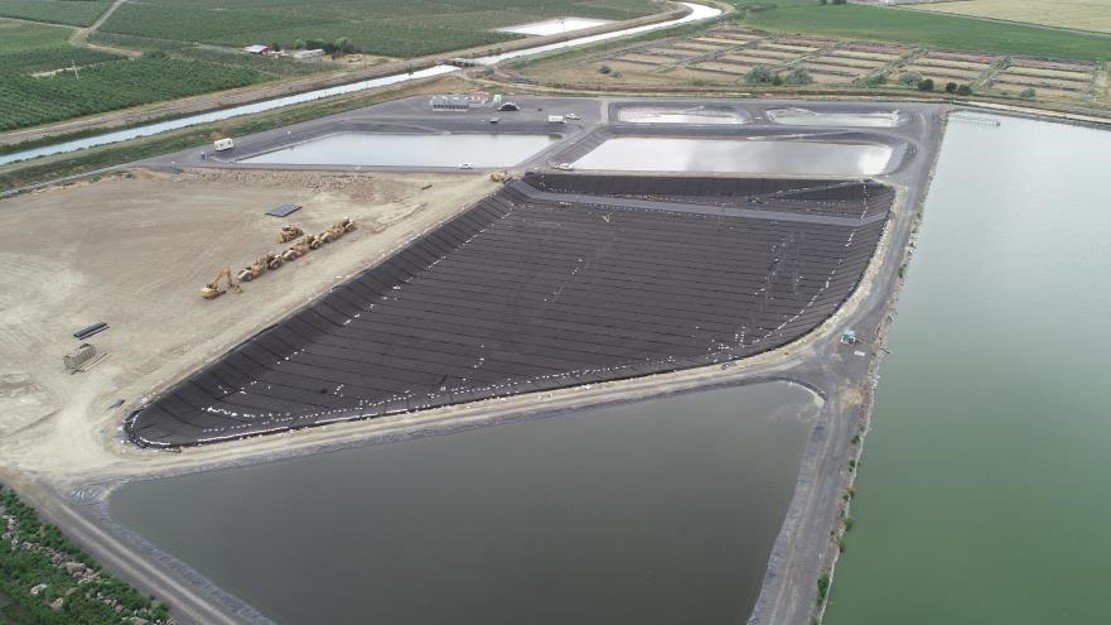
A brine pond associated with the Quincy Water Reuse Utility. The treatment system separates dissolved minerals from water that is reused for data-center cooling.
Photo: City of Quincy, via U.S. EPA · Source
That is a more useful standard than a national average offered to a town with a particular aquifer or water system. Residents need to know what a proposed facility will withdraw, consume and discharge in their location; how those demands change in hot or dry weather; and what happens if the estimate is wrong. A better cooling design and an enforceable local agreement answer different parts of the same question.
The industry is responding on its own terms as well. Microsoft’s January 2026 Community-First AI Infrastructure plan[81] commits it to covering the electricity costs its facilities create, reducing water-use intensity, replenishing water, publishing regional water-use information and contributing to local tax bases and training. These are commitments to test over time. An improvement in water used per unit of computing does not, by itself, establish a reduction in total water use.
In March, Microsoft announced that it would stop using NDAs with local governments[82] and work through existing agreements worldwide to terminate them. Its explanation preserves protection for certain trade secrets and security information. That is a significant policy change, but it is more precise than saying every old agreement had already disappeared or every document was now public.
The White House’s March 4 Ratepayer Protection Pledge[181] brought the principle to a national stage. Amazon, Google, Meta, Microsoft, OpenAI, Oracle and xAI signed[182]. They committed to new power supply, the infrastructure needed to deliver it, and separate negotiated rates payable even when the power goes unused. The pledge itself describes those negotiations as voluntary. It cannot substitute for the utility orders and contracts that decide who pays in a particular place.
Some developers argue that openness helps projects move forward. In Bisnow’s June 9 report[187], DBT Data president and CEO David Tolson described a community that had rejected five earlier proposals whose developers withheld key details. He said DBT gained support after committing to share detailed plans with residents and other stakeholders before filing them: “We now have their support simply by engaging, being present and being transparent.” This was the developer’s account of one project. It puts a concrete practice behind the language of community engagement: explaining what is proposed while people can still respond.
The change has been uneven. At Ohio’s Joint Data Center Committee hearing on June 4[189], Microsoft discussed its decision to stop using local-government NDAs. Bisnow, citing Cleveland.com’s account, reported[187] that representatives of Google, Amazon and Meta declined to make the same commitment. Amazon subsequently changed its stated policy: by October, its published commitments said it no longer used NDAs with government agencies on its projects[180]. The June response captures a moment in that argument, not an unchanging position for all three companies. Amazon’s statement does not establish that every legacy agreement or contractor arrangement has been unwound.
Amazon’s October announcements also included a spending commitment: its Built Together program[179] pledges more than $1 billion of additional spending over five years in data-center communities, directed toward education, training, energy affordability and water. That is a five-year pledge, not money already delivered.
These changes are worth taking seriously without treating them as the end of the story. A company can announce a better policy while residents still have unanswered questions. A state can adopt stronger rules while a project remains contentious. A household can benefit from fairer cost allocation and still face an expensive electric bill. The case for hope is that people are acquiring specific ways to demand something better, and specific records against which to judge the response.
Gallup, Confidence in Institutions, 2020–2026. Share of US adults. Annual readings; the complete table supplies the 2022 and 2023 values. Source
None of this guarantees that the relationship will heal. Nor does a fairer data-center agreement resolve the concentration of wealth and power that runs through this story. But if communities can negotiate meaningful terms, see what was promised and hold someone accountable for delivery, the data-center fight could become a model for a different relationship with technology.
Time named “You” its 2006 Person of the Year on the idea that the many were gaining power. The breakup we have been tracing came, at its core, from the feeling that power had moved in the other direction: technology was becoming something done to people.
The changes that offer a way back have something in common. Parents choosing when a smartphone enters a child’s life. Teenagers trying to reclaim their time. Towns deciding what can be built, under what conditions, and at whose expense. Each gives people some say in what happens to them.
It may be that the way back to trusting technology runs through the same thing the original promise was always about: giving more people the power to shape their own lives.
The reporting, research and original records behind this companion. Sources from the original edition are retained; additions are grouped below.